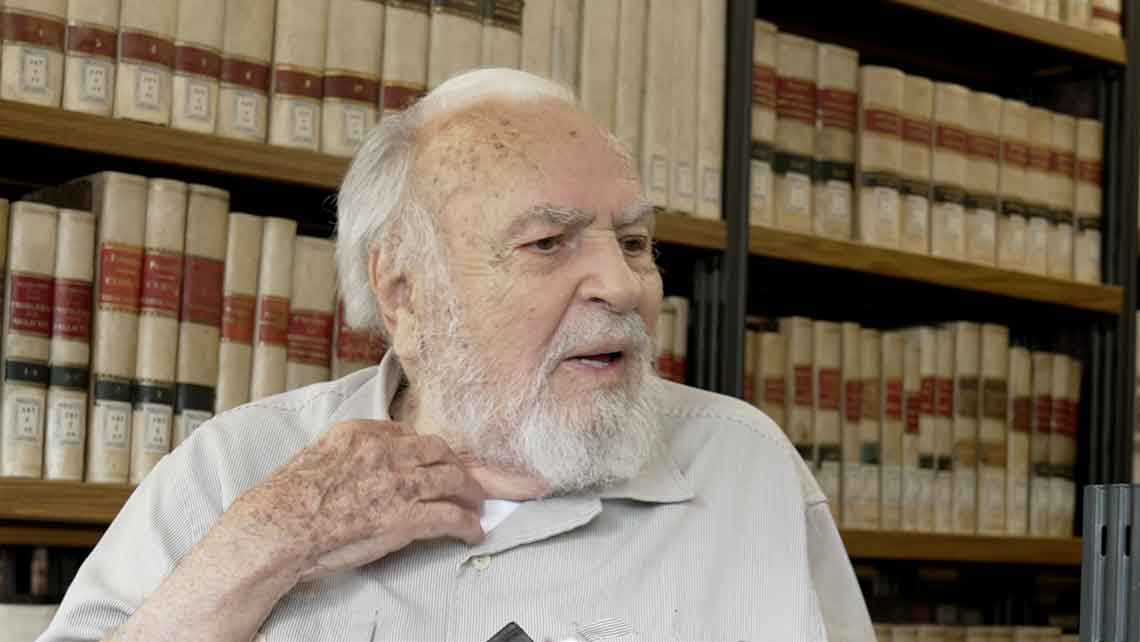
Fr. Antonio Oteiza
Antonio Oteiza was much more than a sculptor, painter and religious man. He was a tireless traveller, a passionate observer of human nature and an artist who found in art a way to express what words cannot always convey. His work, deeply rooted in experience, spirituality and encounters with other cultures, preserves the vitality of a life lived with curiosity, freedom and emotion.
Art as a Form of Encounter
Antonio Oteiza Embil (San Sebastián, 1926 – Madrid, 2025) was a sculptor, painter, writer, Capuchin friar, missionary and traveller. Yet any one of these words, taken on its own, is insufficient to explain a life in which creativity, spirituality and human experience ultimately became one.
He was born in San Sebastián on 26 June 1926, into a family in which art would have an exceptional presence. His brother Jorge Oteiza, eighteen years his senior, would become one of the key figures in twentieth-century Spanish sculpture. Antonio, however, would follow a deeply personal path. At the age of ten, he moved to Orio, and in 1945 he entered the Capuchin novitiate in Bilbao. He studied Philosophy and Theology and was ordained a priest in Madrid in 1953.
Soon afterwards came the experience that would decisively shape his way of seeing: America.
He was sent to Cuba as a missionary and later lived and travelled in Venezuela and other parts of the continent. He journeyed along the Orinoco, lived among indigenous communities and discovered ways of life in which nature, fraternity, hardship and a sense of community were intimately intertwined. Those years were not simply a stage preceding his dedication to art. To a great extent, they were the place where his art was born.
Oteiza himself recalled that his inclination towards sculpture arose from a specific need. In Venezuela, he wanted to create a monument commemorating the Capuchin presence in those lands. He looked for a sculptor and, unable to find one, searched for clay and decided to make it himself. He was around thirty years old.
That gesture reveals something essential about his personality: “before it was a profession, for Antonio Oteiza art was a need for expression.”
“Art grows more from the blood than from reason”
— Antonio Oteiza
He returned to Madrid in 1961 and asked his superiors about the possibility of devoting himself to religious art. He trained with the sculptor Víctor de los Ríos and the painter Amadeo Roca, set up a small studio in the Capuchin monastery of Cuatro Caminos and began a period of exploration that would gradually lead him from academically rooted figurative art towards an increasingly personal, expressive and essential language.
He worked in wood, stone and ceramics. He also studied at the International School in Perugia, Italy, and during those years participated in the renewal of religious art that accompanied the Second Vatican Council. His religious imagery would not simply repeat inherited models. Oteiza sought to make matter itself capable of conveying emotion, restlessness, pain, tenderness and spirituality.
In 1969, he experienced a unique episode in his career: for a time, he worked at Arantzazu alongside his brother Jorge on the Basilica’s extraordinary artistic project. It was the only occasion on which the two brothers worked together. Their closeness did not erase their profound creative differences. Antonio explained this with particular clarity: while Jorge had constructed an intensely reasoned and theorised form of art, he himself felt drawn to the spontaneity and freshness of folk art.
And he travelled again.
In 1970, he left for Brazil and spent months travelling up the Amazon. He later lived in the Peruvian Andes, served as parish priest in Angasmarca and continued exploring different lands and cultures. These experiences also gave rise to books and travel notebooks. Antonio often described himself as an adventurer, perhaps because he never wanted to separate artistic creation entirely from the experience of living.
His travels transformed his way of seeing. In contrast to an exclusively intellectual conception of art, Oteiza found inspiration among indigenous peoples, in popular cultures, in the simplicity of their objects and in the natural way in which communities continued to regard creation as part of life itself.
His sculpture thus acquired an extraordinary narrative power. Human figures, religious scenes, pilgrims, saints, workers, musicians, biblical characters and everyday events are infused with powerful gestures. His works contain bodies that seem to speak, walk, suffer, pray, embrace one another or question the viewer.
The religious dimension occupies a fundamental place in his work, but reducing it to the simple category of “sacred art” would diminish its richness. In Antonio Oteiza's work, the spiritual is continually bound to the human. His Christ also embodies suffering; his pilgrims also express weariness and searching; his Franciscan figures speak of fraternity, poverty and encounter.
He himself maintained that beauty could become a path towards truth and goodness. And this idea helps us understand much of his journey: to make visible what words cannot always express.
Antonio Oteiza died in Madrid on 4 August 2025, just a few weeks after his 99th birthday. He left behind almost a century of life shaped by faith, travel, adventure, creativity and a curiosity that seemed to remain with him until the very end.
Today, his work stands as the testimony of an artist who is difficult to confine within any one school. A creator who learned in studios and academies, but also in the Amazon, in the Andes, in the missions, along the roads and, above all, by observing people.
At the Museum, his sculptures and paintings offer a journey through precisely this universe. They speak not only of an artist's career.
“They speak of a man who travelled the world seeking to understand it and who found in art one of the most profound ways of telling its story.”
Works by the author
-
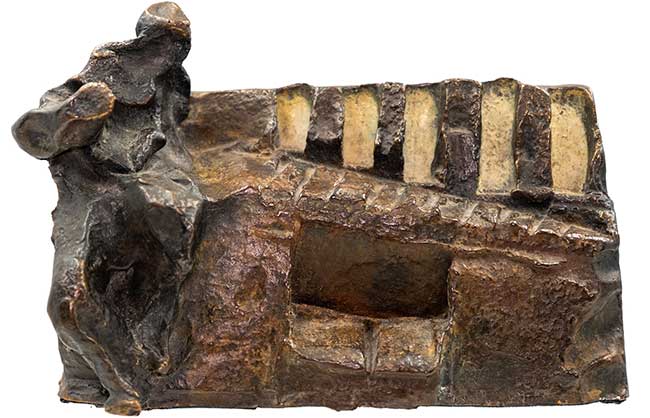
Organist
A man leans towards the keyboard as his body is absorbed into the architecture of the organ. Antonio Oteiza turns the act of performance into an image of complete concentration: musician and instrument no longer appear as separate realities, but as a single structure from which silence seems about to become music. -
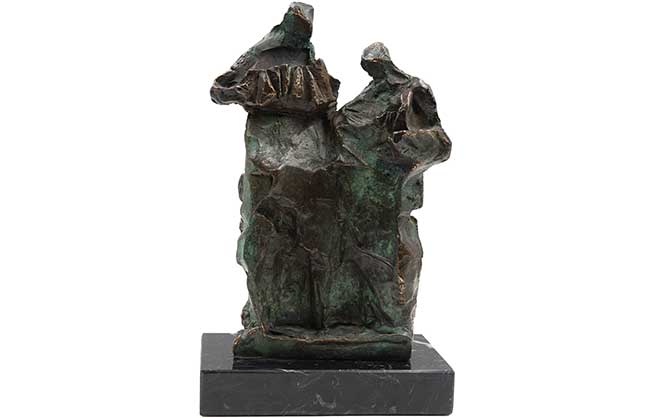
Trikititxa
Two musicians rise from the same mass of bronze, united by rhythm and by a shared tradition. Antonio Oteiza transforms the trikitixa into a sculptural construction of great intensity: Basque popular music is no longer only sound, but becomes body, encounter and collective memory. -
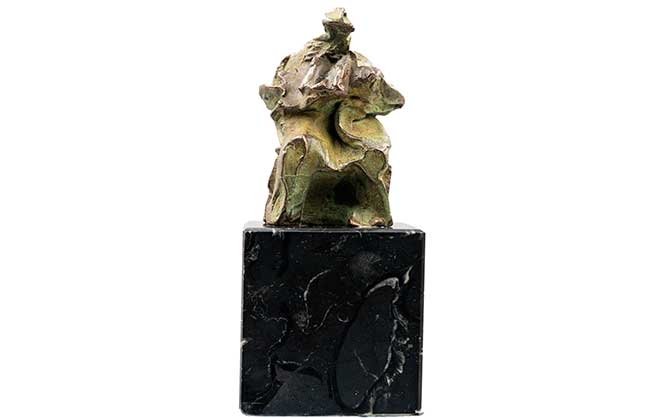
Accordion Player
The figure gathers around the accordion until musician and instrument become a single presence. Antonio Oteiza transforms performance into both a physical and inward experience: arms, torso and instrument are bound together in a compact composition where music, though unheard, seems to remain suspended within every fold of the bronze. -
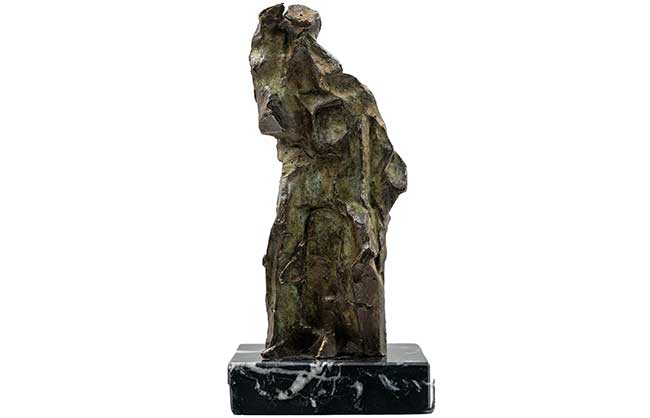
Irrintzilari
A figure lifts the head and gathers the entire body into the instant of releasing the irrintzi. Antonio Oteiza transforms this ancestral cry into a sculpture of extraordinary tension: the voice seems to pass through the material, open the body and project itself into space as an expression of identity, celebration and belonging. -
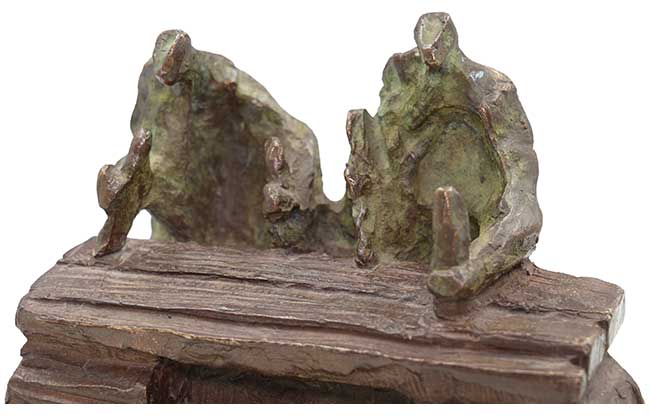
Txalaparta
Two musicians lean over the txalaparta and create a rhythm that can exist only through listening and mutual response. Antonio Oteiza transforms this Basque tradition into a scene of intense concentration: bodies, makilak and wooden boards become a single structure in which music arises from the encounter between two people. -
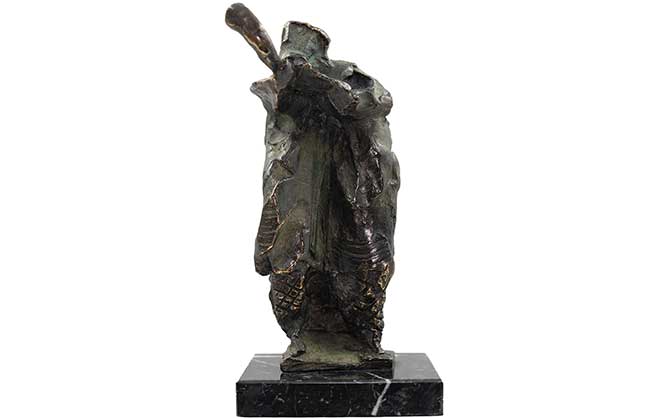
Ttuttulari
The musician gathers the entire body into the act of blowing, while the instrument extends outwards in a powerful curve. Antonio Oteiza transforms performance into an image of expansion: air seems to pass through the figure, open the material and become a sound that exceeds the limits of the bronze. -
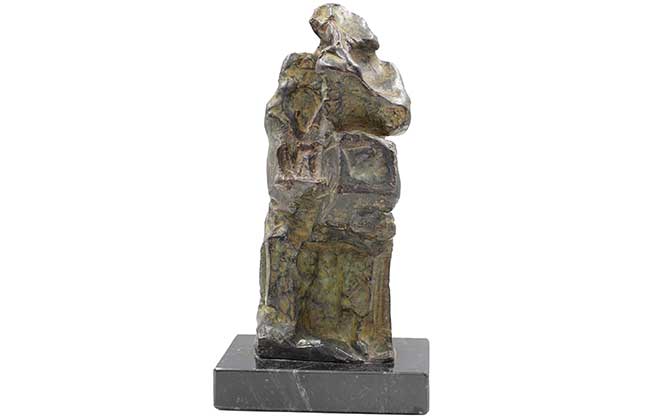
Txistulari I
The txistulari brings breath, melody and rhythm together in a single gesture. Antonio Oteiza condenses this complex coordination into a vertical, compact figure in which the body, the txistu and the percussion element become one sculptural structure. Music is presented not as spectacle, but as inner discipline, memory and shared belonging. -
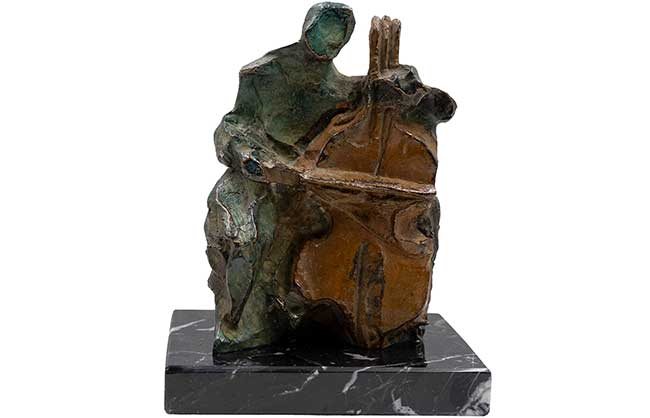
Cellist
The cellist leans over the instrument until the two seem almost inseparable. Antonio Oteiza transforms performance into a scene of intimacy and concentration: the body listens, the bow advances and the cello occupies the centre of a composition in which music, matter and gesture are no longer perceived as separate realities. -
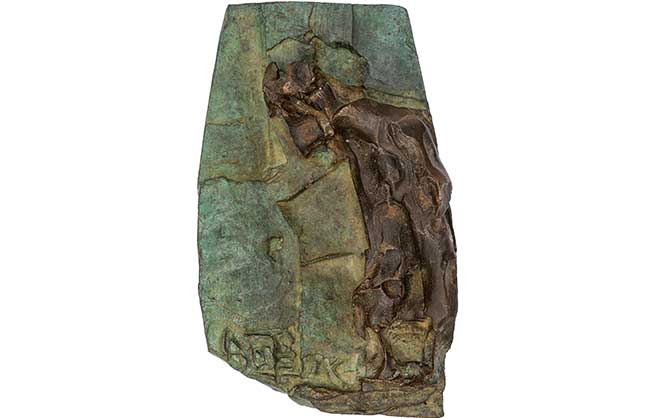
Irrintzilari
The body leans back, the head rises and the irrintzi seems to force its way through the bronze. In this relief, Antonio Oteiza turns the cry into a force that transforms the surface: the figure emerges from the background, strains against it and appears to break through it, making visible the energy of a voice bound to celebration, identity and shared experience. -
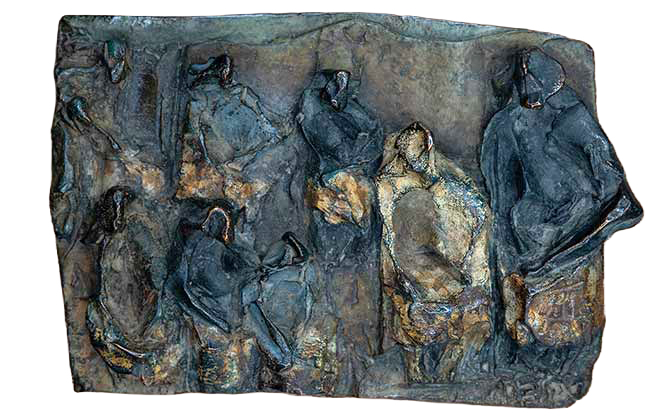
Drums of Bajo Aragón
A multitude of figures, drums and bass drums fills almost the entire surface of the relief. Antonio Oteiza transforms one of the most powerful traditions of Bajo Aragón into an image of extraordinary density: bodies overlap, drumsticks cut across the space and the bronze seems to retain the vibration of a collective sound that exceeds each individual performer. -
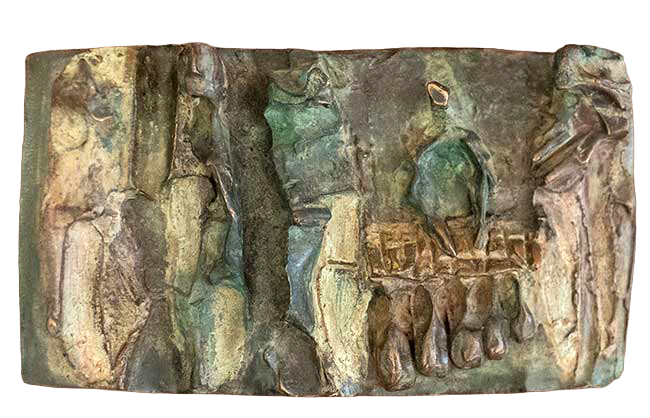
Musicians
Several figures gather within a shared space, each absorbed in an individual gesture yet connected to the others by music that cannot be heard. Antonio Oteiza transforms the ensemble into a structure of rhythms, pauses and presences: the bodies unfold across the bronze like distinct voices learning to coexist within the same performance. -
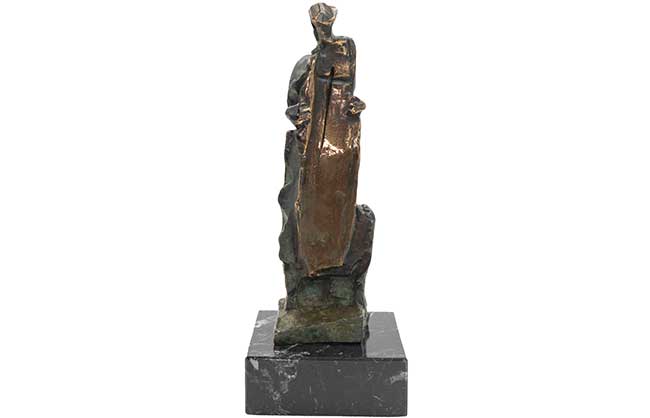
Saint John of the Cross
Antonio Oteiza approaches Saint John of the Cross through restraint, silence and inwardness. The tall, compact figure avoids narrative detail and traditional attributes, allowing the saint’s identity to emerge through contemplation rather than physical likeness. -
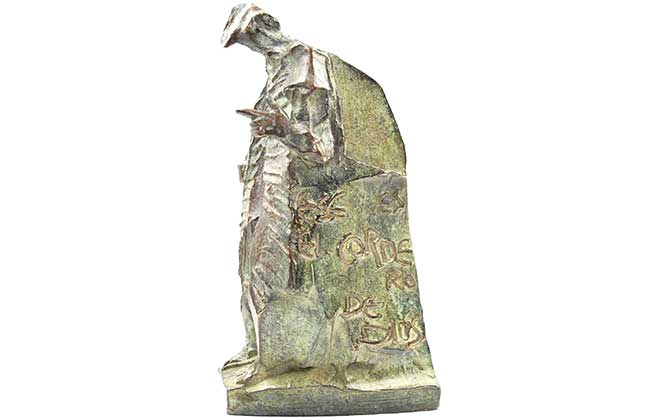
Saint John the Baptist
Antonio Oteiza presents Saint John the Baptist as a forceful, upright figure stripped back to what is essential. The saint is not idealised: his presence emerges from gesture, material and an inner urgency that turns him into a figure of warning and proclamation. -
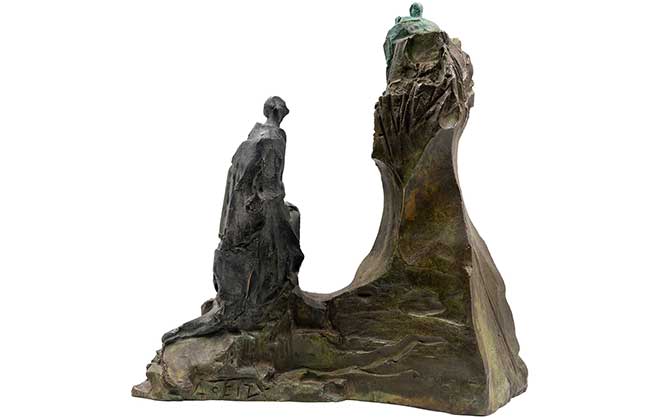
Saint Ignatius before the Virgin of Arantzazu
Saint Ignatius stands before the Virgin of Arantzazu in a scene shaped by distance, silence and contemplation. Antonio Oteiza turns the spiritual encounter into a tension between two presences: the dark, restrained human figure and the monumental form rising before him. -
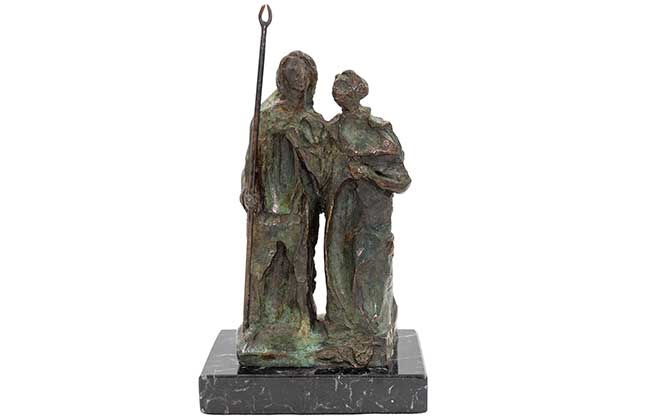
Saint John of God
Saint John of God stands beside a man in need of support. Antonio Oteiza presents compassion not as a grand gesture, but as physical and emotional closeness: two figures drawn together until care, trust and dignity become a shared presence. -
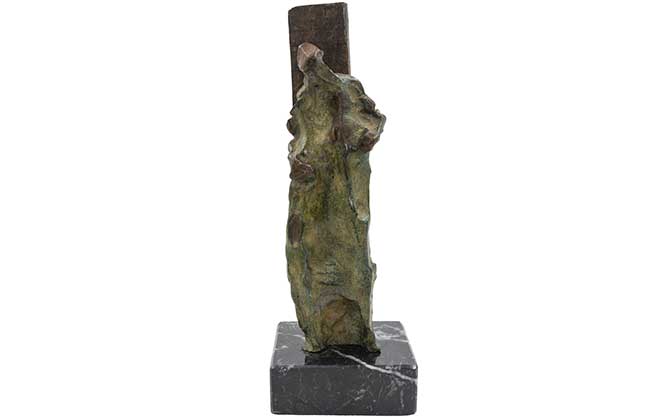
Saint Sebastian
Antonio Oteiza presents Saint Sebastian not as an idealised hero, but as a vulnerable human figure. The body stands against a tall wooden post, without arrows or explicit violence. The tilted head, the fragile silhouette and the tension between bronze and wood are enough to evoke martyrdom. -
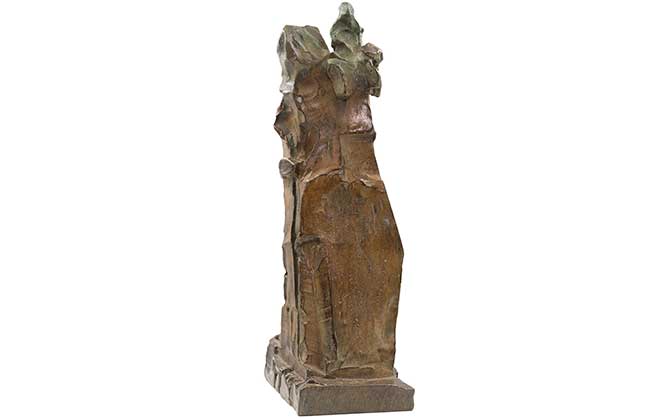
Saint Christopher
Saint Christopher carries the Christ Child on his shoulders through a landscape reduced to its essential forms. Antonio Oteiza transforms the familiar legend into a powerful image of burden and purpose: a massive body becomes a support, while the small figure above gives meaning to the entire journey. -
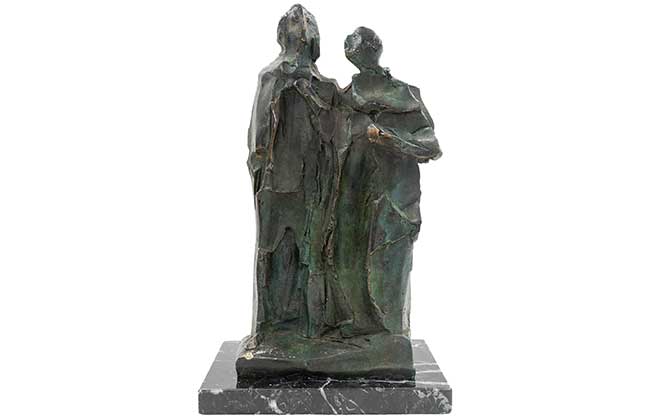
Saint Francis and Saint Ignatius
Saint Francis of Assisi and Saint Ignatius of Loyola meet in a scene that never took place historically, yet feels spiritually convincing. Antonio Oteiza brings together two founders and two distinct Christian traditions through proximity, exchanged attention and a gesture of mutual recognition. -
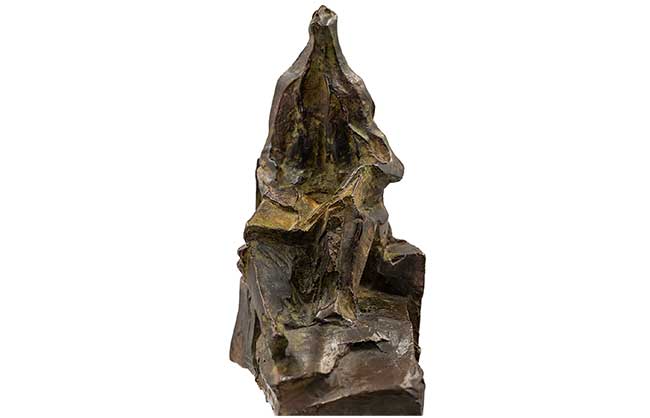
Saint Ignatius Wounded
Wounded and forced into stillness, Saint Ignatius sits within a space that both supports him and cuts him off from the world beyond. Antonio Oteiza captures the moment when physical defeat begins to become an inner turning point: the future founder has not yet been transformed, but his former life is already losing its hold. -
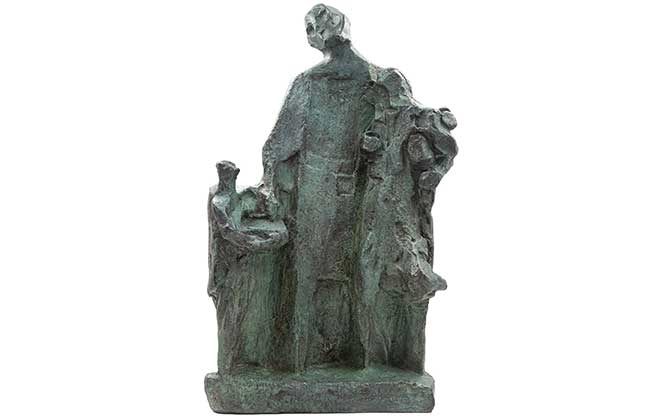
Saint Ignatius at La Magdalena
Saint Ignatius rises at the centre of a community that surrounds him, seeks him out and seems to call for his attention. Antonio Oteiza transforms the scene into an image of encounter: spiritual experience does not remain enclosed within the individual, but opens towards others and finds its meaning in listening, closeness and service. -
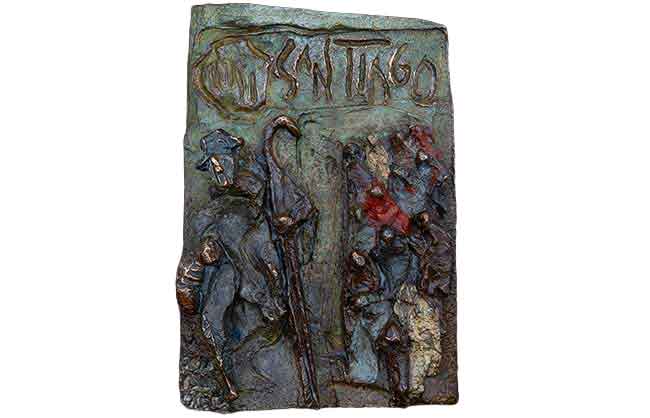
Saint James
Santiago appears as the guide of a humanity on the move. Around him gather pilgrims of different ages, attitudes and backgrounds, united by a shared direction. Antonio Oteiza transforms the relief into a collective image of the Way: an experience of searching, encounter and transformation undertaken together. -
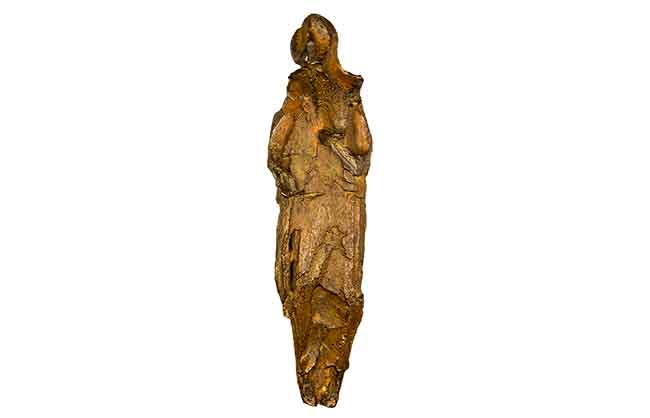
Saint Anthony of Padua
Antonio Oteiza presents Saint Anthony of Padua as a figure of inwardness and closeness. The spiritual centre of the work lies in what the saint holds against his chest, while habit, posture and material merge into a single vertical form. Far removed from solemn distance, holiness is expressed here through welcome, restrained tenderness and self-giving. -
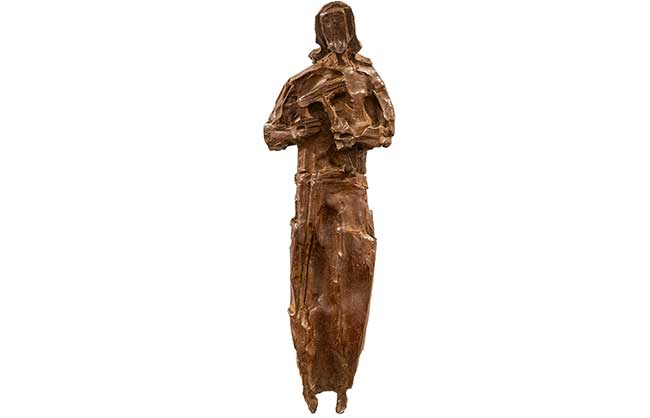
Saint Francis of Assisi
Saint Francis appears as an austere, vertical and inwardly focused presence. Antonio Oteiza concentrates the expressive force of the work in the hands and in the sign of the cross held close to the saint’s chest. Without narrative episodes or solemn gestures, the relief presents a spirituality founded on self-emptying, contemplation of Christ and the gift of one’s own life. -
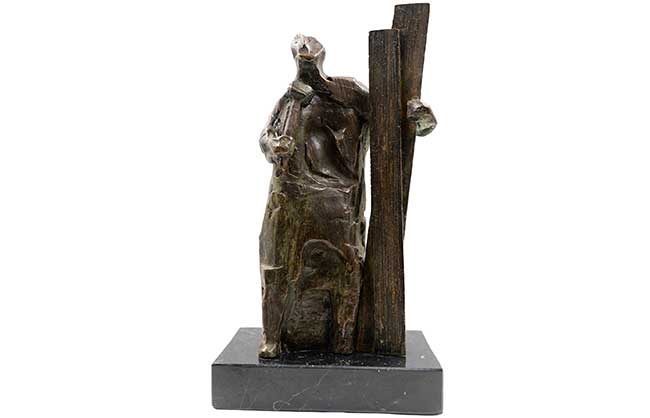
Formworker
Formworker pays tribute to one of the essential trades in construction. Antonio Oteiza honours the craftsman who prepares the framework upon which every building takes shape. The sculpture reveals how skill, precision and quiet dedication become the true foundation of any enduring work. -
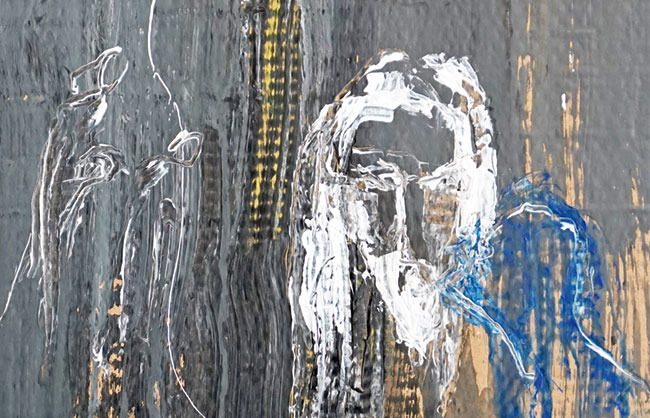
I-1 - El beso de Judas
En el huerto de Getsemaní Judas no señaló con el dedo ni culpó a Jesús ante sus enemigos, usó el beso como señal. -
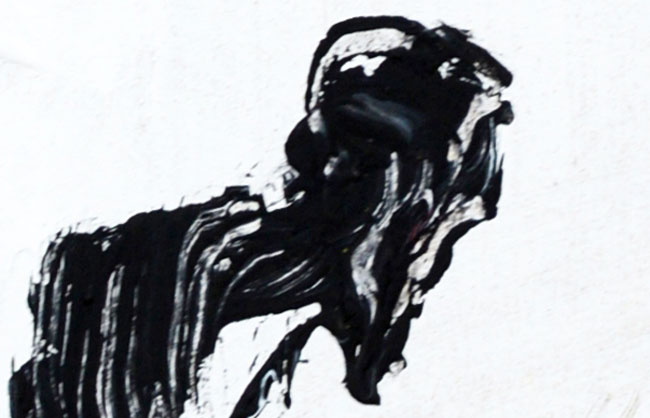
Chapter 1
Once there was a man in the land of Uz named Job. He was just and upright, God-fearing and kept away from evil. He had seven sons and three daughters. He owned seven thousand sheep, three thousand camels, five hundred yoke of oxen, five hundred female donkeys, and a large number of servants. He was the richest man among the people of the East. -
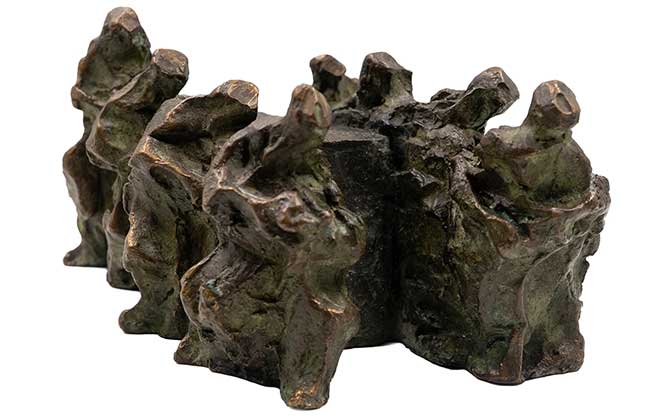
Gizon proba
Gizon proba -
I-2 - Ante Anás
Anás fue designado sumo sacerdote entre los años 6 y 15 d. C. por el romano Quirino, hasta que el procurador romano Valerio Grato (el que después dejaría su cargo en manos de Poncio Pilato) le removió del puesto para más tarde concedérselo a Caifás (año 18), su yerno. Anás, aún después de su despido, fue considerado sumo sacerdote junto con Caifás, y podía actuar como presidente del Sanedrín. -
Chapter 2
The Lord said to him: –Have you considered my servant Job? There is no one like him on earth: he is a just and upright man, God-fearing and far from evil. And you have incited me against him, to destroy him without cause; yet he still holds fast to his integrity. Satan replied: –Skin for skin! A man will give everything he has for his life. -
Harrijasotzaile
Harrijasotzaile -
Blacksmith
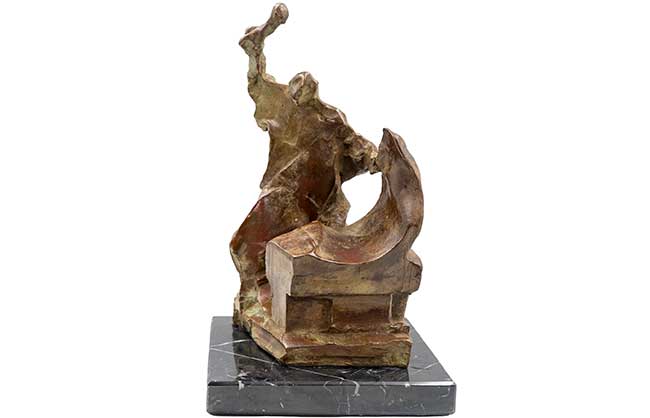
In Blacksmith, Antonio Oteiza captures the essence of craftsmanship at its most decisive moment. Rather than depicting the impact of the hammer, he focuses on the instant beforehand, when strength, skill and concentration come together. The sculpture becomes a tribute to manual knowledge and to the transformative power of human labour. -
I-3 - Ante Caifás
Caifás es citado varias veces en el Nuevo Testamento (Mt 26,3; 26,57; Lc 3,2; 11,49; 18,13-14; Jn 18,24.28; Hch 4,6). El historiador judío Flavio Josefo dice que Caifás accedió al sumo sacerdocio alrededor del año 18, nombrado por Valerio Grato, y que fue depuesto por Vitelio en torno al año 36 (Antiquitates Iudaicae, 18.2.2 y 18.4.3). -
Chapter 3
Then Job opened his mouth and cursed the day of his birth, saying: “May the day I was born perish, and the night that said, ‘A boy has been conceived!’” -
Aizkolari
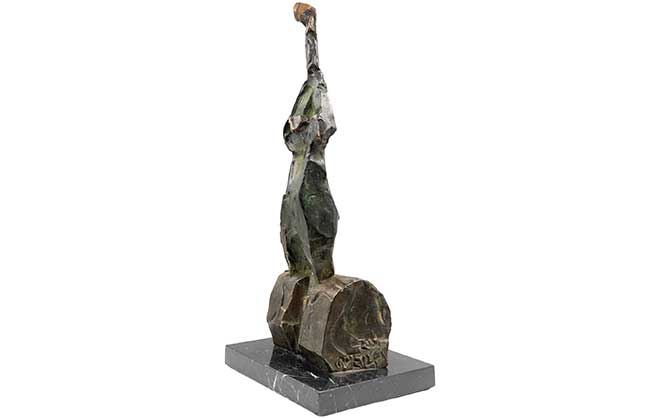
Aizkolari -
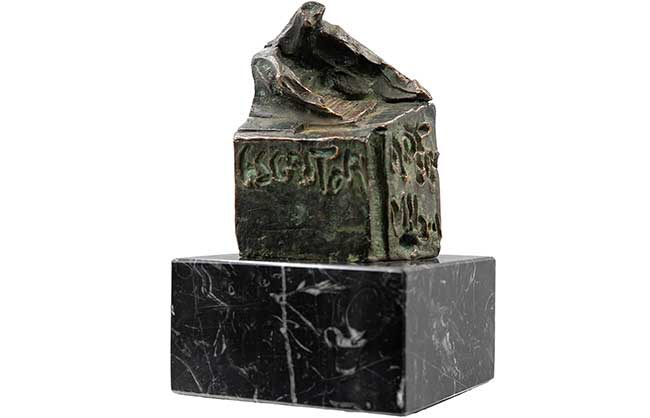
Writer
In Writer, Antonio Oteiza transforms the act of writing into sculptural matter. The figure, bent over his task, becomes closely integrated with a volume covered in signs and incisions that visually extend the act of writing. Rather than portraying a specific individual, the work evokes concentration, memory and the human impulse to turn experience into language. -
I-4 - Ante Pilato
Poncio Pilato es un personaje fundamental en la muerte de Jesús. No todos los evangelios ofrecen el mismo relato del papel que tuvo Pilato en la condena a muerte de Jesús. -
Chapter 4
Eliphaz of Teman replied: “If someone were to speak to you, I do not know whether you could bear it; but can anyone hold back their words?” -
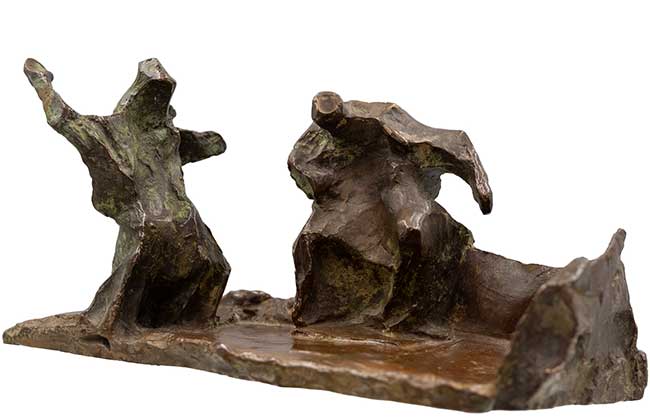
Frontón
Frontón -
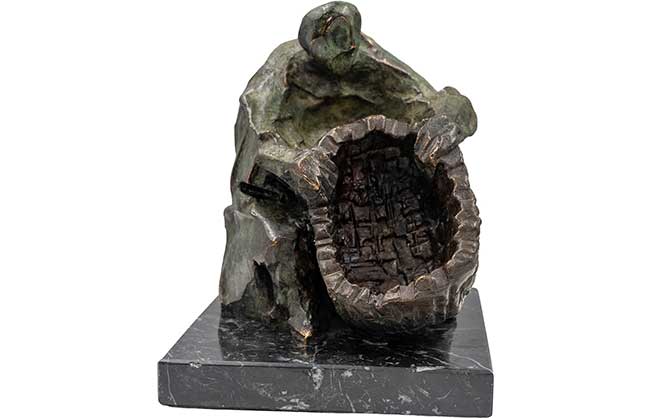
Basket Weaver
In Basket Weaver, Antonio Oteiza transforms a traditional craft into a reflection on the relationship between human beings, materials, and skills learned through the hands. The figure bends over a large basket that becomes almost as important as the craftsman himself. Rather than simply depicting a task, the sculpture conveys concentration, craftsmanship, and the quiet dignity of everyday work. -
I-5 - Ante Herodes
Herodes Antipas es el que aparece en el proceso a Jesús y el que decidió acabar con la vida de Juan el Bautista. Era hijo de Herodes el Grande y fue gobernador de las regiones de Galilea y Perea. -
Chapter 5
Call out and see if anyone answers you; which angel will you turn to? -
Idiprobak
Idiprobak -
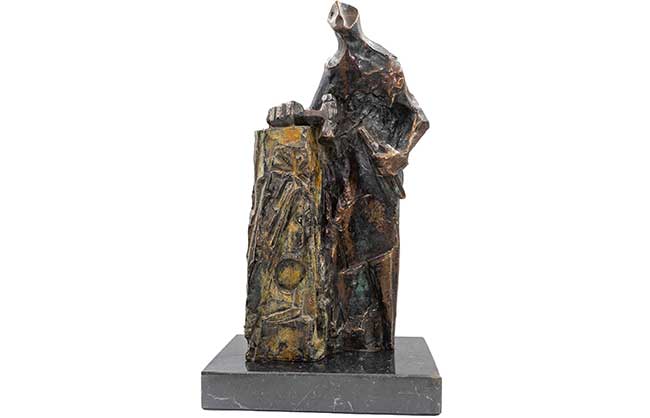
Ashlar Stonemason
In Stone Mason, Antonio Oteiza pays tribute to one of humanity's oldest crafts. Rather than celebrating physical effort alone, the sculpture explores the quiet relationship between the mason and the stone, revealing the patience, skill and understanding required to shape raw material into architecture. The work becomes a reflection on craftsmanship as both knowledge and creation. -
I-6 - De nuevo ante Pilato
“Entonces Pilato se hizo cargo de Jesús y lo mandó azotar… -
Chapter 6
Job replied: If only my sorrow could be weighed and all my misfortunes placed together on the scales, they would be heavier than the sand; that is why my words are so wild. -
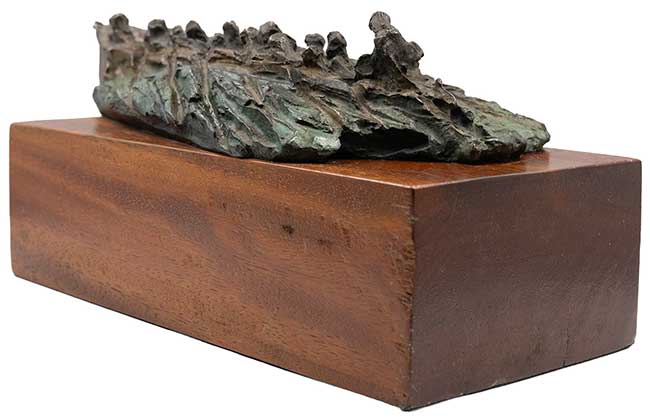
Traineras
Traineras -
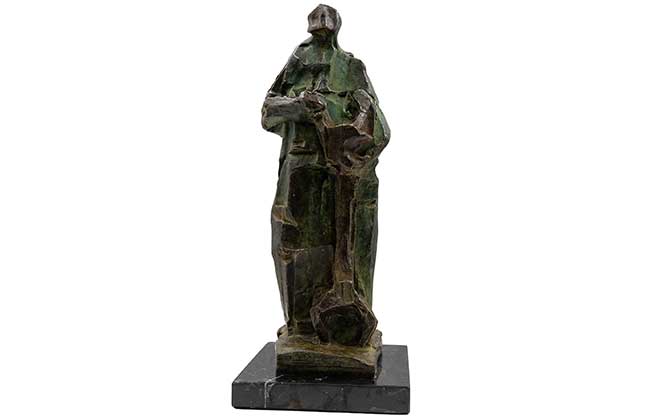
Mechanic
In Mechanic, Antonio Oteiza captures the decisive moment of work. The standing figure leans over a mechanical component, manipulating it with both hands. Every part of the body is directed toward this single point, where observation, movement and material come together. The sculpture transforms an everyday task into a powerful reflection on concentration, craftsmanship and dedication to one's profession. -
I-7 - ¡Crucifícale!
“Respondió Pilato: - ¿Y qué hago con Jesús, llamado el Mesías? Contestaron todos: - ¡Crucifícalo! Él les dijo: - Pero ¿Qué mal ha hecho? Sin embargo, ellos seguían gritando: - ¡Crucifícalo!” (Mt 27,22-23) -
Chapter 7
Man is on earth to fulfil his service; his days are those of a hired labourer... -
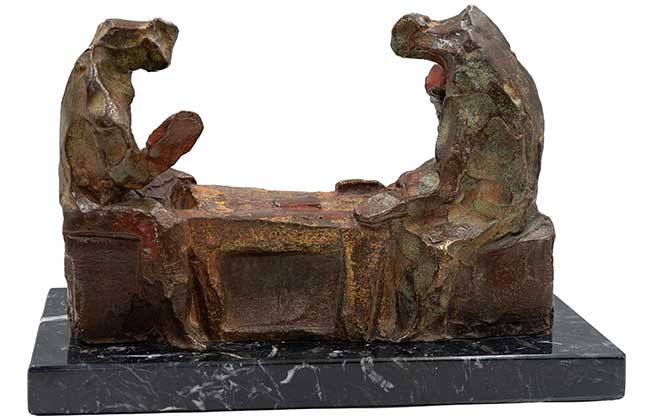
Jugador de cartas
Jugador de cartas -
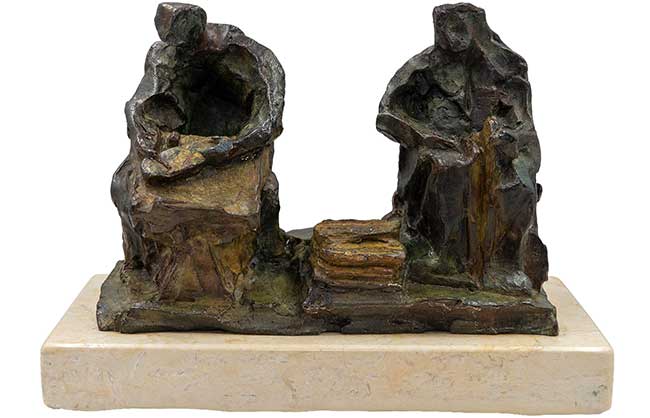
Espadrille Maker
In Espadrille Maker, Antonio Oteiza pays tribute to one of the traditional crafts that quietly shaped everyday life. Two artisans share the same workspace, their attention focused on a task that depends less on strength than on skill, patience and experience. Between them, a small stack of finished espadrilles becomes the silent outcome of their shared labour. -
II-1 - Sevilla
La imagen fue de los Capuchinos de Sevilla. Desconocemos su autor y la fecha en que fue tallada. -
Chapter 8
Bildad of Shuh then spoke and said: “How long will you speak like this, and how long will your words be like a raging wind?” -
Jinete
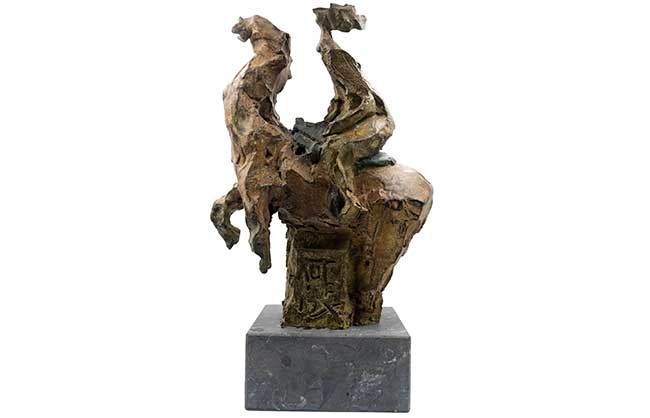
Jinete -
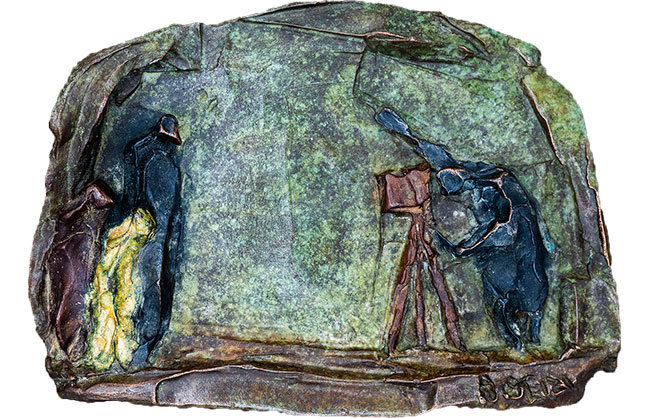
Photographer
In Photographer, Antonio Oteiza transforms a familiar profession into a quiet study of observation and anticipation. A small group of figures occupies one side of the relief, while the photographer leans over his camera on the other. Between them, a broad open space becomes the silent stage where the moment before the image is captured unfolds. -
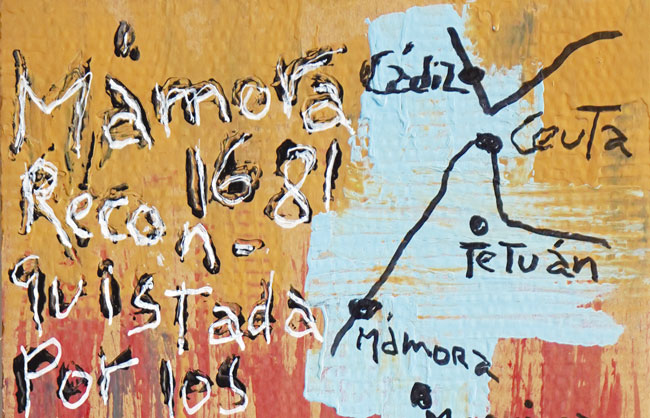
II-2 - Mámora
El origen de Mámora se debe a Almanzor, quien a finales del s.XII eligió este lugar como defensa y refugio. Fue conquistada por los portugueses en 1515, quienes levantaron la muralla defensiva. -
Chapter 9
Job replied: I know very well that this is so: man cannot be in the right before God. -
Baloncesto
Baloncesto -
Grape Harvester
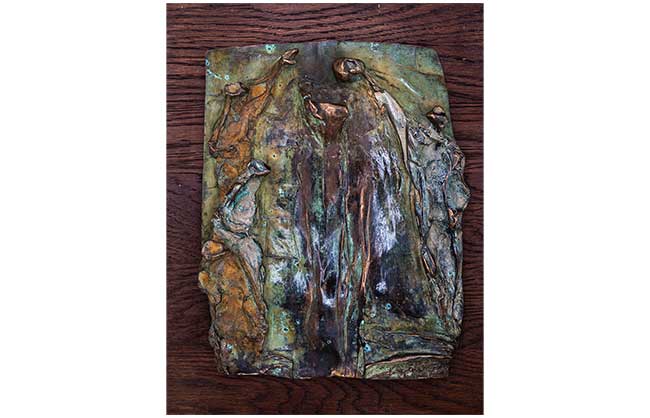
A woman carries the weight of the grape harvest on her shoulder. Antonio Oteiza turns this everyday gesture into a powerful image of endurance, balance and the deep bond between human labour and the land. -
II-3 - Cautivos
Tras cuatro días de asedio, el 30 de abril de 1681, la plaza de Mámora pasaba a manos de los moros. Una de las condiciones pactadas era que todos los que estaban allí quedaría prisioneros excepto seis. -
Chapter 10
I am weary of life: I will give myself over to complaint and pour out the bitterness of my soul. -
Maratón
Maratón -
Teaching
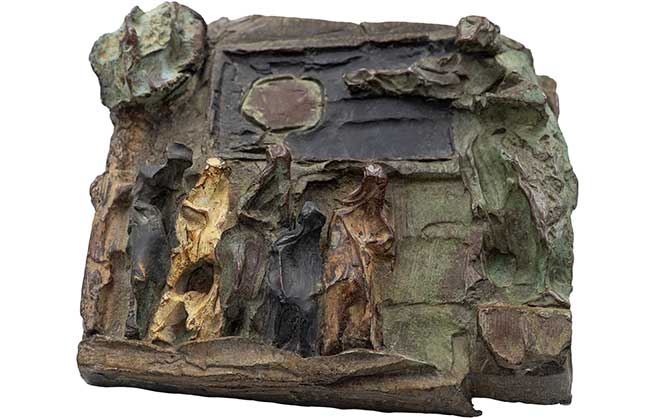
A group of people listens attentively as one figure points towards a large surface in the background. In Teaching, Antonio Oteiza presents the transmission of knowledge as a human encounter shaped by attention, exchange and the willingness to learn. -
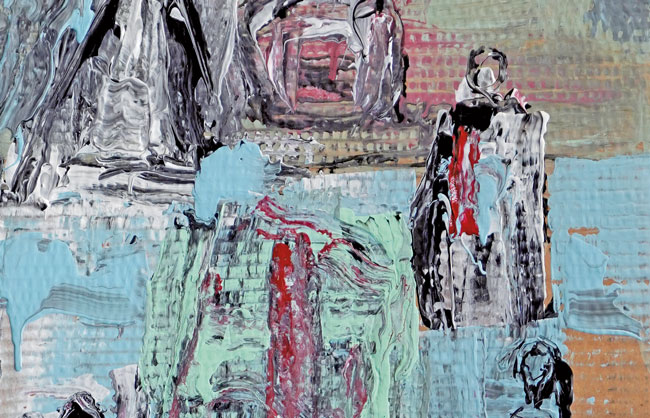
II-4 - El rescate
Cuantos se encontraban en Mámora al rendirse, fueron llevados a Mequínez, residencia de Muley Ismael. Se llevaron también las imágenes y objetos de valor de la iglesia. -

Chapter 11
Zophar of Naamah then spoke and said: “Will all this talk go unanswered? Is the chatterer to be proved right?” -
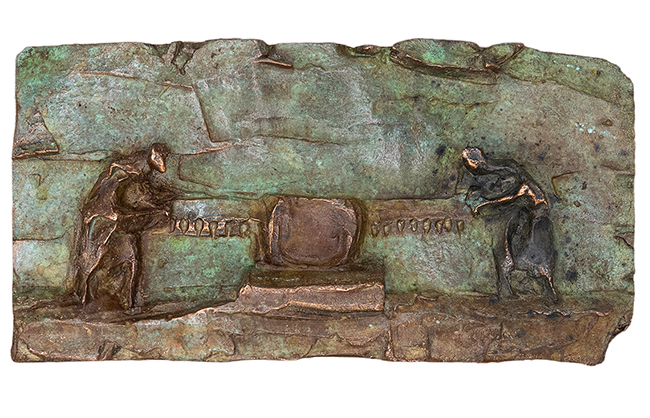
Crosscut Sawyers
Two men work opposite one another with a long crosscut saw. Antonio Oteiza turns this demanding task into an image of shared effort: each worker’s strength becomes effective only when it falls into rhythm with the other. -
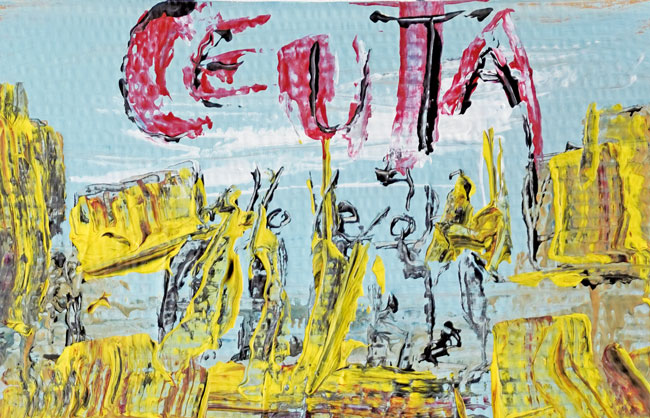
II-5 - Ceuta
Según varios cronistas Trinitarios fueron transportadas las imágenes de Mequínez a Tetuán, donde llegaron a fines de diciembre... -
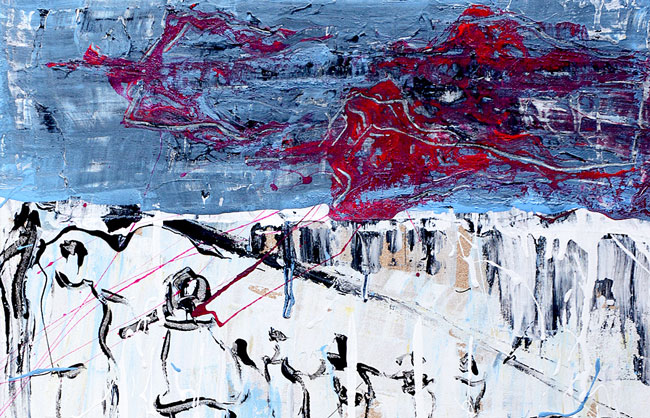
Chapter 12
Job replied: “What important people you are! Wisdom will die with you!…” -
Bullfighters. Paseíllo
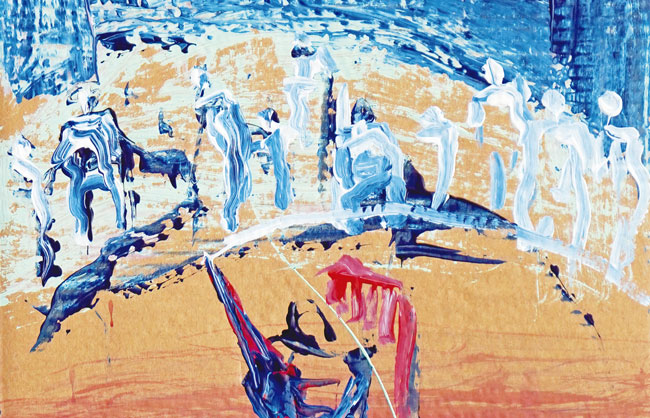
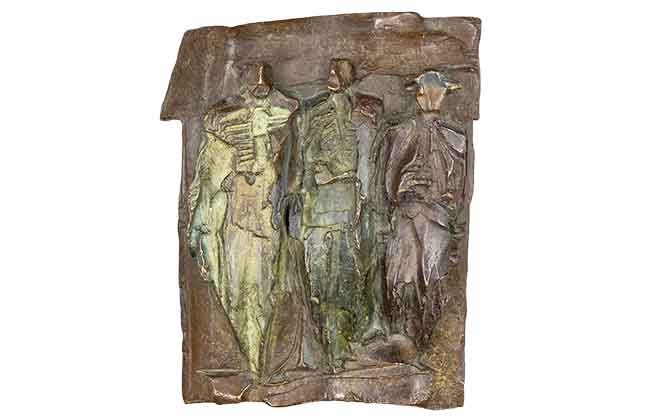
Three bullfighters advance together during the solemn paseíllo. Antonio Oteiza captures the moment just before the bullfight begins, when ceremony, public scrutiny and an awareness of danger turn an orderly procession into a scene charged with inner tension. -
II-6 - Llegada a Madrid
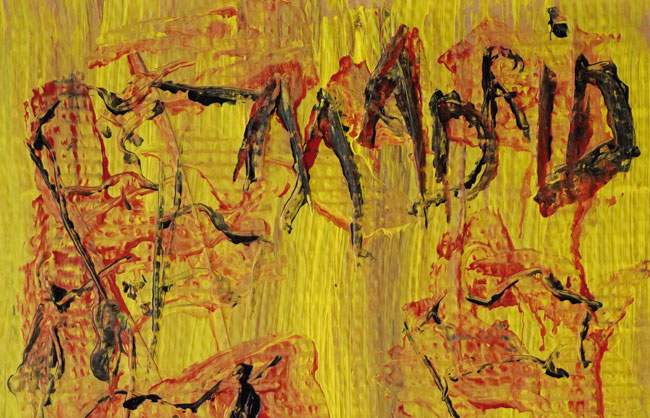
La imagen de Jesús llegó a Madrid en la segunda quincena de agosto de 1682. Una de las razones que movieron a los Trinitarios a traer a Madrid las imágenes rescatadas, fue que, habiendo recibido grandes ultrajes de los moros en Mequínez... -
Chapter 13
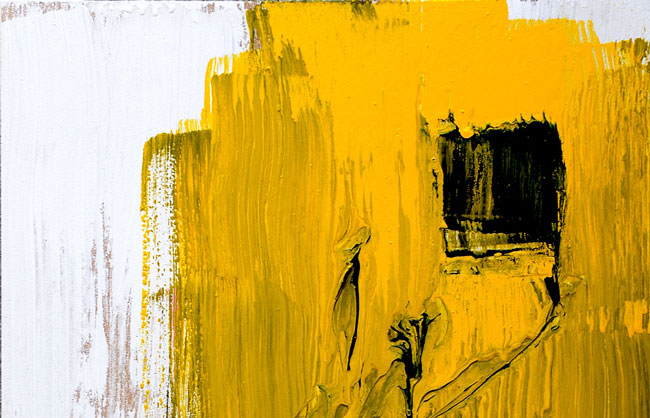
My eyes have seen all this, my ears have heard it, and I understand it. What you know, I also know, and I am no less than you. -
II-7 - Desamortización
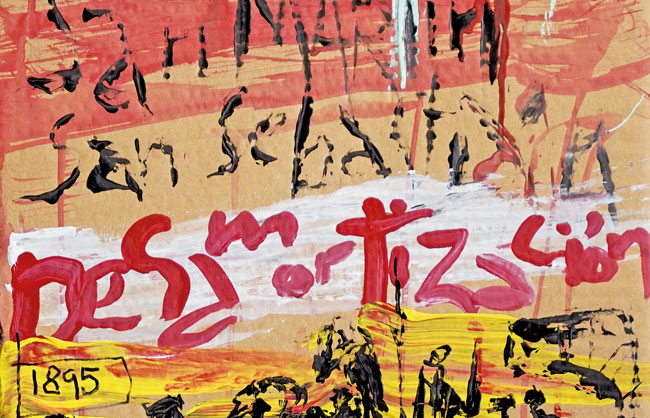
Dos fechas marcaron la historia de España y la de la devoción a Jesús Nazareno de Medinaceli: la invasión francesa en 1808 y la Desamortización de Mendizábal en 1835, en la que los religiosos se vieron obligados a dejar su conventos e iglesias. -
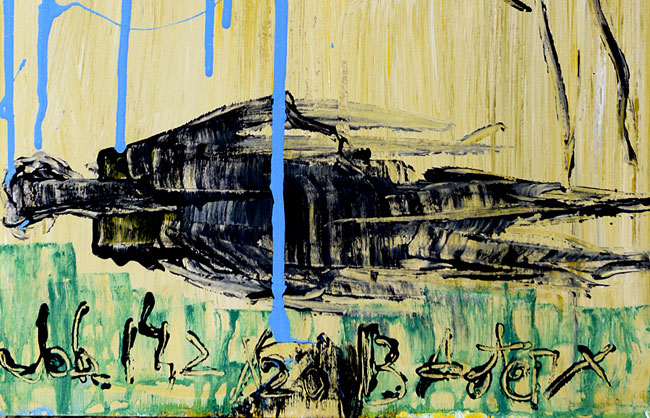
Chapter 14
Man, born of woman, is short of days and full of trouble. Like a flower he blossoms and withers; he flees like a shadow and does not remain. -
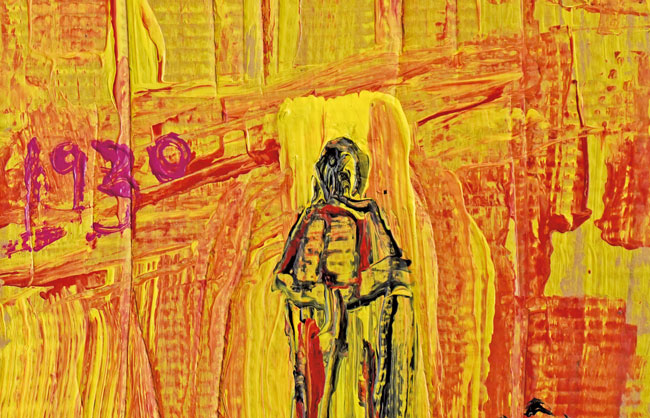
II-8 - La nueva iglesia
En 1922 se derriba la capilla de Jesús Nazareno para construir la nueva iglesia, que fue consagrada el 21 de noviembre de 1930. Con ella se pretendía disponer de un lugar sagrado, amplio, cómodo y capaz para grandes concurrencias... -
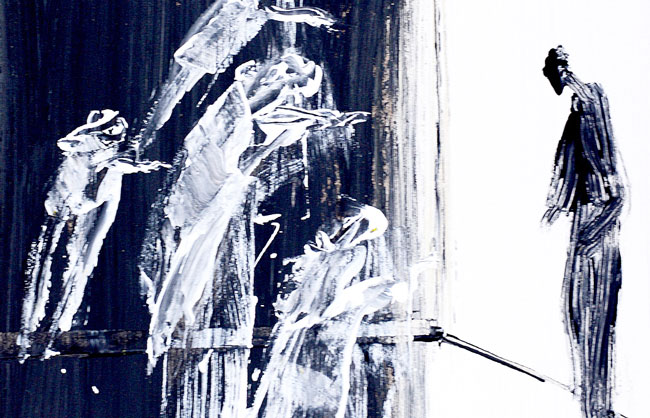
Chapter 15
Eliphaz of Teman then spoke and said: “Does a wise man answer with false teaching or fill himself with the east wind, arguing with empty reasoning or meaningless words?” -
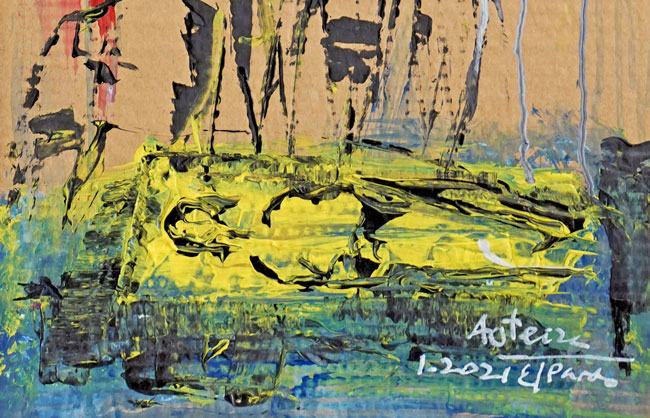
II-9 - El Cristo en el sótano
El 18 de julio de 1936 los frailes colocaron en los sótanos de la iglesia la imagen de Jesús. La envolvieron en unas sábanas dentro de una caja de roble para protegerla de su destrucción. -
Chapter 16
Job replied: “I have heard a thousand speeches like these already; you are all troublesome comforters.” -
II-10 - Viaje a Suiza y vuelta
Un buen día se presentaron en la iglesia varios camiones de guardias de Asalto, con la orden terminante del general Miaja de hacerse cargo de la imagen y llevarla a Valencia. -
Chapter 17
My mind is troubled, my days are fading, and the grave awaits me. Only mockery keeps me company, and I am weary of provocation. -
II-11 - La Procesión
Manifestación de ese amor a Jesús y de esa devoción tiene lugar la tarde del Viernes Santo, en la que la imagen de Jesús es llevada procesionalmente por las calles de Madrid. -
Chapter 18
Bildad of Shuh then spoke and said: “How long will you go on hunting for words? Think first, and then we shall speak.” -
Chapter 19
Job replied: “How long will you continue to afflict me and crush me with your words?” -
Chapter 20
Zophar of Naamah then spoke and said: “My agitation urges me to answer, for I feel deeply troubled.” -
Chapter 21
Job replied: “Listen carefully to my words; let this be the comfort you give me.” -
Chapter 22
Eliphaz of Teman then spoke and said: “Can a man be of use to God? Can a wise man be of use to him?” -
Chapter 23
Job replied: “Today too I complain bitterly, for his hand makes my groaning heavier.” -
Chapter 24
Why does the Almighty not appoint times when his friends may witness his interventions? -
Chapter 25
Bildad of Shuh then spoke and said: “God possesses an awe-inspiring power and establishes peace in his heights.” -

Chapter 26
Job replied: “How well you have helped the weak and aided the arm that has no strength!” -
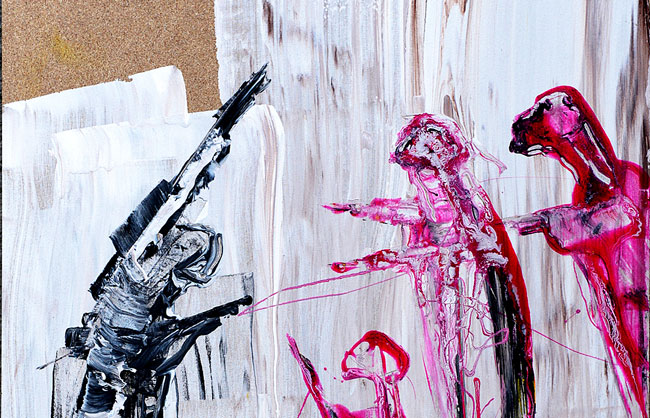
Chapter 27
Job continued reciting his verses and said: “As God lives, who denies me justice, and the Almighty, who fills me with bitterness…” -
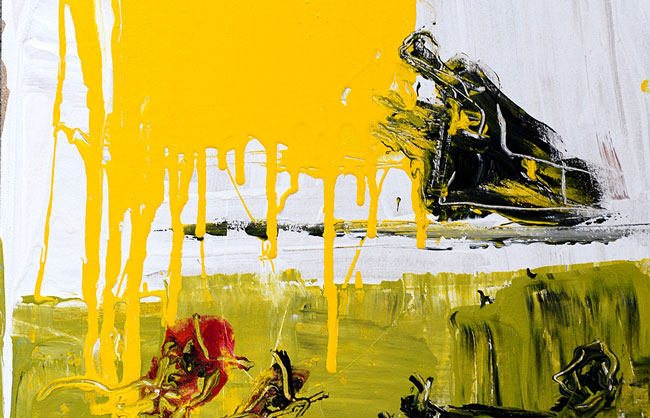
Chapter 28
Silver has its veins, and gold a place where it is refined. Iron is extracted from the earth, and bronze is obtained by smelting rock. -
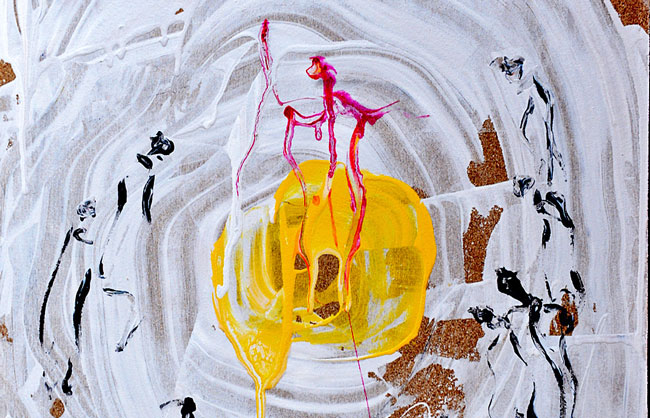
Chapter 29
Job continued reciting his verses and said: “If only I could return to the days gone by, when God watched over me…” -
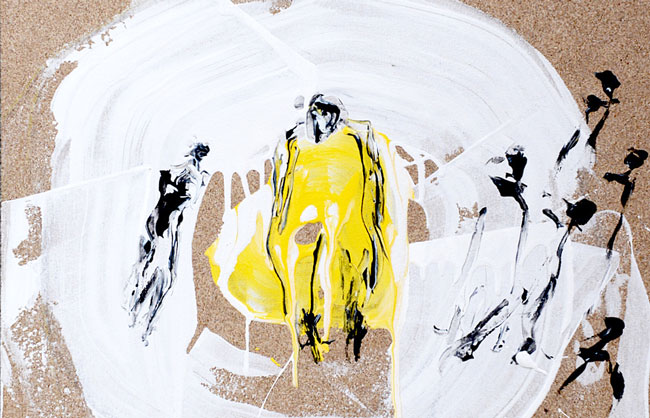
Chapter 30
But now men younger than I am mock me, men whose fathers I would have refused to put even with the dogs of my flock… -
Chapter 31
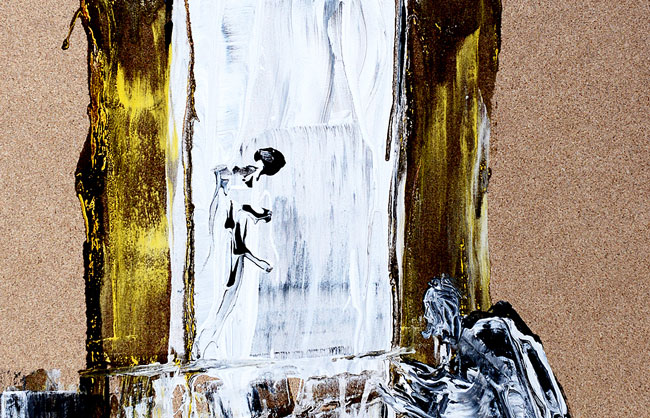
I made a covenant with my eyes not to look lustfully at a young woman. -
Chapter 32
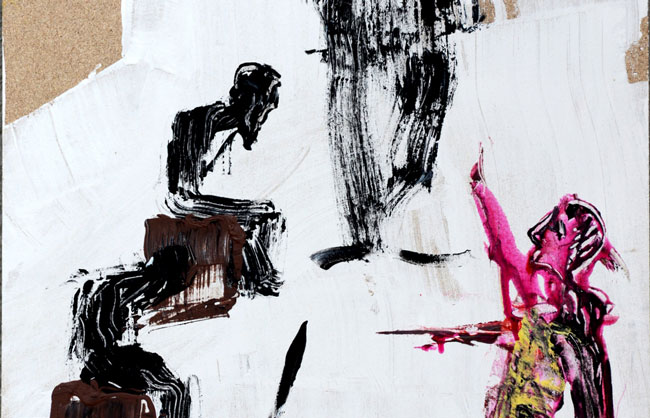
The three men no longer answered Job, convinced that he considered himself innocent. But Elihu, son of Barachel, of the clan of Ram, a native of Buz, became angry with Job because he sought to justify himself before God. -
Chapter 33
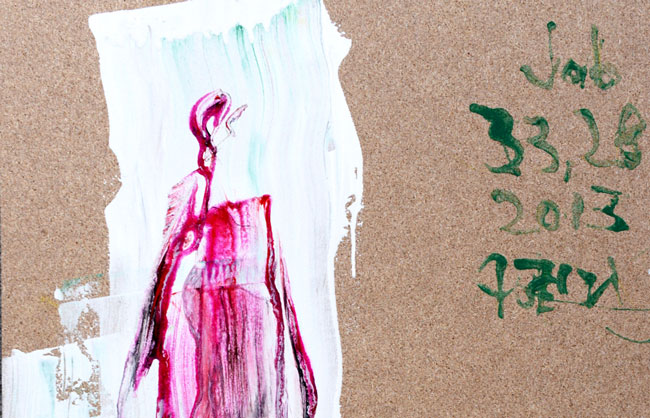
Listen to my words, Job; pay attention to my speech. See, I am opening my mouth, and my tongue is forming words against my palate. -
Chapter 34
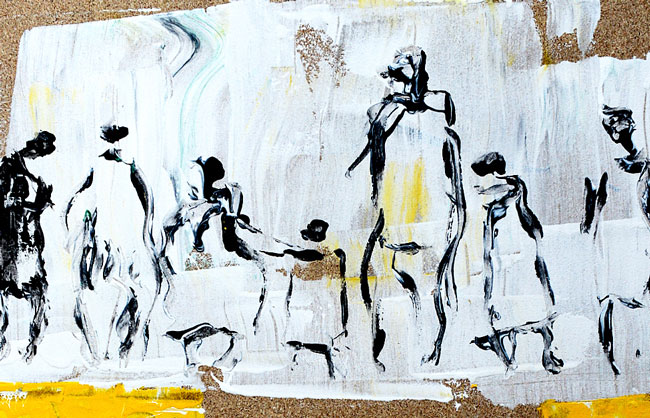
Elihu continued, saying: “You who are wise, listen to my words; you who are learned, pay attention to me…” -
Chapter 35
Elihu continued: “Do you think it is reasonable to say, ‘I am in the right against God’?” -
Chapter 36
Elihu continued: “Wait a little longer and I will teach you, for there is still something to be said in God’s defence.” -
Chapter 37
At the sight of this, my heart trembles and leaps from its place. -
Chapter 38
Then the Lord answered Job out of the storm: “Who is this who obscures my designs with meaningless words?” -
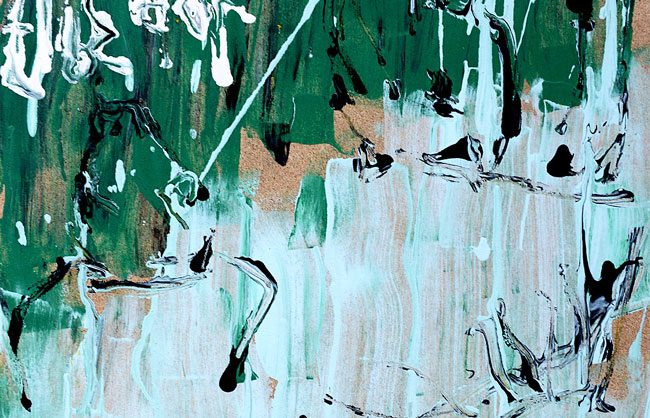
Chapter 39
Do you know when the mountain goats give birth, or have you watched the deer give birth? -
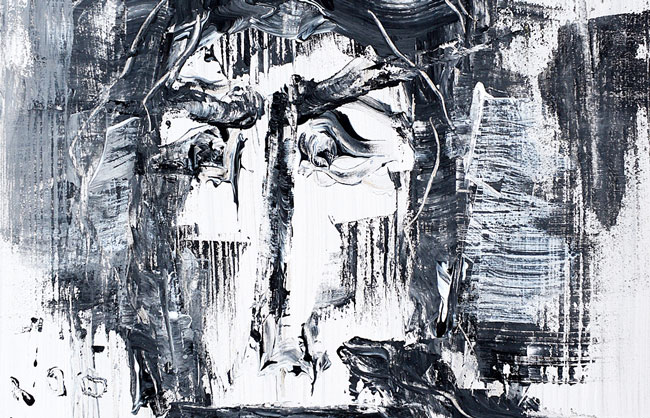
Chapter 40
The Lord continued speaking to Job: “Does the critic wish to contend with the Almighty? Let the one who criticizes God answer.” -
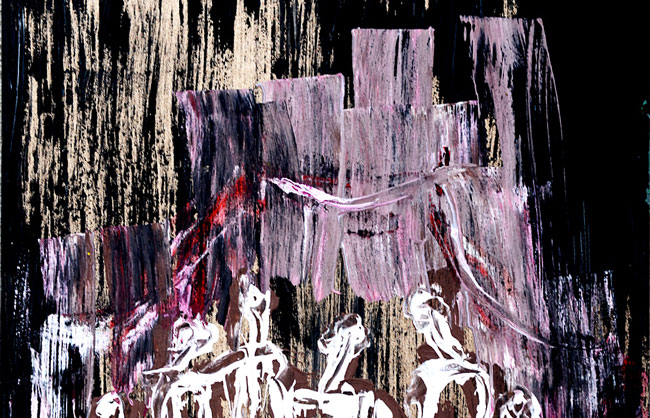
Chapter 41
I will not fail to describe its limbs and its incomparable strength. -
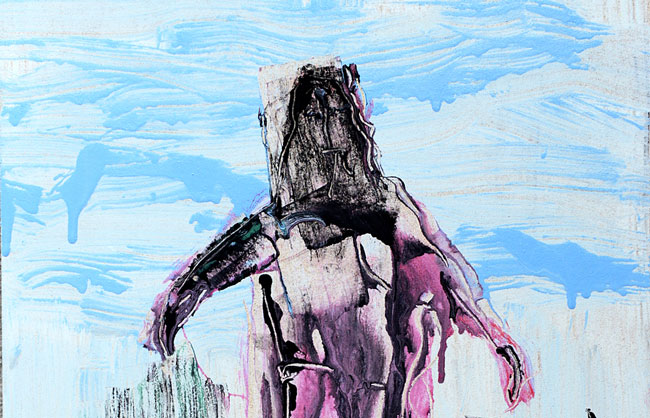
Chapter 42
Job answered the Lord: “I acknowledge that you can do all things and that no plan is impossible for you.”