Irrintzilari
| Collection: | Music in Bronze (Antonio Oteiza) |
| Author: | Fr. Antonio Oteiza |
| Inventory Number: | MCO-AO-ES-00052 |
| Type: | Sculpture |
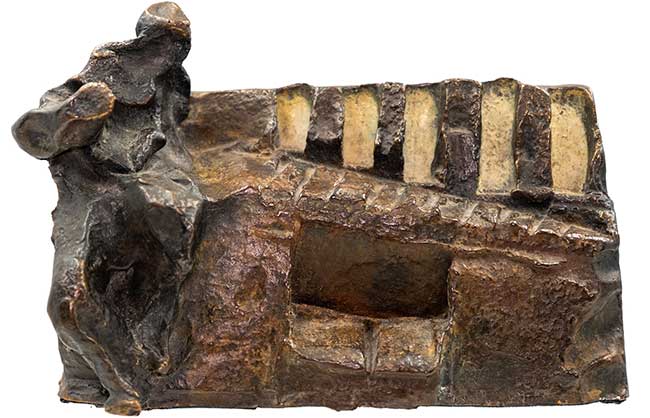
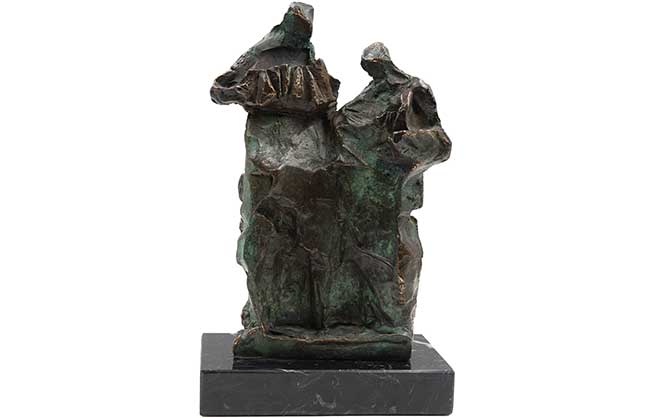
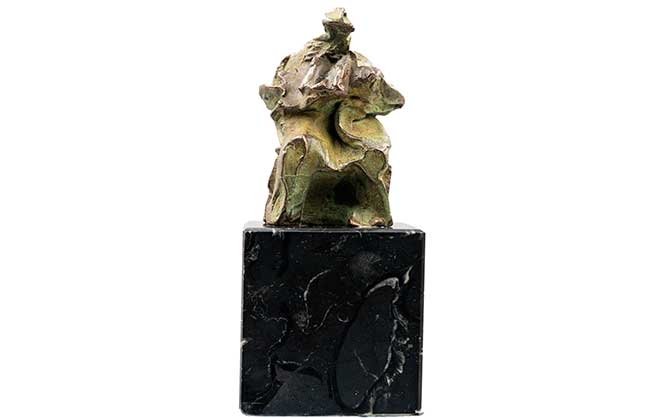
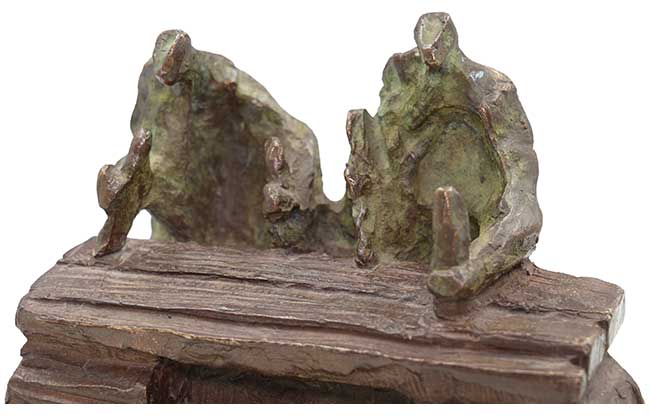
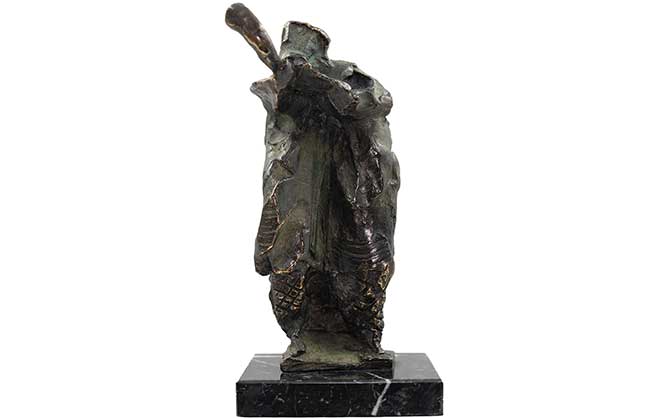
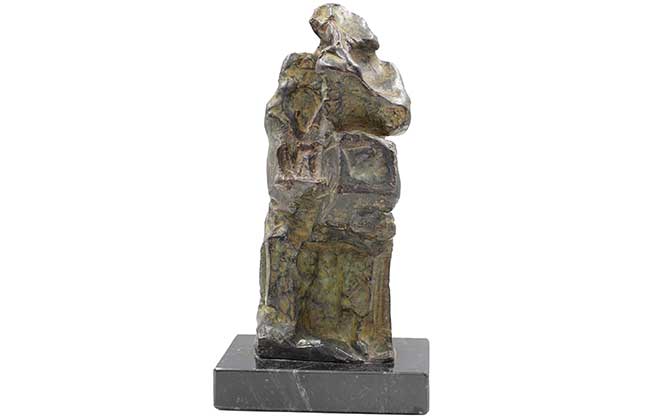
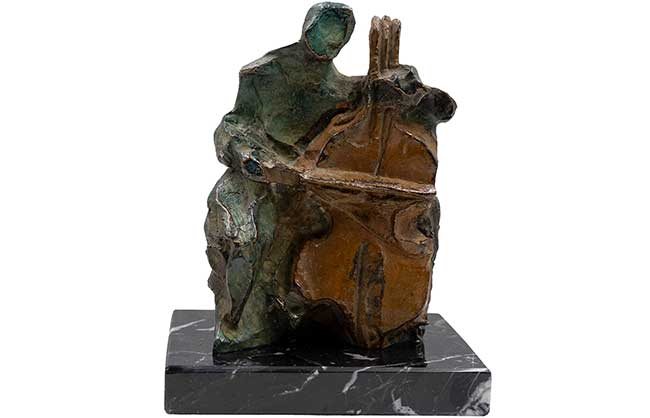
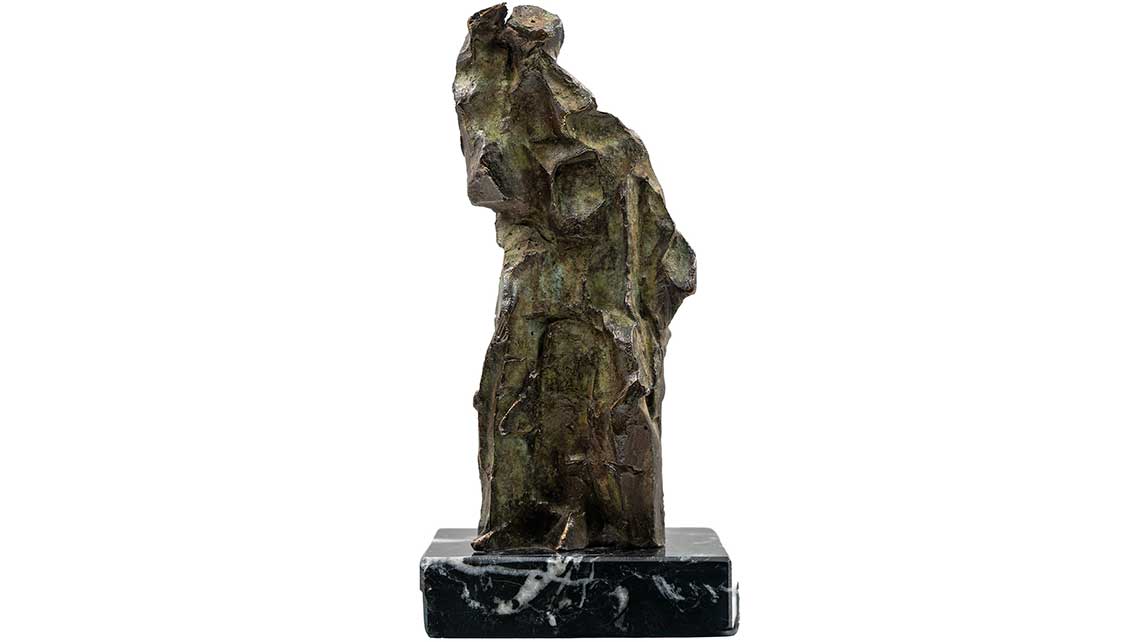
| Characteristics: | Irrintzilari is a freestanding bronze sculpture with a vertical composition and an irregular outline. The figure stands with the body slightly inclined, the head raised and one arm close to the face, in a posture that concentrates the full energy of the vocal gesture. The anatomy is constructed through fractured planes, concavities, sharp edges and abrupt changes in volume. Oteiza abandons naturalistic description and turns the body into a structure crossed by ascending tensions. The patina combines muted greens, deep browns, dark earth tones and coppery reflections. Colour becomes denser in the recessed areas, while the edges, head, shoulders and raised arm recover the warm luminosity of the metal. The sculpture stands on a rectangular plinth of polished black marble. The regularity and stability of the support contrast with the dynamism, fragmentation and vertical impulse of the bronze. |
| Artwork: |
Click to enlarge |
| Description: |
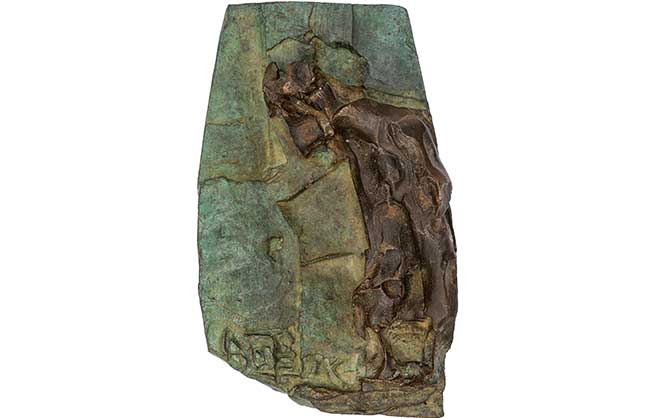
The irrintzi is a high, prolonged cry deeply rooted in Basque culture. It may be heard during celebrations, festive gatherings and collective expressions of joy or affirmation. It begins in an individual body, but is projected towards others and finds its fullest meaning within a shared space. Antonio Oteiza does not depict a festival or place the figure within a recognisable landscape. He removes every anecdotal element and concentrates the work on the precise moment when the voice seems to overflow the body. The figure rises from a narrow base and develops through a succession of irregular planes. The head, tilted upwards and slightly backwards, directs the entire composition. The face has no individualised features: its expressive force comes not from a specific facial expression, but from the posture and the tension gathered in the neck, shoulders and torso. One arm rises beside the head and opens a broad lateral cavity. This empty space is essential to the work. It is not an accidental interval between two parts of the body, but the area into which the cry seems to be projected. Oteiza thus uses the absence of material to suggest what sculpture cannot physically contain: sound. The torso is not presented as a closed volume either. Concavities, cuts and fractures make the body appear to open from within. Anatomy becomes a resonating structure, as though every plane were participating in the expansion of the voice. The lower section provides greater stability. Legs and feet merge into a narrow mass that supports the impulse of the upper body. This opposition between rootedness and elevation is fundamental: the figure remains attached to the ground, yet all its energy is directed outward and upward. The work changes significantly when viewed from different angles. From the front, the act of crying out dominates the image; from the side, the inclination of the body and the void opened beside the face become more intense. At the rear, the figure loses part of its narrative character and becomes a more closed, vertical and abstract construction. The surface preserves the direct trace of modelling. Incisions, cavities, casting ridges and changes in thickness break up the light and resist idealisation. The bronze does not behave like a uniform shell, but like matter under pressure, opened by the figure’s inner force. The patina deepens this effect. Greens and browns give the work density and an almost mineral quality, while coppery highlights run along the edges like small flashes of energy. As the viewer moves around the sculpture, light continually alters the silhouette and seems to reconstruct the direction of the irrintzi. The black marble introduces a geometric, stable and silent base. Its polished surface emphasises the irregularity of the bronze and makes the contrast between the stillness of the support and the expansion contained within the figure especially visible. Oteiza approaches a popular tradition without reducing it to a closed folkloric image. The irrintzi does not appear as a picturesque curiosity, but as a primary and universal expression: the need to make joy, strength or belonging visible through the voice. Irrintzilari captures the instant when a person is no longer only body, but also sound. Antonio Oteiza makes an immobile and silent material preserve the energy of a cry that still seems to be travelling through space. |