Musicians
| Collection: | Music in Bronze (Antonio Oteiza) |
| Author: | Fr. Antonio Oteiza |
| Inventory Number: | MCO-AO-RE-00041 |
| Type: | Relief |
| Location: | Cataloguing Room |
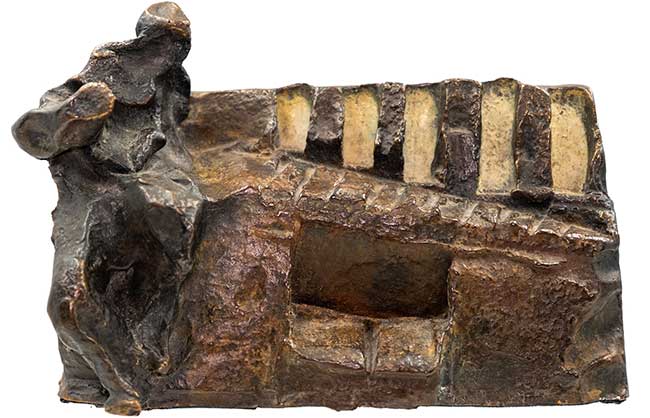
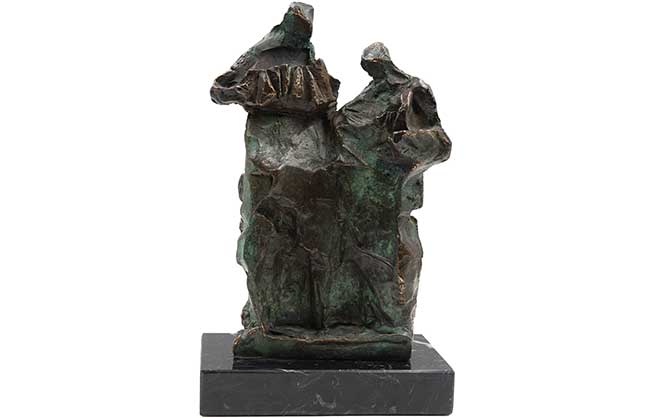
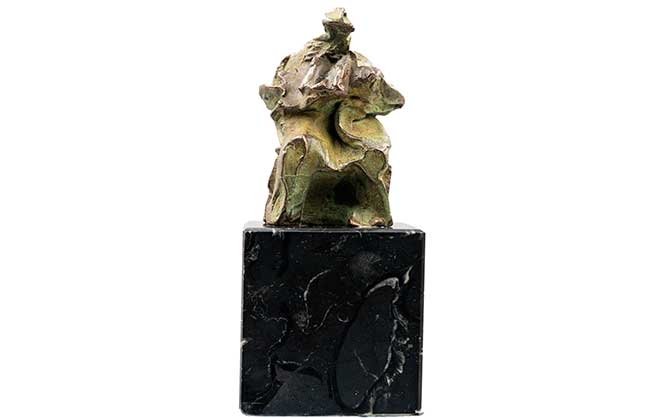
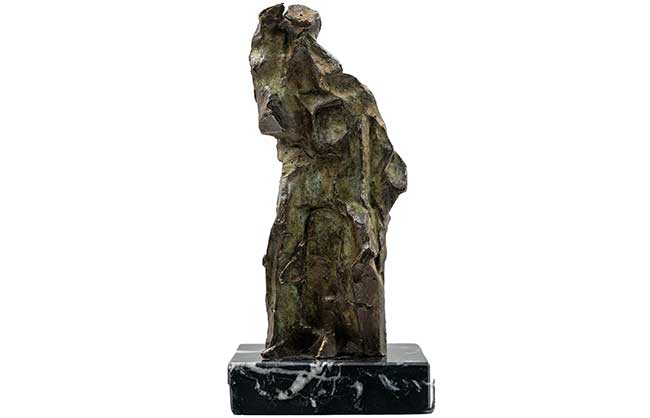
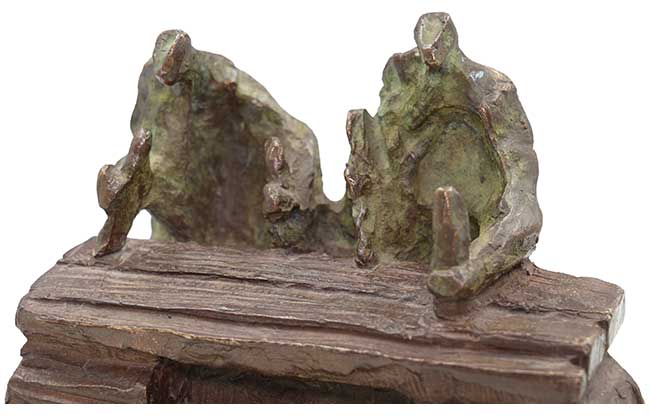
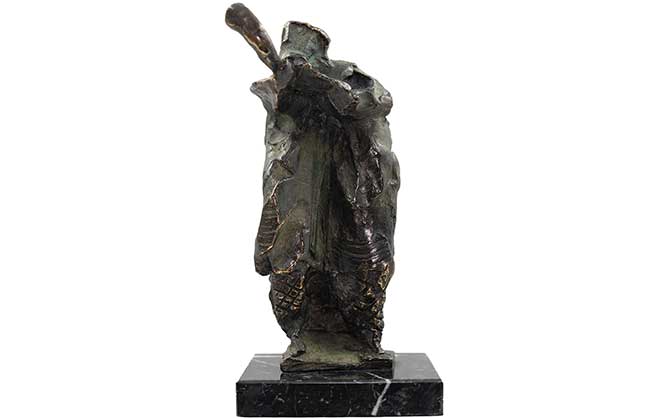
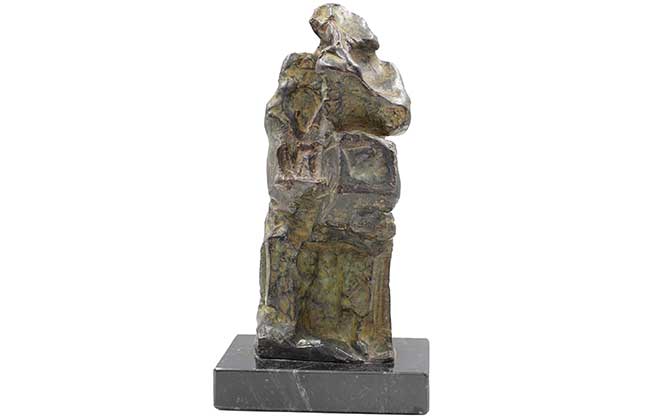
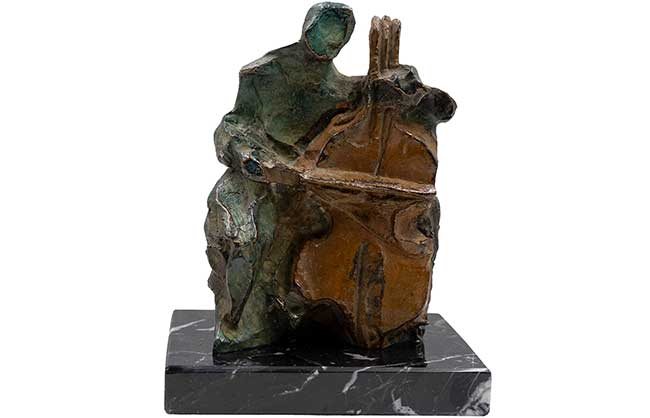
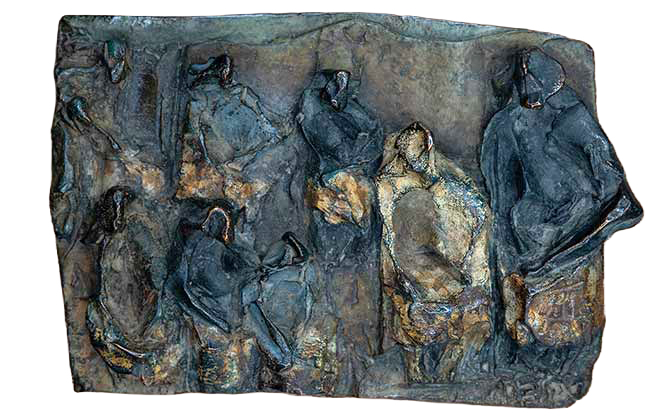
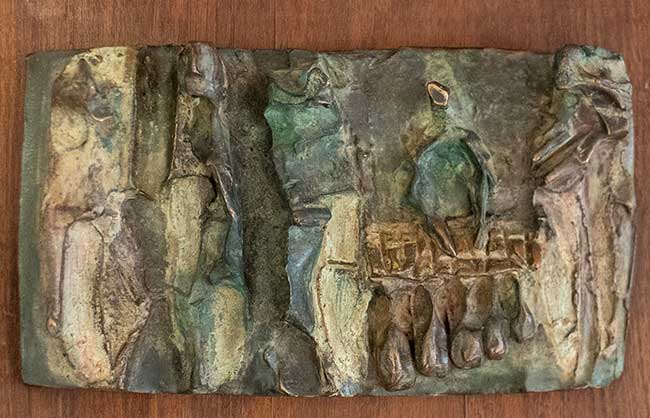
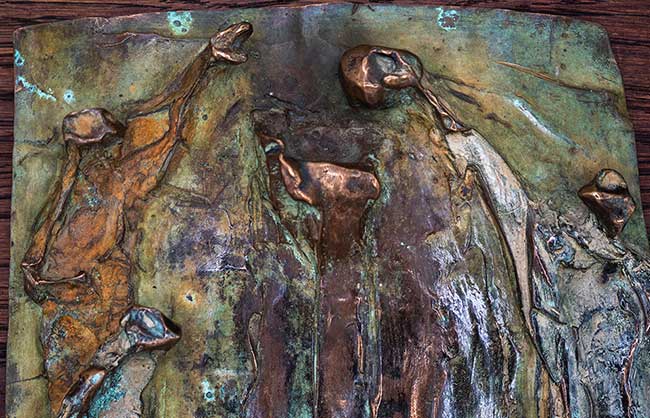
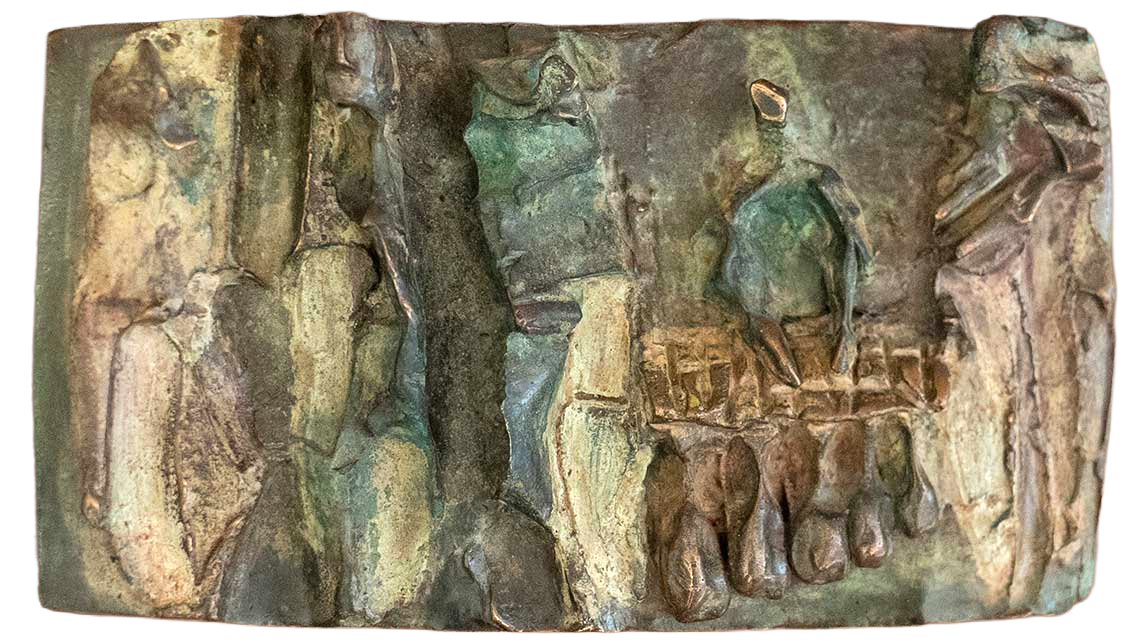
| Characteristics: | Musicians is an autonomous bronze relief in a horizontal format with a slightly irregular outline. The composition brings together several performers distributed across the surface and organised through a sequence of vertical figures, overlapping forms and changes in depth. The bodies are constructed through simplified planes, concavities, folds and volumes of varying thickness. The faces have no individualised features, while postures, hands and certain instrumental elements suggest different ways of participating in the musical action. The patina combines bluish greens, muted turquoise, ochres, pale earth tones, browns and darker areas. This chromatic variety helps distinguish the figures and organise the scene, while metallic highlights accentuate heads, hands, edges and the most projecting reliefs. The surface preserves incisions, roughness, small cavities and accumulations of material that fragment the light. The contrast between areas that barely rise from the background and volumes that project more strongly gives depth to the ensemble and causes its appearance to change with the lighting. |
| Artwork: |
Click to enlarge |
| Description: |
Music occupies a constant place in Antonio Oteiza’s work. Through individual performers and groups, the sculptor explores how the act of playing transforms the body, focuses attention and establishes relationships among those who share the same sonic space. In Musicians, no single figure assumes the leading role. The work brings together different presences without imposing a rigid hierarchy among them. Each character retains an individual position and gesture, yet none can be fully understood apart from the ensemble. The composition develops horizontally, like a musical phrase formed through successive entries. The figures appear at different heights and depths, some remaining closer to the background and others moving forward towards the viewer. This spatial rhythm prevents the scene from becoming a static line-up. On the left, a sequence of elongated bodies is densely grouped and partially superimposed. Some volumes are clearly distinguishable, while others merge with neighbouring figures and with the field of the relief itself. The eye must move slowly across the surface to identify the different presences. In the centre, the figures establish a transition between the density of the left side and the more open forms on the right. The bodies are articulated through curved planes, vertical masses and small intervals that allow the composition to breathe. Towards the right, several musicians become more legible. Their hands descend towards forms that suggest instruments, although Oteiza avoids describing them with technical precision. He preserves the position, contact and concentration needed to recognise the musical act, while rejecting the kind of detail that would turn the relief into mere illustration. This openness is one of the work’s particular strengths. The instruments can be sensed, but they do not impose a closed interpretation. Music appears primarily as a relationship among bodies rather than as an inventory of clearly identifiable objects. The faces are reduced to oval, angular or slightly concave forms. There are no individual portraits and no carefully described expressions. The identity of each performer lies in posture: some remain upright, while others lean, hold, press or gather around an instrument. Oteiza therefore shifts expression away from physiognomy and towards attitude. The viewer does not encounter a collection of portrayed individuals, but different states of concentration within a shared experience. Vertical lines organise much of the relief. Bodies, instrumental elements and divisions in the background establish an ascending cadence across the surface. Against them, hands, arms and certain horizontal forms introduce pauses and changes of direction. Music becomes visible through this alternation. The verticals provide continuity and support, the diagonals suggest movement, and the intervals between figures function like moments of silence. The composition thus adopts a structure comparable to a performance built through sound, waiting and response. The background does not represent a specific architecture. Its divisions and changes of level provide enough space to gather the musicians together, without placing them on a recognisable stage. Oteiza removes anecdotal detail in order to concentrate on the relationships among the figures. The depth of the relief is equally irregular. Some figures barely detach themselves from the plane, while others gain greater volume and cast their own shadows. This movement between surface and volume allows certain musicians to advance while others remain in a secondary register. The patina actively contributes to this organisation. Lighter tones bring particular figures closer to the eye, while greens and darker areas place others further back. Colour does not establish a fixed hierarchy, but creates a visual path that changes with the light. The texture intensifies this mobility. Incisions, rough surfaces and small accumulations prevent the bronze from appearing visually still. As the viewer moves in front of the work, a succession of reflections and shadows activates the bodies and rearranges their relationships. The horizontal format reinforces the sense of a group. The scene does not gather around an absolute centre, but unfolds from one side to the other, as though it continued beyond the irregular edges of the relief. Oteiza does not present the musicians as heroic or spectacular figures. He shows them absorbed in a shared discipline, in which each participant must attend both to an individual gesture and to the presence of the others. This double demand lies at the heart of the work. Music requires individuality, but also integration; a distinct voice and the ability to become part of a common structure. Each performer contributes something different, yet the result only exists when those voices find a relationship. In Musicians, Antonio Oteiza transforms a human group into an architecture of rhythms and resonances. The bronze remains silent, but the succession of bodies, gestures and spaces preserves the impression of collective music born precisely from the coexistence of difference. |