Trikititxa
| Collection: | Music in Bronze (Antonio Oteiza) |
| Author: | Fr. Antonio Oteiza |
| Inventory Number: | MCO-AO-ES-00050 |
| Type: | Sculpture |
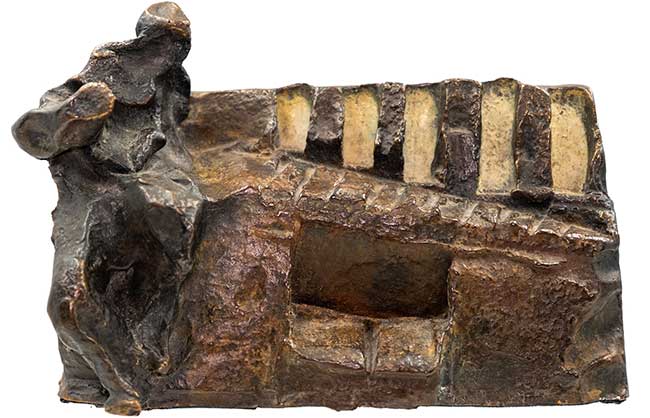
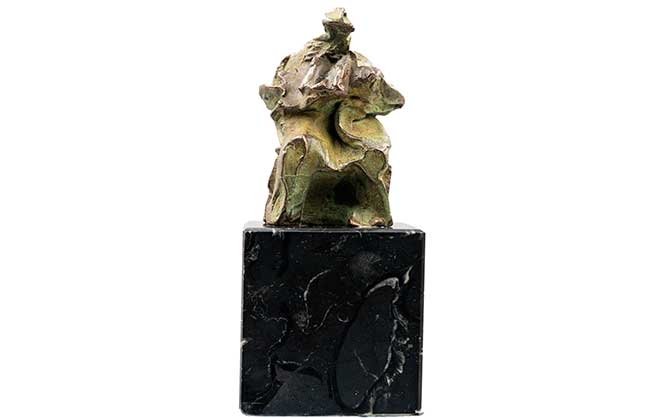
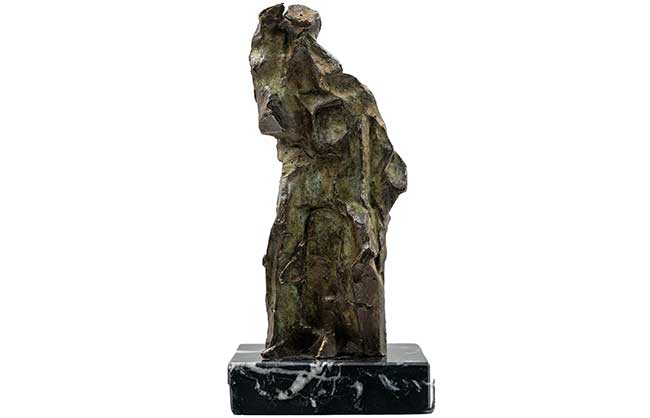
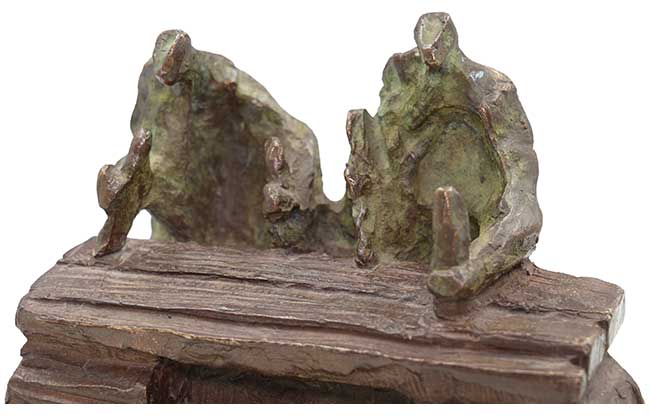
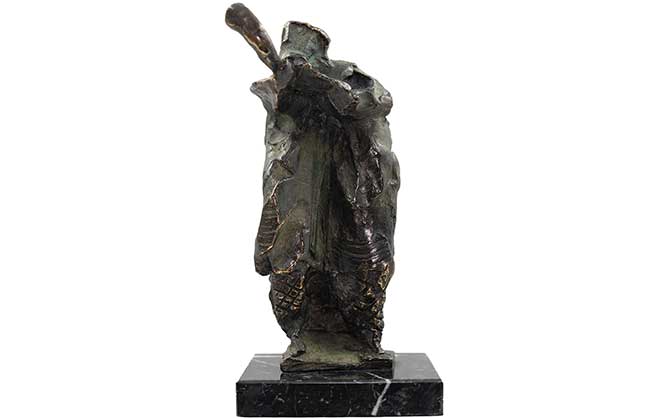
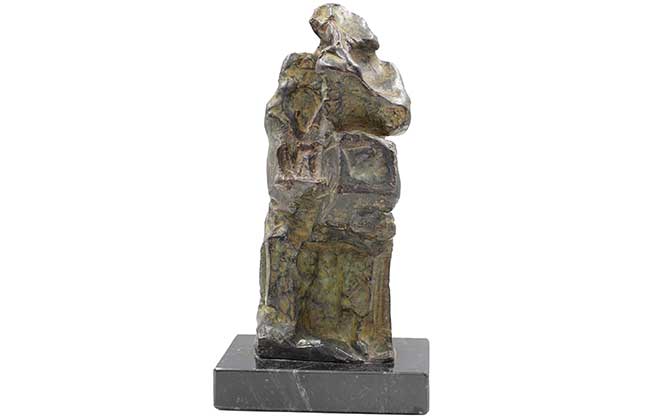
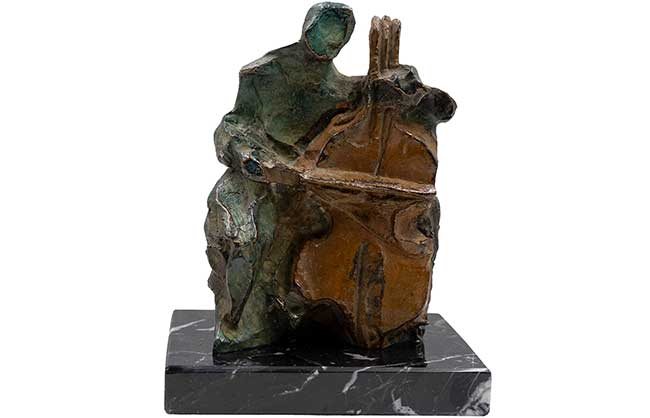
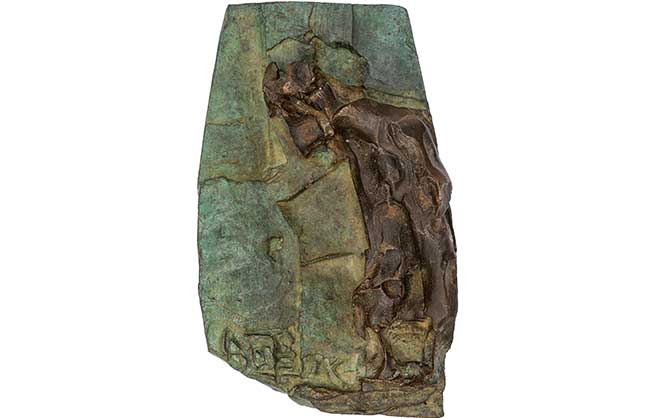
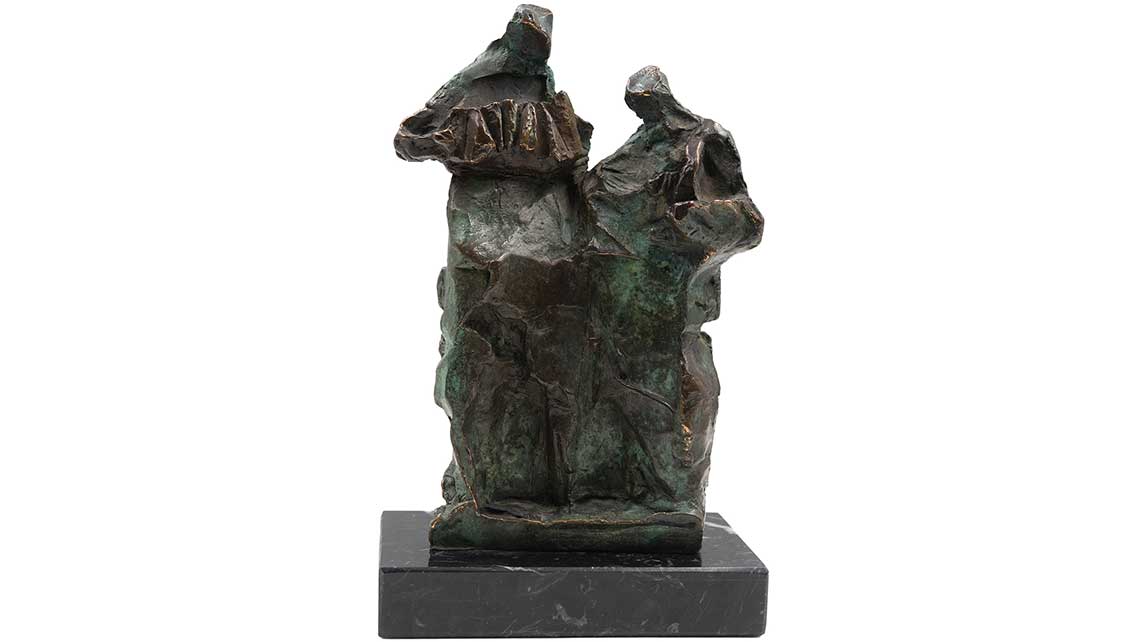
| Characteristics: | Trikititxa is a freestanding bronze sculpture composed of two standing figures brought together in a compact, strongly vertical arrangement. The musician on the left holds a diatonic accordion, recognisable by its open bellows and by the sequence of folds that establishes much of the work’s visual rhythm. A second figure completes the musical scene. The bodies are constructed through broad planes, cavities, sharp edges and irregularly modelled surfaces. Oteiza avoids detailed anatomy and individually described faces in order to concentrate on posture, gesture and the relationship between the two performers. The dark green patina spreads unevenly across the bronze and combines with black and brown areas, as well as small coppery highlights on the most projecting parts. These chromatic variations emphasise the accordion bellows, define the heads and reveal the changing directions of the sculptural mass. The group rests on a base integrated into the casting and, in turn, on a rectangular plinth of black marble. The polished surface of the stone creates a precise contrast with the fractured, organic texture of the bronze. |
| Artwork: |
Click to enlarge |
| Description: |
In Trikititxa, Antonio Oteiza turns to one of the most recognisable expressions of Basque musical culture. Traditionally associated with the diatonic accordion and with music performed at festivals, pilgrimages and popular gatherings, the trikitixa is not presented here as a picturesque scene. The sculptor begins with a familiar reality in order to construct a contemporary image of shared identity. The composition is organised around two human presences rising from a common base. Although each performer retains an individual position, their bodies draw so close that they form an almost indivisible structure. Music is therefore not represented as a solitary act, but as an experience that requires listening, coordination and companionship. The accordion player dominates the left-hand side. The instrument occupies the upper part of the torso and projects forward as a broad, articulated volume. Its folds are treated as a sequence of vertical planes that make the opening and closing movement of the bellows visible. Oteiza thus translates musical action into bronze without relying on detailed naturalistic description. The second figure introduces a different rhythm. The body leans slightly and gathers around the element held in front. Rather than appearing as a secondary accompanist, this figure balances the presence of the accordion player and completes the structure of the group. The closeness between them allows the viewer to imagine a musical exchange. The faces contain very few recognisable features. The identity of the performers does not depend on individual appearance, but on their posture and on the role each one plays within the scene. Oteiza turns them into universal figures while keeping them firmly rooted in a specific cultural tradition. The work asks to be viewed from different angles. From the front, the two figures appear clearly united and the instruments draw the eye. From the sides, the viewer discovers how arms, bodies and musical volumes advance and recede, opening deep cavities. At the rear, the narrative becomes less explicit and the sculpture assumes a more compact, almost architectural character. The surface plays an essential role. Cuts, folds and rough textures capture the light unevenly, while polished edges produce warm reflections. The bronze does not present a uniform skin; it seems to vibrate, tighten and change as the viewer moves around the piece. The green patina gives depth and visually unifies the group. In the recesses it becomes darker, while on the accordion edges, the heads and certain lines of the bodies the copper tone of the metal reappears. Light therefore creates a visual cadence that supports the musical meaning of the work. The integrated base binds both figures to a shared ground. There is no physical separation between the musicians and the space they occupy: they emerge from the same material. The black marble plinth, more regular and restrained, frames the sculpture and reinforces its verticality. Antonio Oteiza succeeds in representing music through an immobile and silent material. Movement does not depend on exaggerated gestures, but on the tension between the bodies, the opening of the bellows and the fragmentation of the planes. Everything in the work seems to contain a rhythm that cannot be heard, but can be perceived visually. Trikititxa brings tradition and modernity together without reducing Basque culture to a closed folkloric image. The sculptor recognises in this music a form of gathering and belonging: a practice passed down through generations and renewed whenever people come together to play, listen and celebrate. Ultimately, the work speaks of a community that recognises itself in its own sounds. Oteiza transforms that musical memory into a solid and lasting presence, making the bronze seem to preserve the echo of a shared melody. |