Organist
| Collection: | Music in Bronze (Antonio Oteiza) |
| Author: | Fr. Antonio Oteiza |
| Inventory Number: | MCO-AO-ES-00026 |
| Type: | Sculpture |
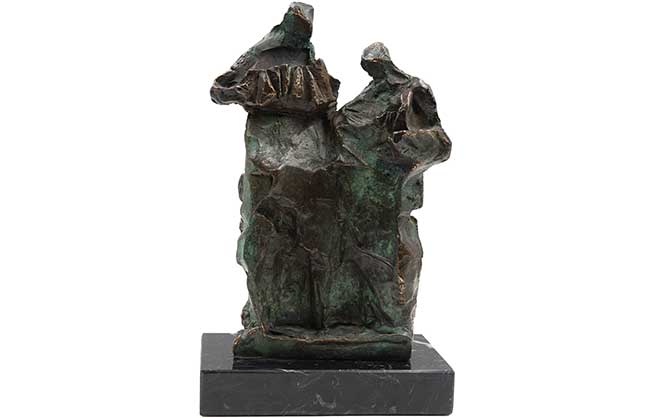
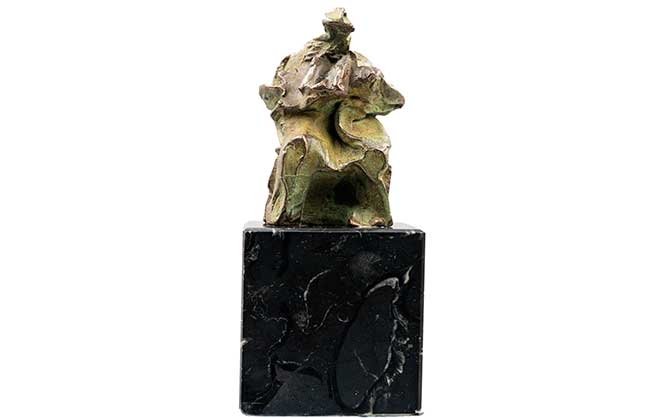
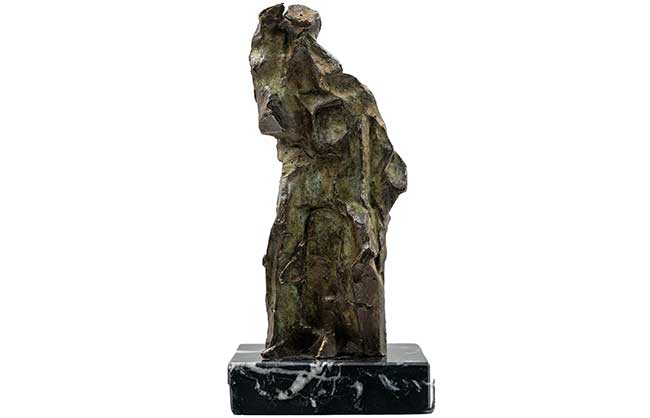
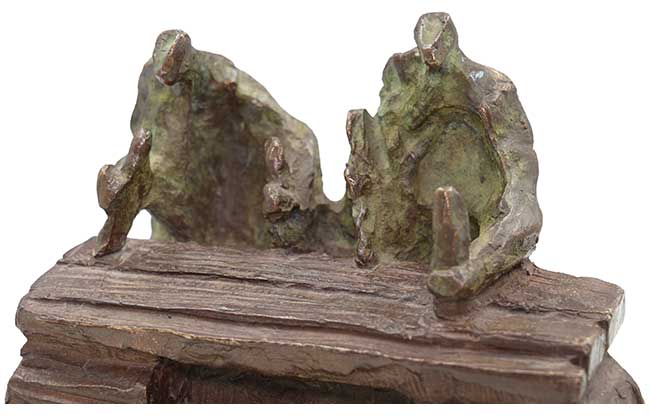
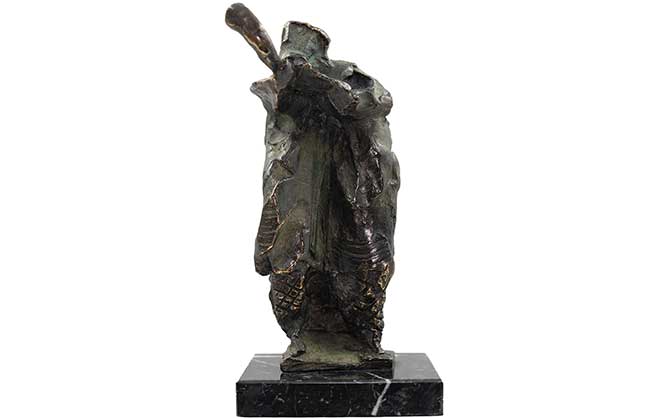
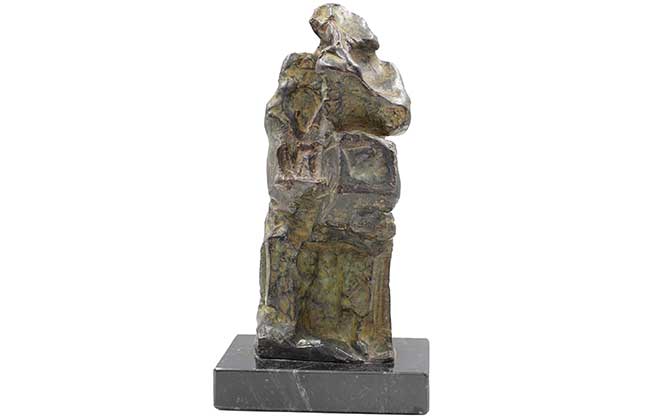
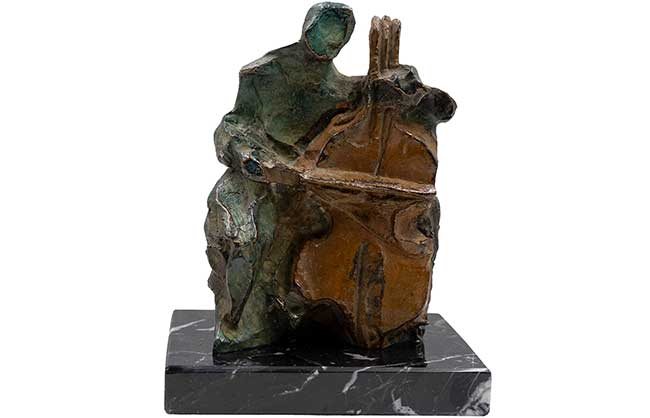
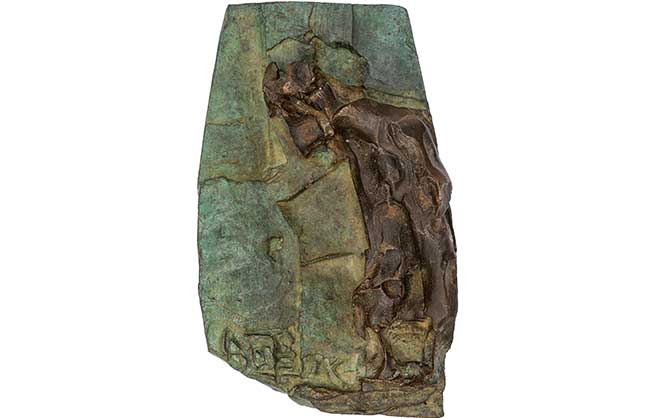
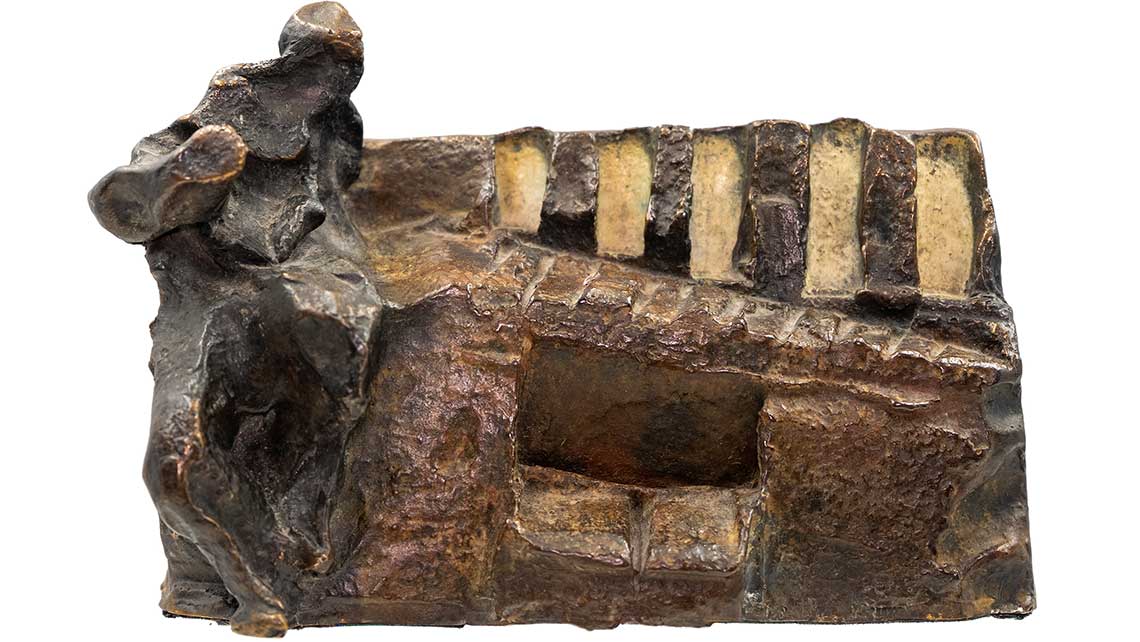
| Characteristics: | Organist is a freestanding bronze sculpture with a strongly horizontal composition. The work brings together the performer, bench, keyboard, organ case and broad rear panel within a single casting. The human figure occupies one end of the composition. Seated and leaning forward, he directs his head and arms towards the keys. Against the irregular anatomy and rough surfaces of the instrument, the keyboard introduces an ordered sequence of light and dark bands that establishes the visual rhythm of the work. The organ case is built from rectangular volumes, stepped planes, cavities and textured surfaces. At the rear, a large panel closes the structure and transforms the narrative scene visible from the front into an almost architectural mass. The patina combines deep browns, earth tones, dark areas and coppery highlights. The keys, differentiated through lighter and darker tones, draw the eye and make the musical nature of the scene immediately recognisable. |
| Artwork: |
Click to enlarge |
| Description: |
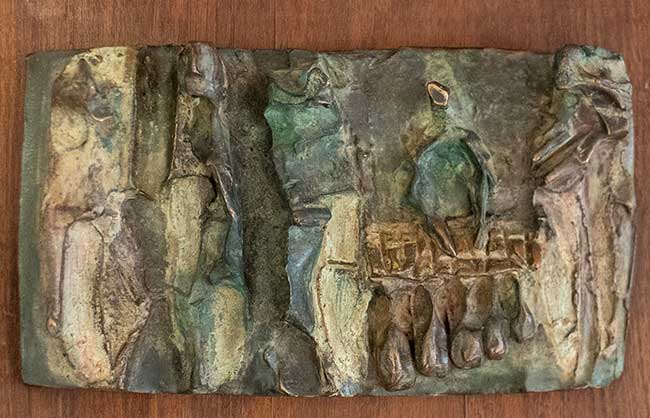
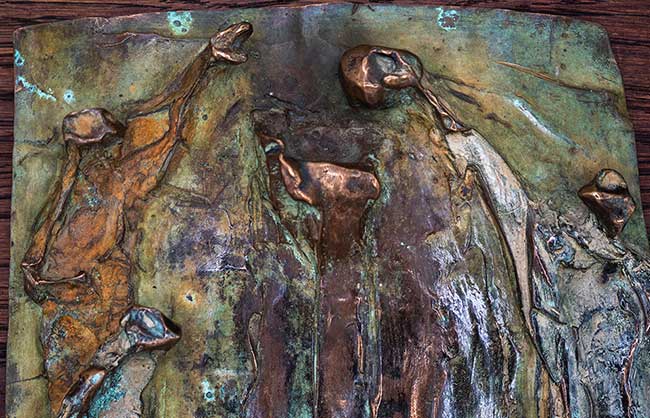
Antonio Oteiza does not present the organist as an isolated figure seated before an instrument. He creates a much more intense relationship: the musician seems to have been absorbed into the organ itself. Bench, body, hands, keyboard and case interlock to form a single sculptural unit. The performer’s posture is essential to this effect. Seated at one end of the work, he bends towards the keyboard with complete attention. The head follows the direction of the keys, while the arms extend the movement of the torso. No gesture is addressed to the viewer. Everything takes place within the intimate space established between musician and instrument. Oteiza reduces the anatomy to forceful volumes, broken contours and highly concentrated areas of material. The hands are not described with naturalistic precision, yet their direction is enough to make the action visible. The figure is recognised less through individual features than through the way he inhabits the space and surrenders himself to the act of playing. The keyboard introduces a different kind of order. The alternation of light and dark keys creates a regular sequence within a composition otherwise dominated by rough and unpredictable surfaces. This repetition acts as a sculptural rhythm: a visual progression that evokes musical measure and structure without attempting to represent sound literally. The organ case carries a weight comparable to that of the human figure. It is not a mere accessory used to explain the scene, but a true architecture within the sculpture. Its planes, openings and stepped forms create the space that receives the performer and governs his movements. The rear view expands this interpretation. From that angle, the keyboard and much of the narrative visible at the front disappear. The organ’s back panel emerges as a large, closed, compact and almost abstract surface. As the viewer moves around the sculpture, the work changes fundamentally: from one viewpoint it shows a musician at work; from another it becomes a silent block whose interior remains concealed. This double condition is one of the work’s greatest achievements. Organist can be read as a recognisable scene, but also as an investigation into volume, space and the relationship between body and architecture. Oteiza preserves the humanity of the subject without allowing anecdote to limit the sculptural independence of the whole. The surface retains incisions, folds, cracks and accumulations that make the energy of the modelling visible. The material seems to advance and withdraw, as though the sculpture had been structured through tensions comparable to those of a musical composition. Against this irregularity, the keyboard acts as an ordering measure. The patina deepens the contrast. Browns and copper tones envelop musician and instrument within a shared atmosphere, while the keys introduce a lighter zone. The eye moves from the inclined body to the hands and then follows the rhythmic progression of the keyboard. The organ also possesses a singular spatial dimension. Unlike many instruments, its sound does not remain close to the performer: it expands and occupies the architecture that contains it. Oteiza condenses this relationship into a small-scale sculpture while granting the instrument an almost monumental presence. Within a religious setting, the organist performs a role that is not intended to occupy the centre of the celebration, but to sustain and accompany it. Oteiza’s figure seems to reflect that attitude. The musician remains partly concealed, submits to the scale of the instrument and concentrates on a task that reaches fulfilment only when the sound is offered to others. The sculpture contains a particularly powerful paradox: it represents music through a silent material. Neither air, vibration nor melody is visible, yet everything needed to imagine them is present. The inclination of the body, the closeness of the hands and the sequence of the keys place the viewer in the instant immediately before sound. Organist transforms musical performance into an experience of discipline, listening and self-giving. Antonio Oteiza gives form to what cannot be seen and makes a mass of bronze seem to hold within it a music still suspended. |