Bullfighters. Paseíllo
| Collection: | Trades in Bronze (Antonio Oteiza) |
| Author: | Fr. Antonio Oteiza |
| Inventory Number: | MCO-AO-ES-00048 |
| Type: | Relief |
| Location: | Cataloguing Room |
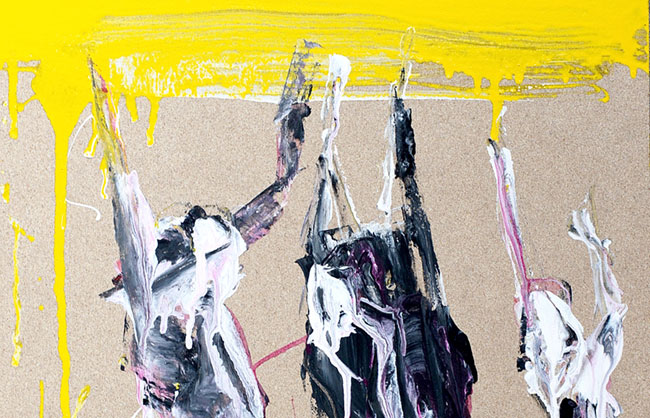
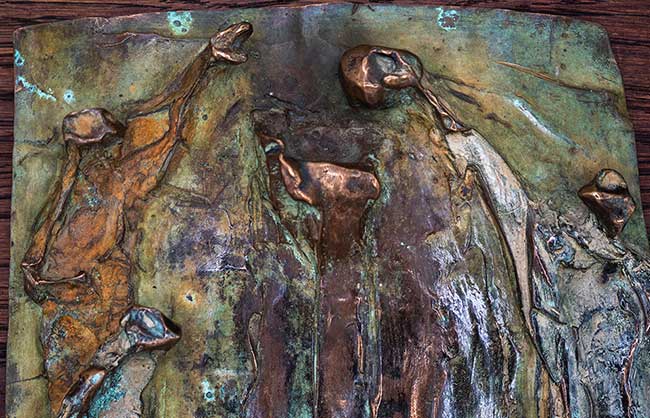
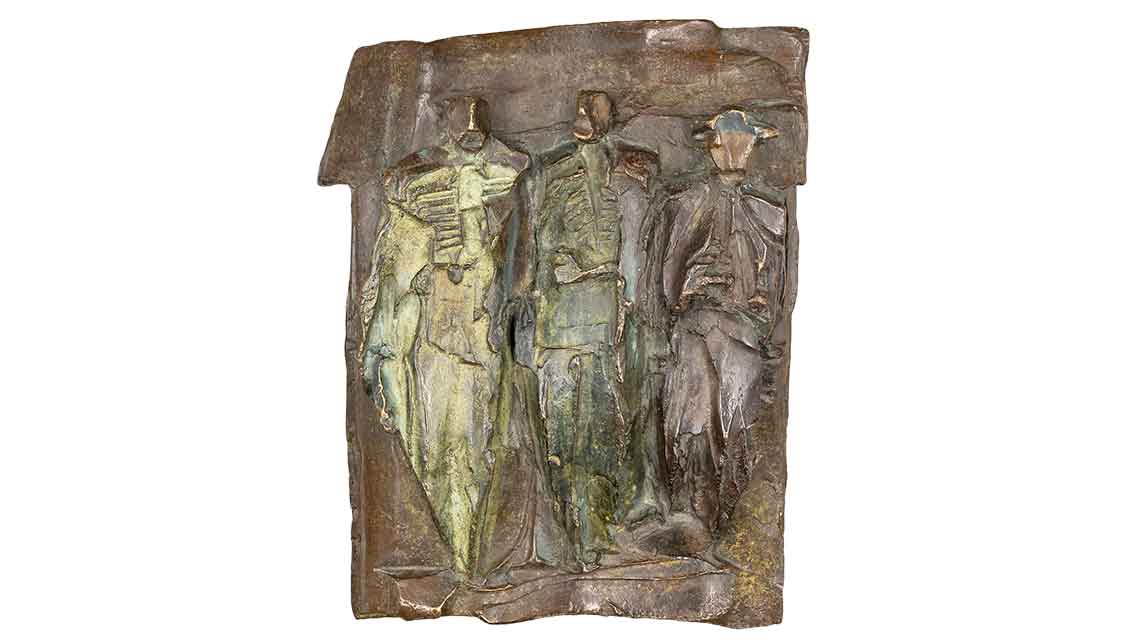
| Characteristics: | Bullfighters. Paseíllo is a vertical relief composed of three male figures shown frontally. Their elongated bodies stand close together, occupying almost the entire surface and forming a compact group governed by a shared vertical rhythm. The bullfighters’ clothing is built through incised lines, overlapping planes and strongly modelled folds. A patina of green, brown and grey tones, enlivened by copper highlights, distinguishes each figure without breaking the unity of the group. The montera worn by the figure on the right is the clearest identifying feature of the scene. |
| Artwork: |
Click to enlarge |
| Description: |
The paseíllo is one of the most ceremonial moments of a bullfight. The action has not yet begun, but the arena is already watching. The bullfighters enter the ring in a prescribed order, presenting themselves before the public in a brief procession where ritual dignity and the tension of what is about to happen coexist. Antonio Oteiza chooses precisely this suspended moment. He does not depict the encounter with the bull or seek dramatic movement. Instead, he places three men before the viewer, advancing together while remaining contained within their costumes and their public role. Their closeness creates a strong collective presence, although each figure retains its own posture, colour and sculptural character. The central figure stabilises the composition. To the left, a lighter and more slender bullfighter introduces a restrained sense of movement through the bent arm and the linear structure of the jacket. On the right, the third figure appears more enclosed and visually weighty, an effect reinforced by the darker tones and the montera. Oteiza does not reproduce the embroidery of the traje de luces in minute detail. He translates it into lines, grooves and small raised forms that structure the torsos. The costume therefore becomes more than a descriptive element: it forms part of the architecture of the figures and intensifies their upright, ceremonial presence. The faces are only lightly defined. There are no portraits or individual identities; what matters is the attitude of men entering the arena fully aware that every gaze is fixed upon them. Their frontal position brings them close to the viewer and turns the procession into a silent presentation. In Bullfighters. Paseíllo, the power of the work lies not in action, but in anticipation. The relief preserves the moment when ritual still contains fear, responsibility and courage within an ordered form, just before the uncertainty of the arena begins. |