Espadrille Maker
| Collection: | Trades in Bronze (Antonio Oteiza) |
| Author: | Fr. Antonio Oteiza |
| Inventory Number: | MCO-AO-ES-00064 |
| Type: | Sculpture |
| Location: | Cataloguing Room |
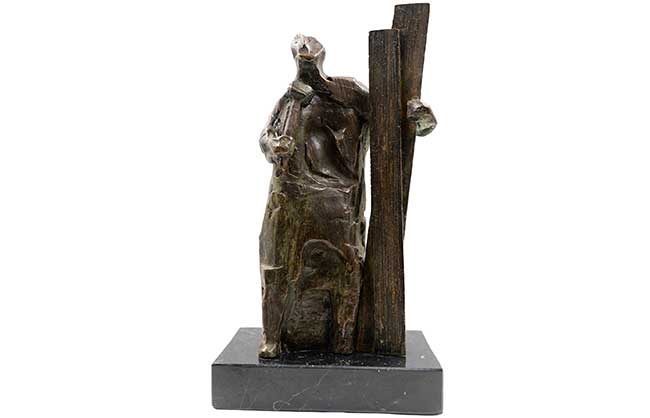
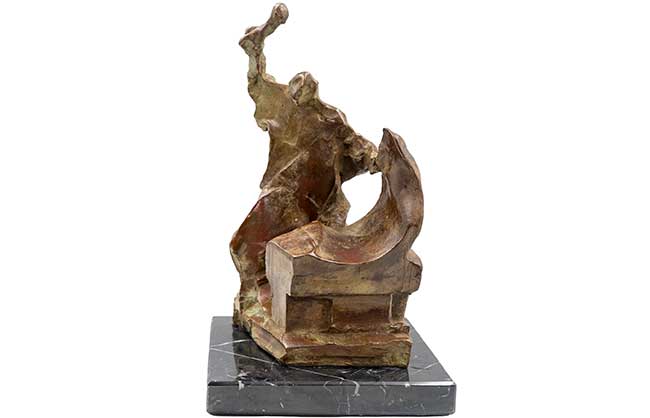
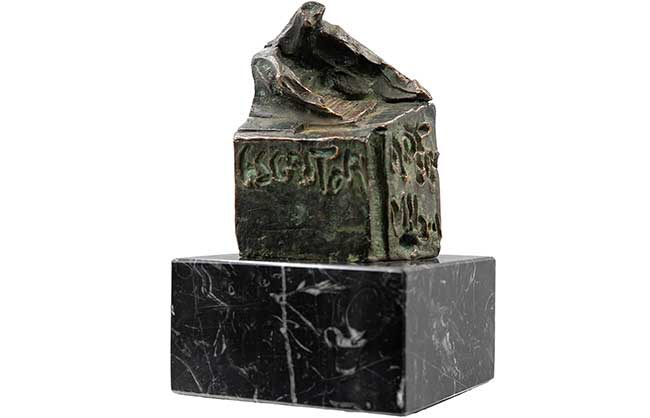
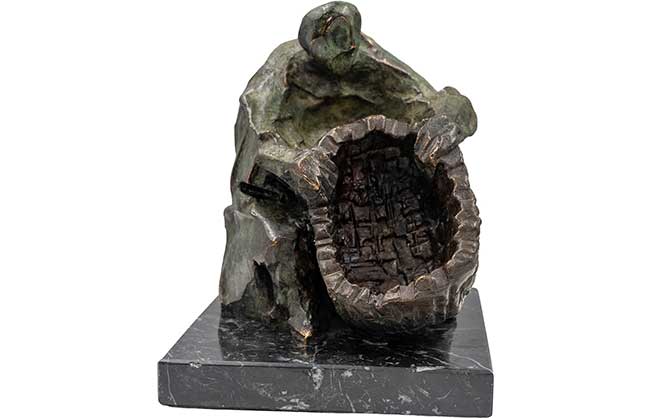
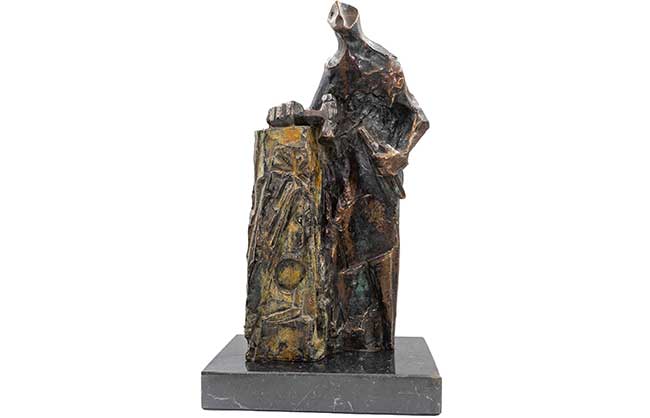
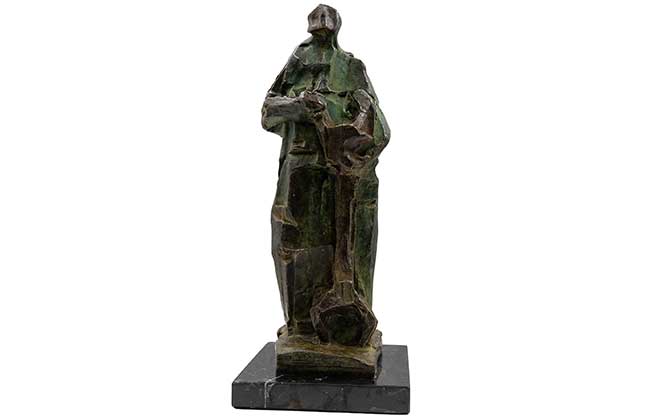
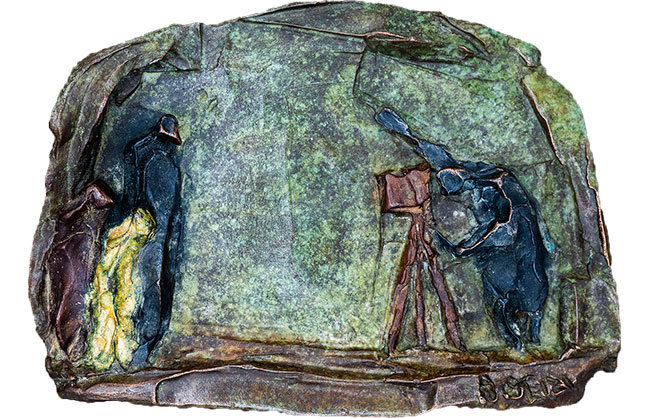
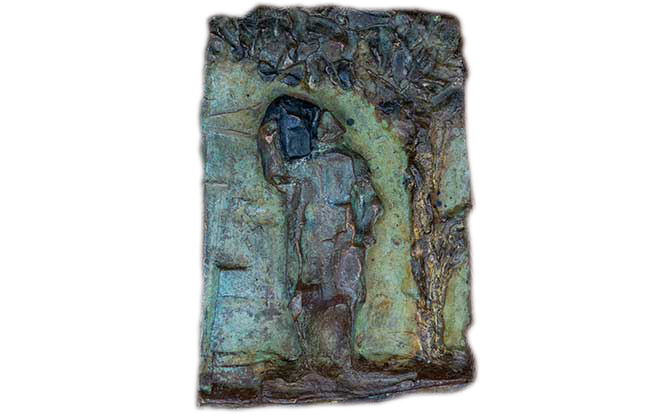
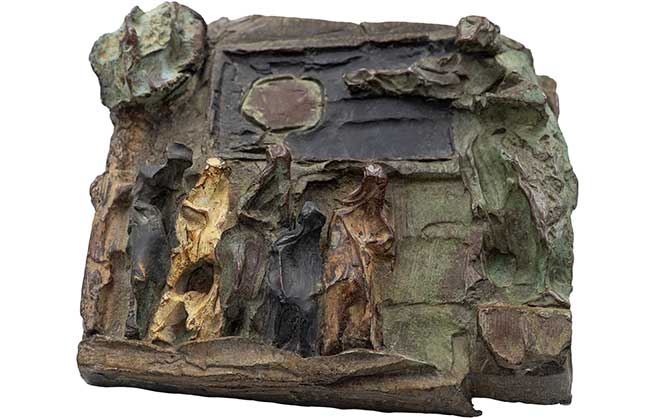
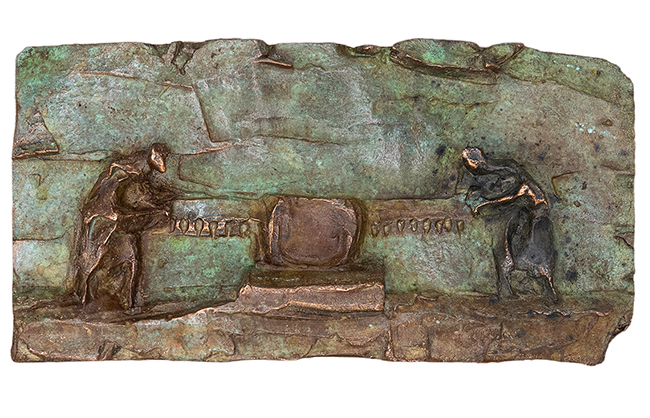
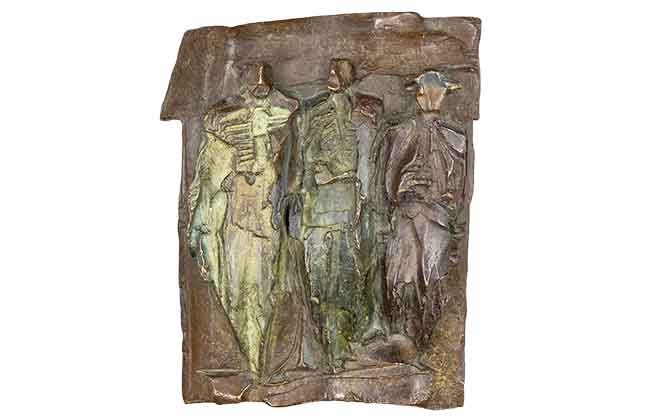
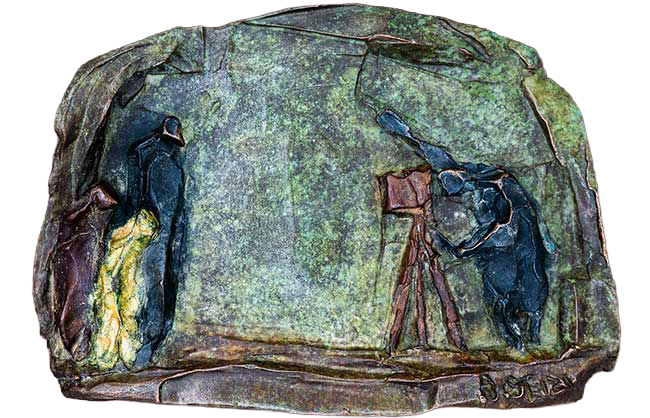
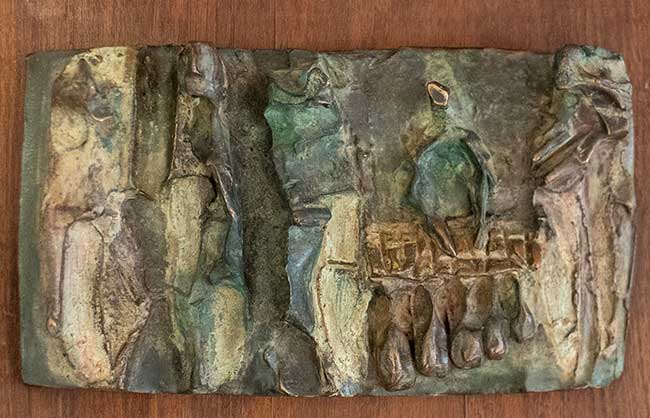
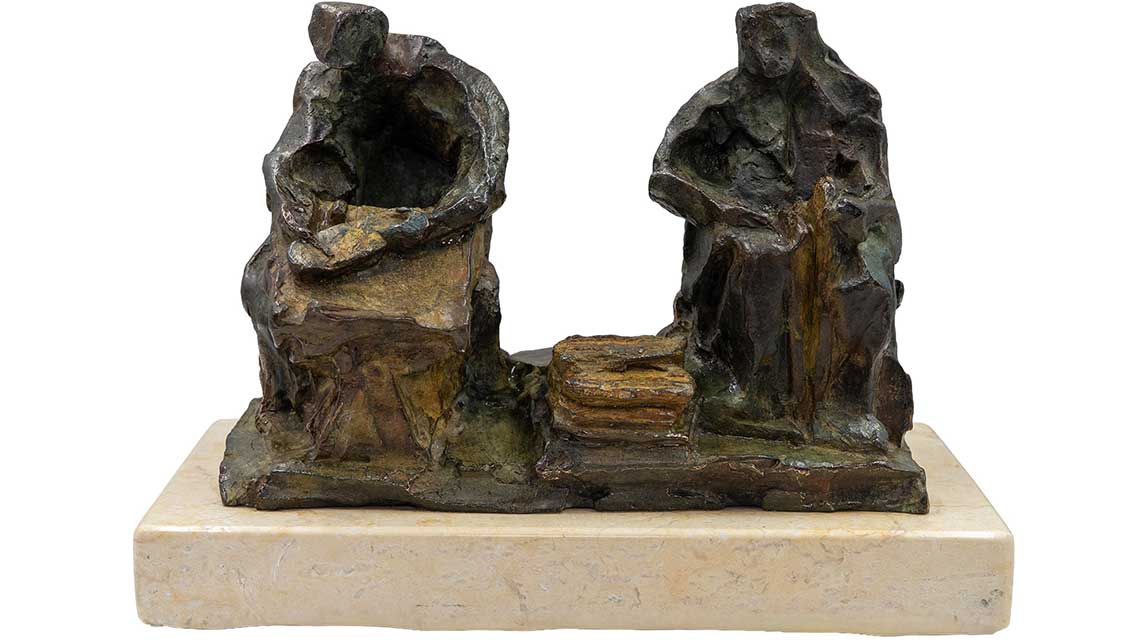
| Characteristics: | Bronze sculpture with a broad horizontal composition featuring two seated figures at separate workstations. A small pile of finished espadrilles occupies the centre of the scene, identifying the trade while visually linking both craftsmen. Oteiza builds the figures through compact masses, angular planes and deeply carved voids, deliberately avoiding detailed facial features or anatomical realism. The patina combines dark browns, greens and blacks with warmer ochre and golden highlights, particularly visible on the work surfaces and the finished footwear. The sculpture is displayed on a rectangular polished cream-coloured marble base. |
| Artwork: |
Click to enlarge |
| Audio Guide: | |
| Description: |
Rather than depicting a workshop as a simple setting, Antonio Oteiza transforms every element into part of the sculpture itself. The figures, their workbenches and the finished espadrilles are conceived as a single composition, where each form contributes to the balance of the whole. The two craftsmen face one another without interacting directly. Their postures suggest quiet concentration rather than movement or narrative action. Oteiza strips away individual identity, reducing the human body to essential volumes and bold structural forms. What remains is not the portrait of two specific people, but a timeless image of craftsmanship itself. At the centre of the composition lies a modest stack of espadrilles. Although small in scale, it plays a crucial visual role. It marks the purpose of the workshop and provides a subtle connection between both artisans. Its warmer tones stand out against the darker bronze of the surrounding figures, naturally drawing the viewer's attention to the product of many careful hours of work. As the sculpture is viewed from different angles, light begins to animate its interior spaces. Deep recesses, irregular surfaces and the gaps between the figures create shifting contrasts of light and shadow, allowing the composition to reveal new relationships from every viewpoint. With Espadrille Maker, Oteiza moves beyond the simple representation of a traditional trade. He reflects on the value of shared knowledge, the quiet dignity of manual work and the continuity of skills passed from one generation to the next. The sculpture reminds us that behind even the simplest handcrafted object lies time, experience and an enduring dialogue between human hands and their craft. |