Saint Ignatius before the Virgin of Arantzazu
| Collection: | Saints in Bronze (Antonio Oteiza) |
| Author: | Fr. Antonio Oteiza |
| Inventory Number: | MCO-AO-ES-00007 |
| Type: | Sculpture |
| Location: | Cataloguing Room |
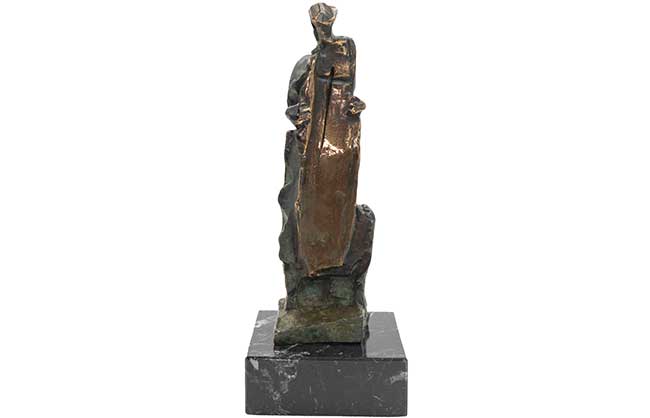
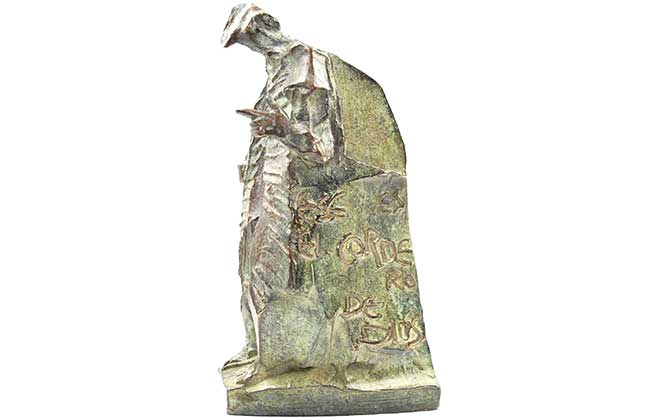
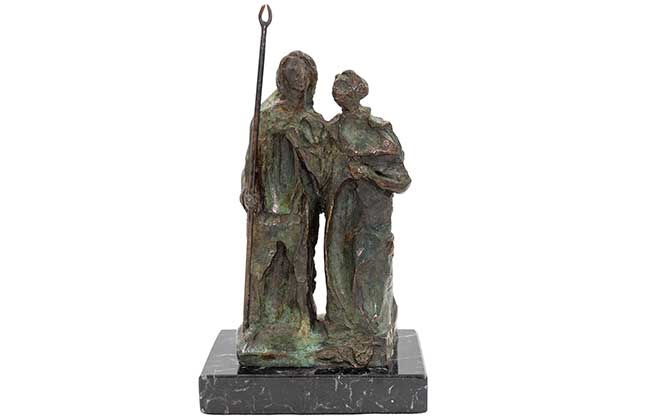
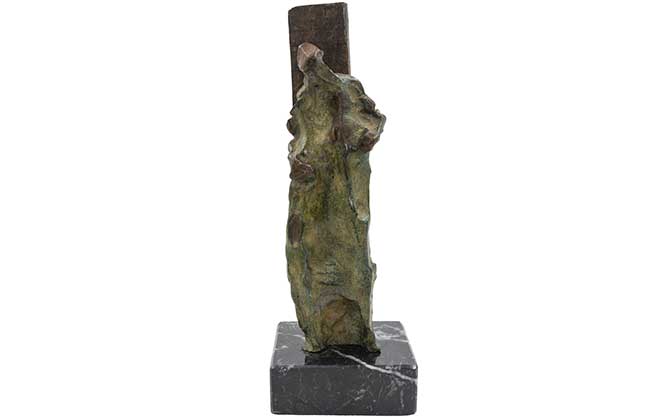
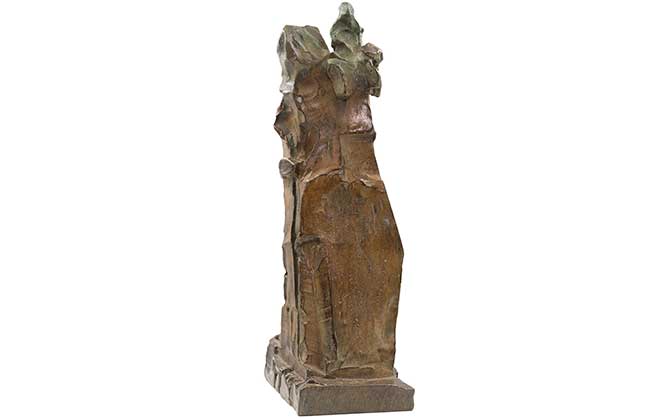
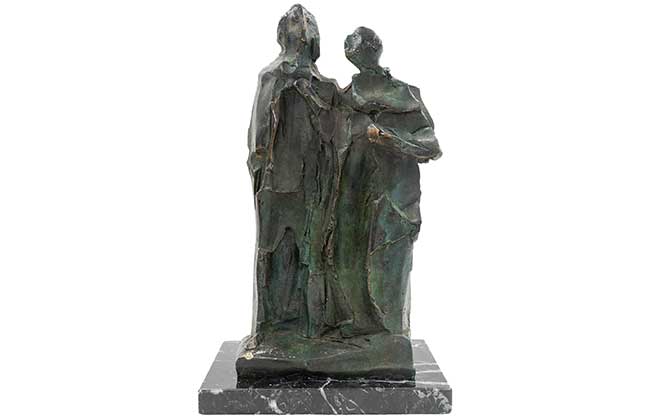
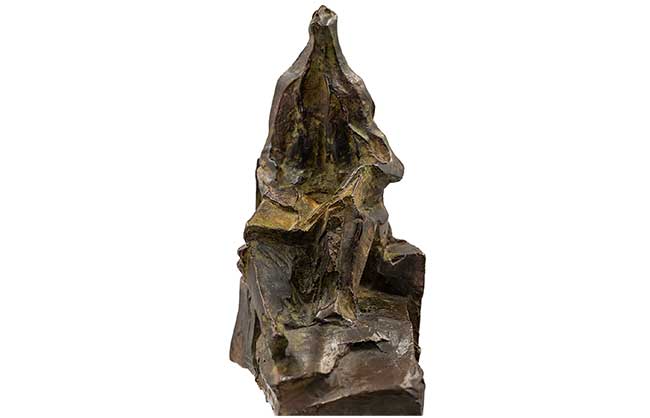
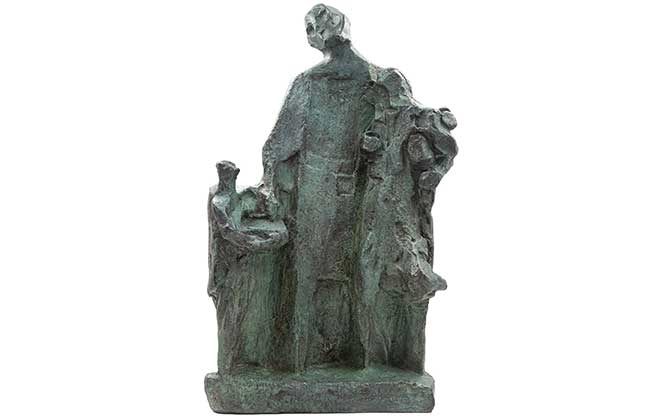
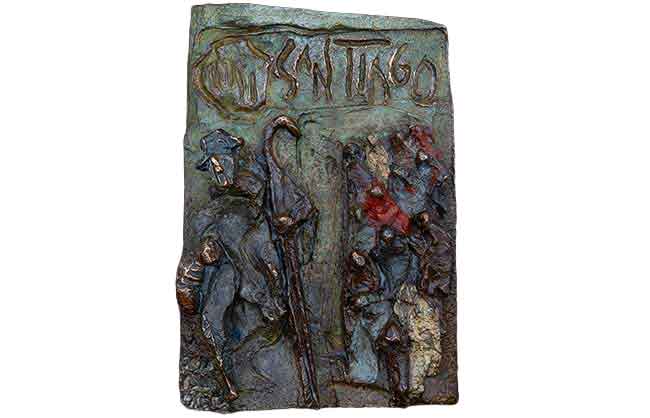
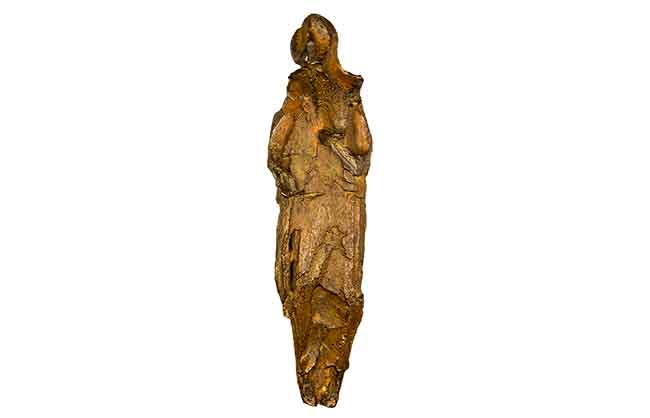
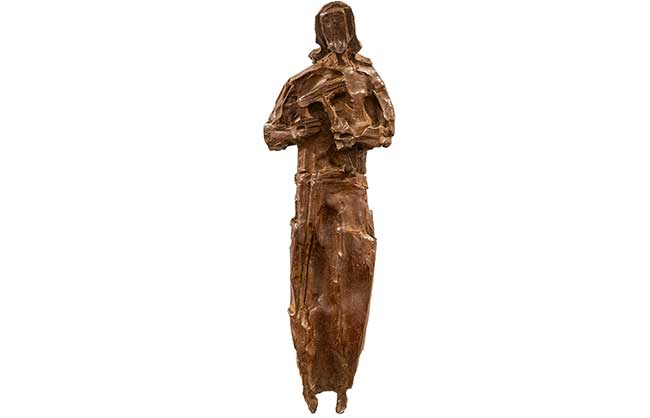
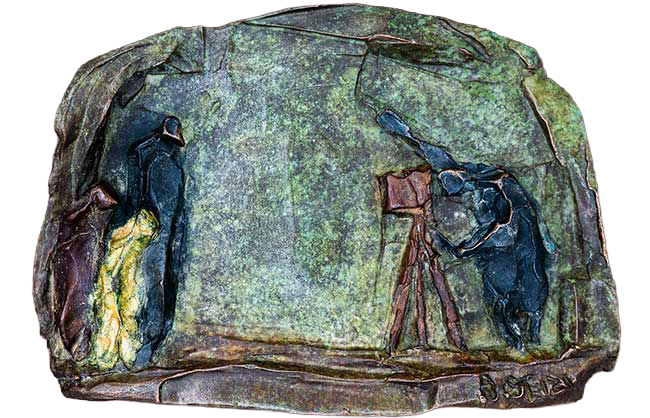
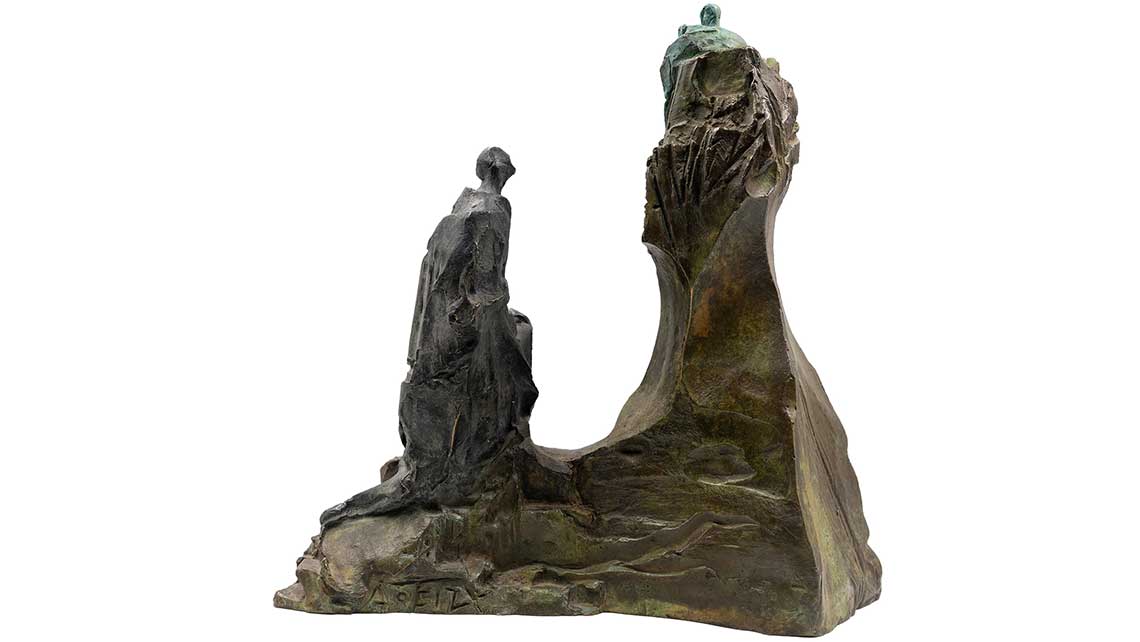
| Characteristics: | Saint Ignatius before the Virgin of Arantzazu is a freestanding bronze sculpture conceived in 1991 and cast in 2002. Its open, asymmetrical composition is organised around two opposing sculptural centres: the upright figure of Saint Ignatius and the taller structure associated with the Virgin and her sacred setting. The patina is complex and varied, combining brown, ochre and green tones. Saint Ignatius is rendered in a much darker register, almost black, while the opposing form includes stronger greens and a denser interplay of planes, cavities and incisions. The irregular base is integrated into the bronze itself and forms part of the represented space. |
| Artwork: |
Click to enlarge |
| Description: |
Antonio Oteiza does not depict prayer through an obvious gesture. Saint Ignatius is not shown kneeling, and the scene avoids conventional religious storytelling. His attitude is conveyed through the verticality of the body, the direction of the head and the distance separating him from the Virgin. That distance is essential: the space between the two figures is not empty, but charged with meaning. The composition depends on the contrast of scale. Ignatius appears slender, sober and unmistakably human. Opposite him, the form associated with the Virgin rises with an almost architectural force, built from folds, hollows, projections and deeply worked surfaces. The difference in scale does not diminish the saint; it makes visible the magnitude of the spiritual experience before him. The central void directs the viewer’s gaze and structures the relationship between the two presences. There is no physical contact, yet their mutual orientation creates a powerful inner tension. Oteiza turns space itself into an active sculptural element: it becomes a sign of reverence, revelation and communication without words. The work changes significantly as the viewer moves around it. From the front, the encounter between the two figures is immediately legible. From the sides, the larger form reveals a far more complex structure of concave planes, deep reliefs and sculptural recesses that suggest both an apparition and a form of sacred architecture. This shifting three-dimensional experience is one of the sculpture’s central strengths. The patina also helps establish the hierarchy of the scene. The darkness of Saint Ignatius reinforces his inwardness, while the greens and ochres of the monumental form catch the light and intensify its exceptional presence. The bronze does not simply describe a devotional image; it creates a spiritual territory in which matter, emptiness and scale express the mystery of the encounter. Saint Ignatius before the Virgin of Arantzazu belongs to a central line in Antonio Oteiza’s religious sculpture: one in which the work does not illustrate an episode, but seeks to make an inner experience visible. Here, prayer is not narrated. It becomes space, presence and silence. |