Saint Francis and Saint Ignatius
| Collection: | Saints in Bronze (Antonio Oteiza) |
| Author: | Fr. Antonio Oteiza |
| Inventory Number: | MCO-AO-ES-00032 |
| Type: | Sculpture |
| Location: | Cataloguing Room |
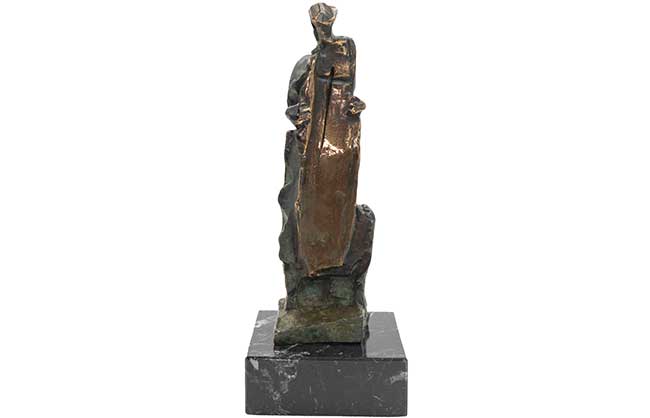
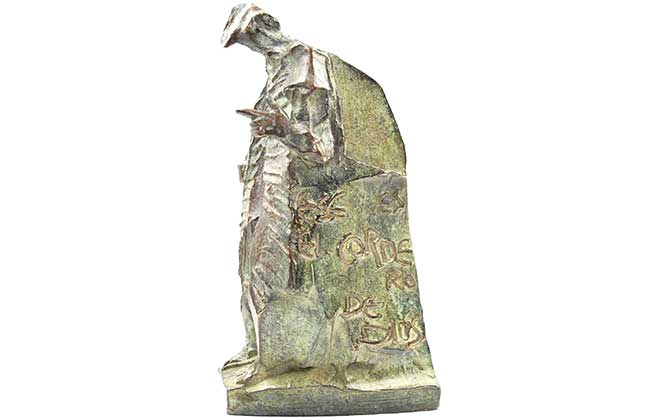
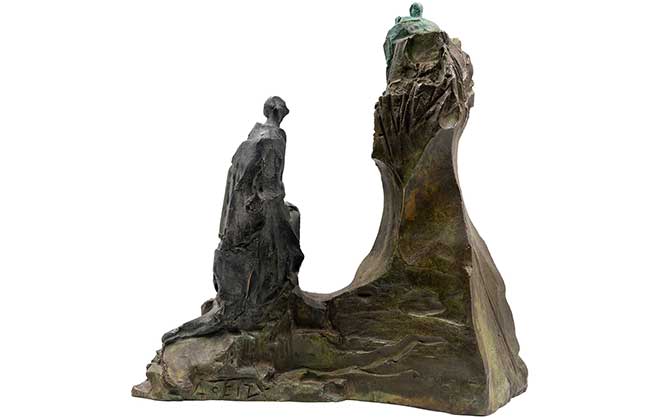
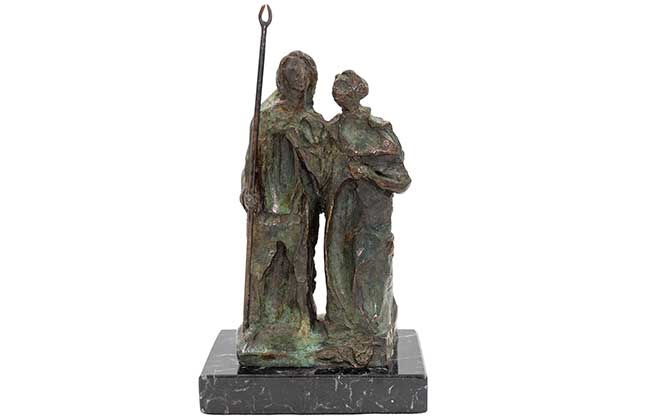
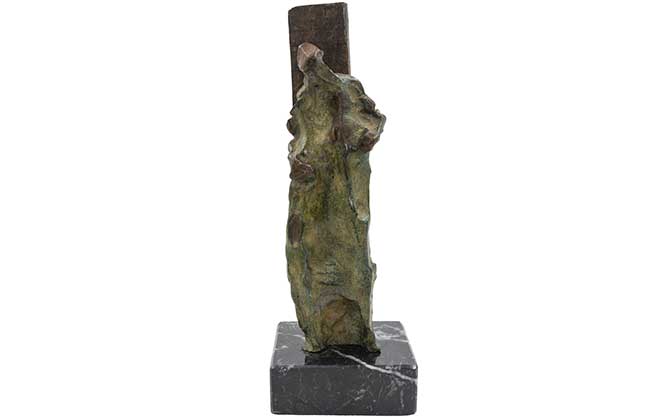
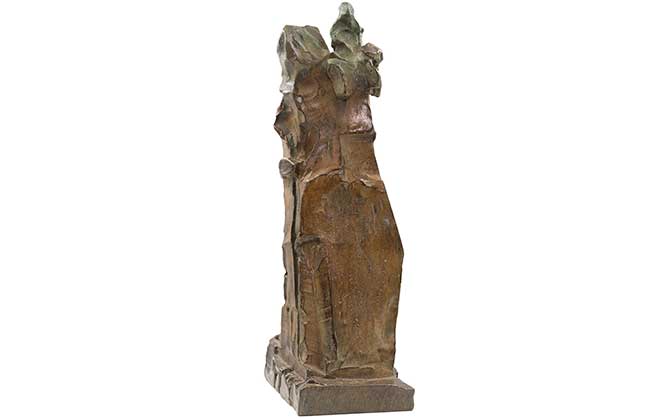
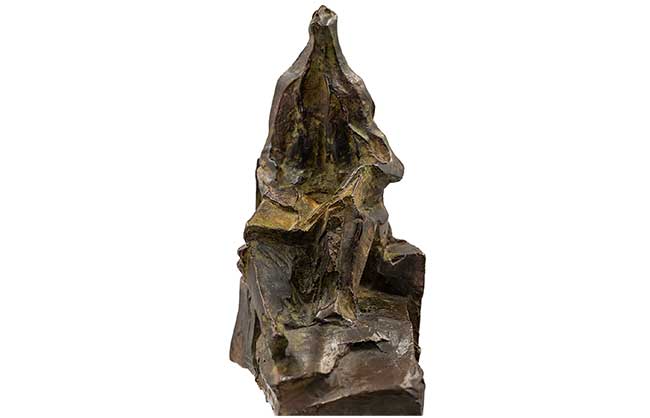
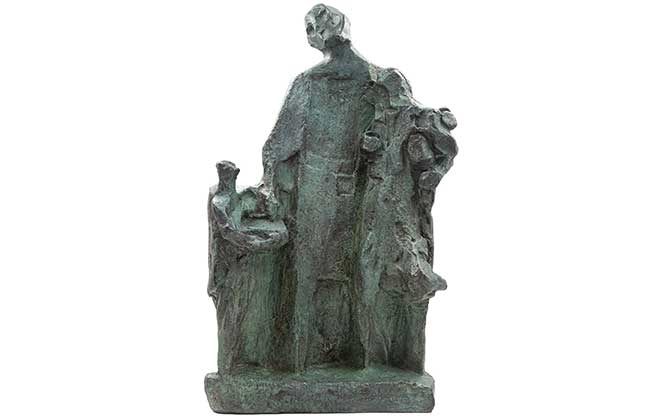
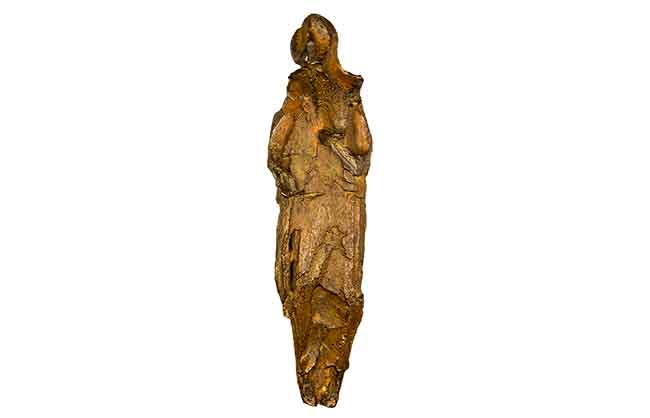
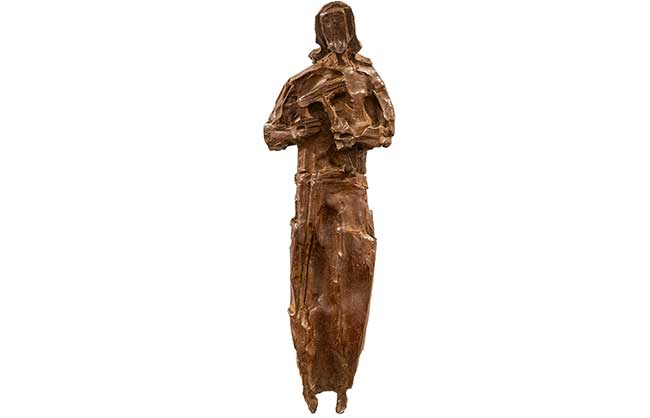
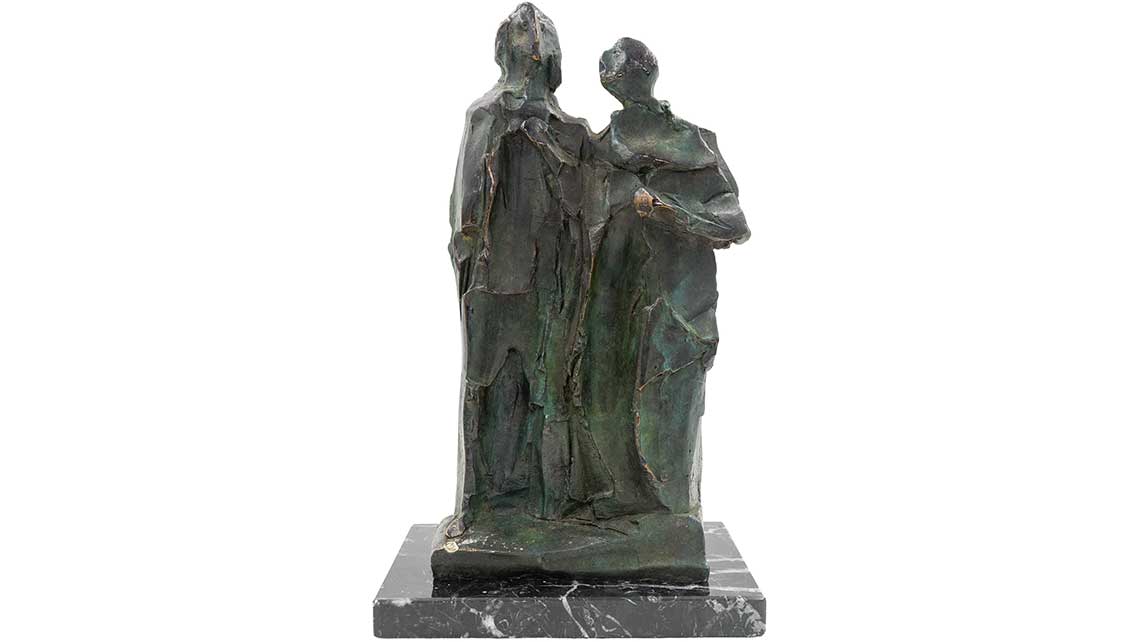
| Characteristics: | Saint Francis and Saint Ignatius is a freestanding bronze sculpture composed of two standing male figures arranged as a compact, strongly vertical group. Their bodies draw close, the shoulders nearly touch, and the heads turn towards one another, giving the work the character of a quiet conversation. The anatomy is reduced to broad masses and essential planes. The long garments descend towards the integrated bronze base, visually anchoring both figures to the same ground. A dark green patina, enriched by brown undertones and warmer bronze highlights on the faces, hands and projecting edges, strengthens the unity of the composition. The figure identified with Saint Ignatius holds a rectangular form before the body, which may be read as a book. Saint Francis appears more austere and less dependent on attributes. The bronze group rests on an integrated base and a separate black marble plinth. |
| Artwork: |
Click to enlarge |
| Description: |
Francis of Assisi and Ignatius of Loyola lived in different centuries and could never have met. Oteiza is therefore not reconstructing a historical episode. He imagines a symbolic encounter between two of the most influential spiritual traditions in the history of the Church. Francis represents a radical return to the Gospel through poverty, fraternity and closeness to the most vulnerable. As founder of the Order of Friars Minor, he is also the spiritual root of the wider Franciscan family, including the Capuchins. Ignatius, founder of the Society of Jesus, embodies discernment, disciplined inner formation and readiness for mission. Oteiza does not place these traditions in opposition. He brings the figures so close that they become part of the same sculptural structure. One arm reaches towards the neighbouring figure and seems to rest upon the shoulder. This restrained contact transforms simple proximity into trust and mutual acknowledgement. The two saints are not distinguished through portrait likeness. Their faces remain highly simplified, and the garments are built from broken surfaces, vertical masses and irregular folds. Identity emerges instead through posture, the direction of the heads, the relationship between the bodies and the possible attributes associated with each figure. The book-like form held by Ignatius suggests reflection, teaching and spiritual discernment. Francis, more stripped back in appearance, is associated with simplicity, poverty and fraternity. Yet Oteiza establishes no hierarchy between them. He presents two different charisms meeting within a shared vocation of service. The narrow space between the figures is crucial. It preserves their individuality while concentrating the tension of the encounter. From the side, shoulders, arms and garments approach one another without fully merging, allowing the void itself to participate in the dialogue. Saint Francis and Saint Ignatius is neither a historical illustration nor a fixed allegory. It is a contemporary image of dialogue: two distinct spiritual paths remain recognisable, yet converge in a common commitment to faith, mission and service. |