Saint John the Baptist
| Collection: | Saints in Bronze (Antonio Oteiza) |
| Author: | Fr. Antonio Oteiza |
| Inventory Number: | MCO-AO-ES-00005 |
| Type: | Sculpture |
| Location: | Cataloguing Room |
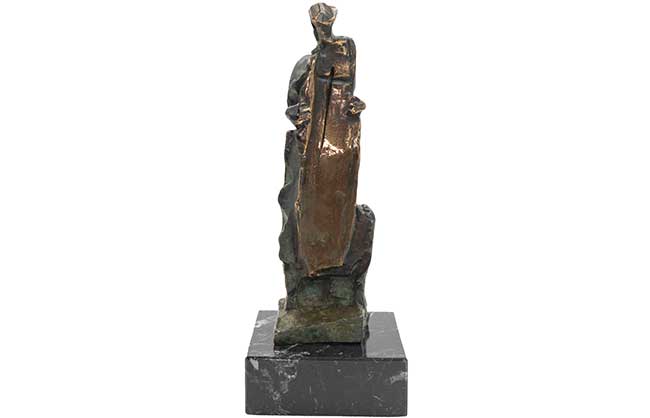
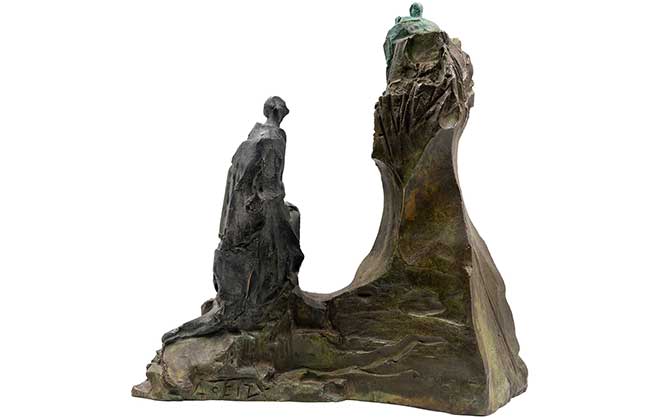
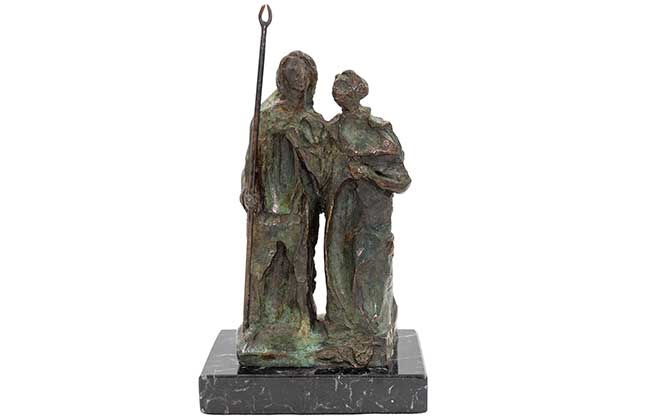
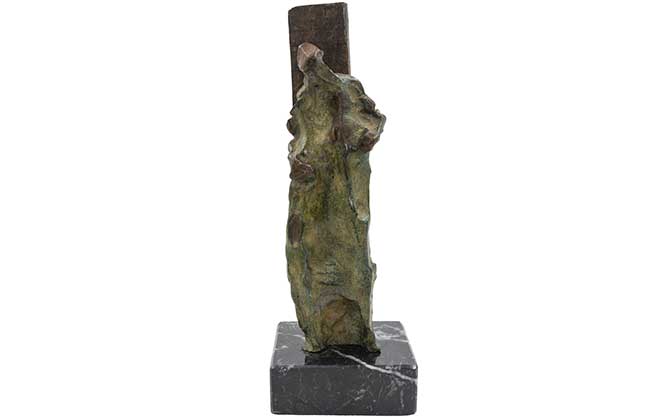
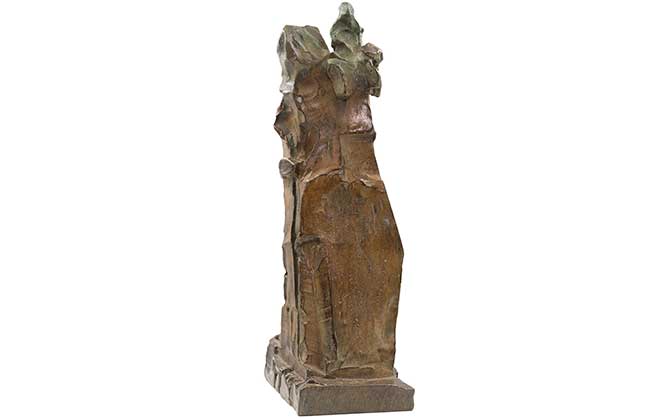
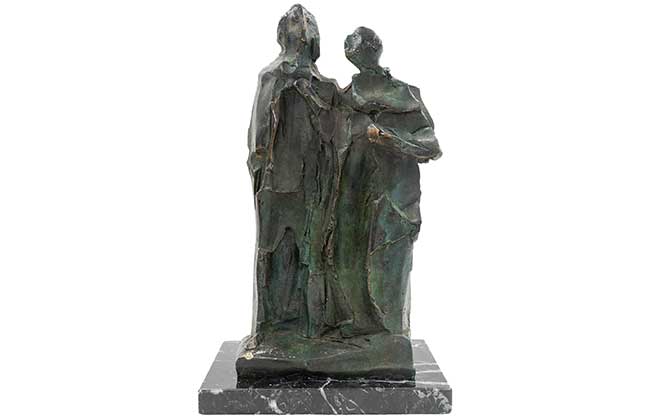
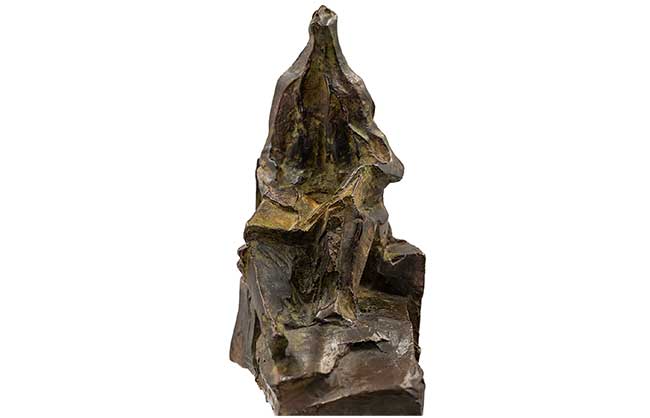
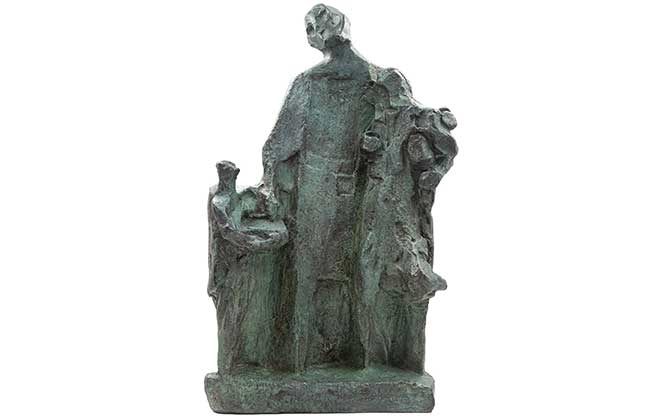
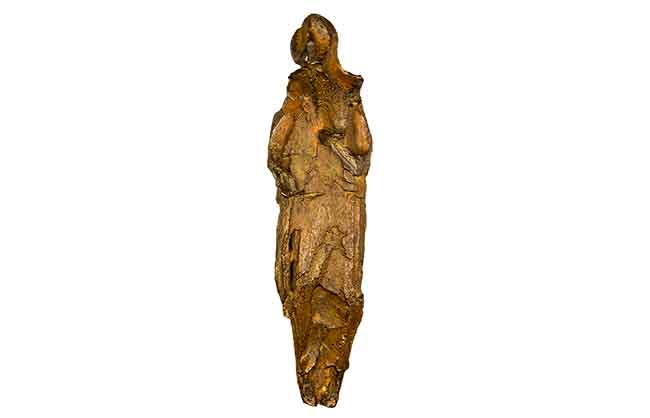
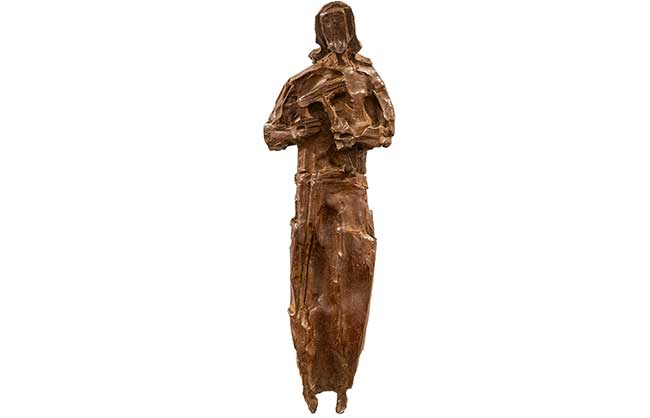
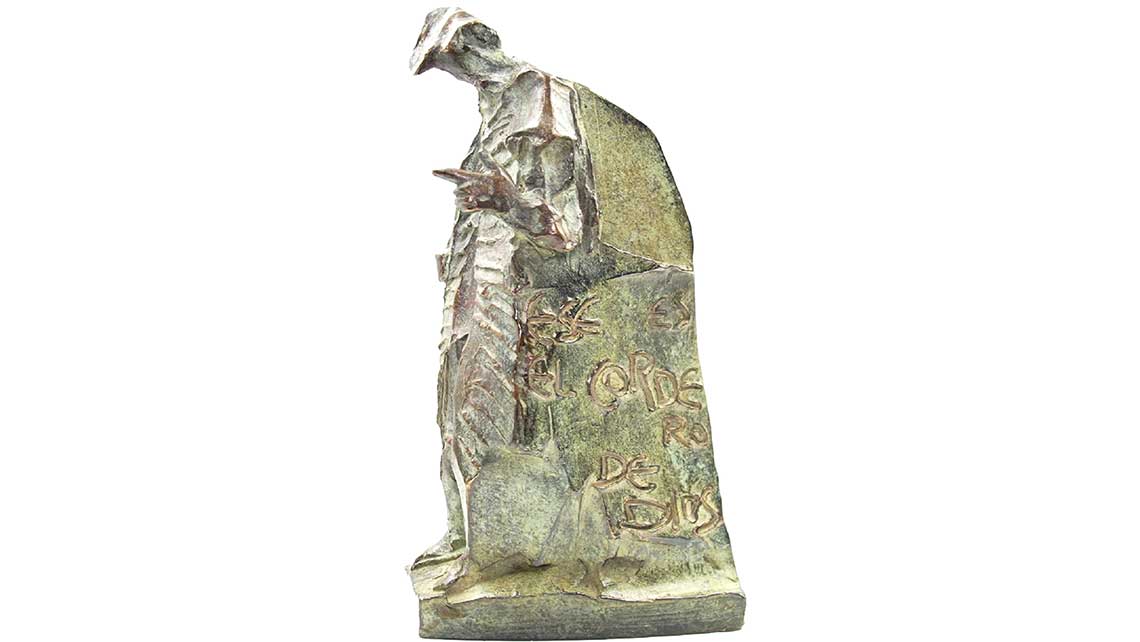
| Characteristics: | Saint John the Baptist is a freestanding bronze sculpture made in 2000. The figure rises from a base integrated into the casting itself and is constructed through highly simplified anatomy, compact volumes, overlapping planes and a strongly vertical silhouette. The patina combines dark greens, browns, ochres and blacks, with areas where the warmer tone of the bronze comes through. The surface retains clear traces of the modelling process, visible in the incisions, edges and abrupt shifts between planes. From the sides, the sculpture reveals a more complex relationship between mass, void and movement. |
| Artwork: |
Click to enlarge |
| Description: |
Antonio Oteiza does not create a calm or ceremonial image of the Baptist. The figure conveys tension, urgency and a powerful need to address others. The head inclines, one arm projects forward and the hand forms an emphatic, almost admonitory gesture. This is not a saint withdrawn into himself, but one who speaks, points and demands attention. The anatomy moves away from naturalistic description. The body is built from broad vertical masses and fractured surfaces that suggest a rough garment associated with life in the wilderness. The folds do not fall evenly; they overlap, break apart and run across the figure like layers. The face is reduced to a small number of planes. Oteiza is not seeking portrait likeness or ideal beauty. The expression lies in the tilt of the head, the openness of the gesture and the way the body seems to press forward from its own axis. The figure remains bound within a dense mass while also appearing ready to break free from it. The surface is central to the sculpture’s effect. Light catches on the edges, follows the incised lines and reveals copper highlights beneath the green and brown patina. New hollows, planes and projections emerge from each viewpoint, so the work cannot be fully understood from the front alone. Its real complexity appears as the viewer moves around it. The base belongs to the same sculptural construction. It is not an added support, but a continuation of the figure and the ground from which it rises. Body and base form a single material unit. In Saint John the Baptist, Antonio Oteiza turns the precursor into a necessary and unsettling presence. The sculpture does not illustrate a specific episode from his life; it concentrates what defines his mission: austerity, proclamation and the force of a word directed towards others. |