Saint Ignatius Wounded
| Collection: | Saints in Bronze (Antonio Oteiza) |
| Author: | Fr. Antonio Oteiza |
| Inventory Number: | MCO-AO-ES-00033 |
| Type: | Sculpture |
| Location: | Cataloguing Room |
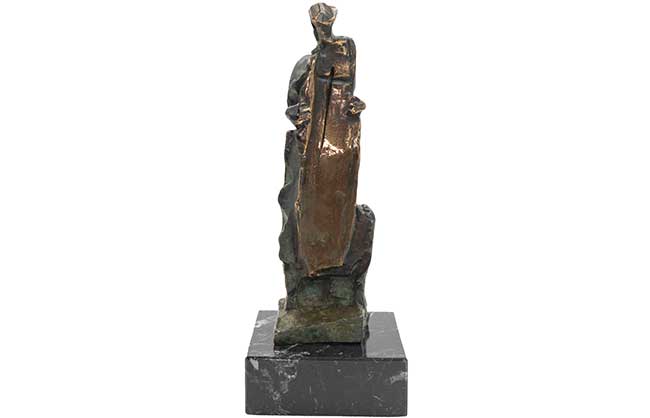
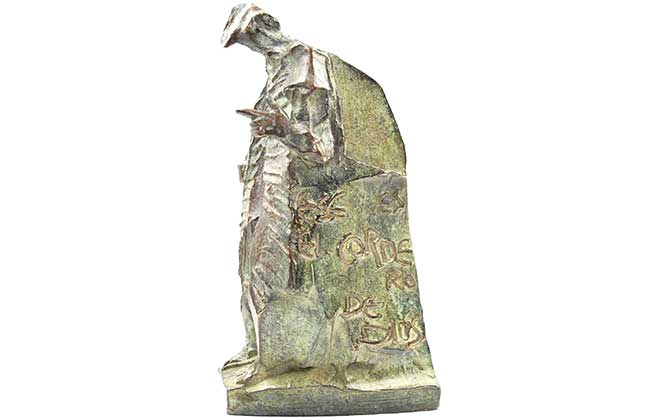
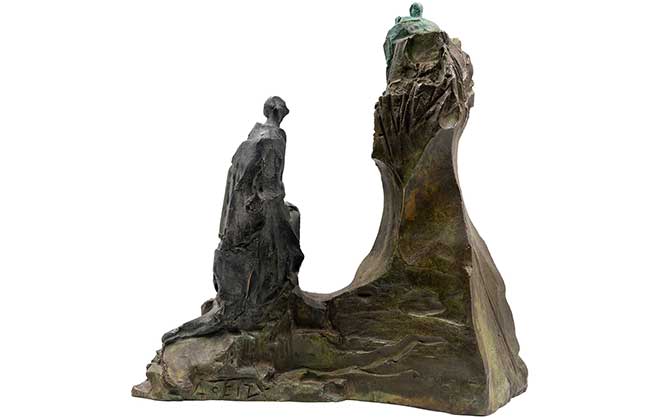
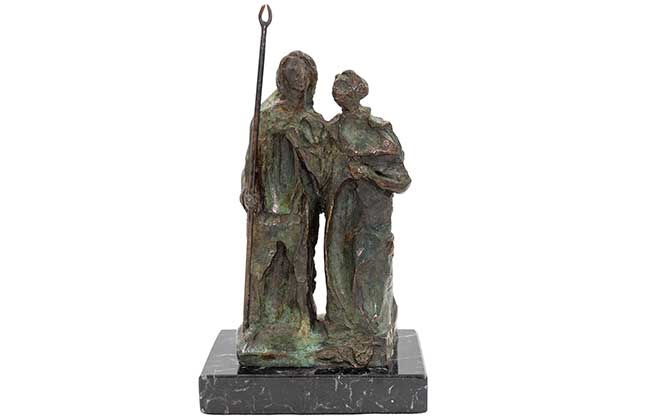
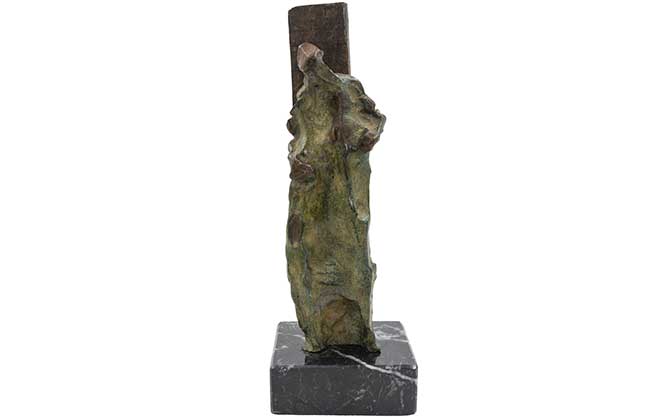
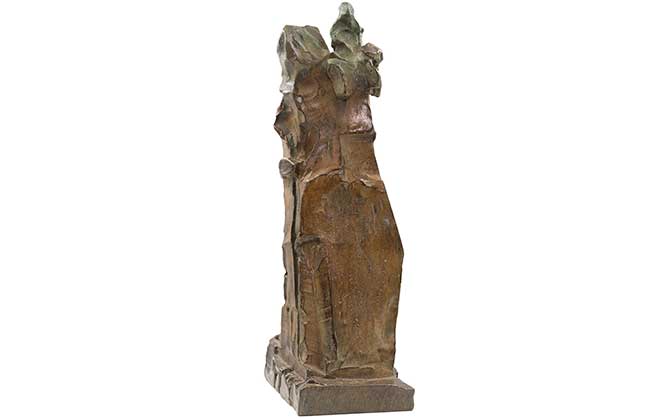
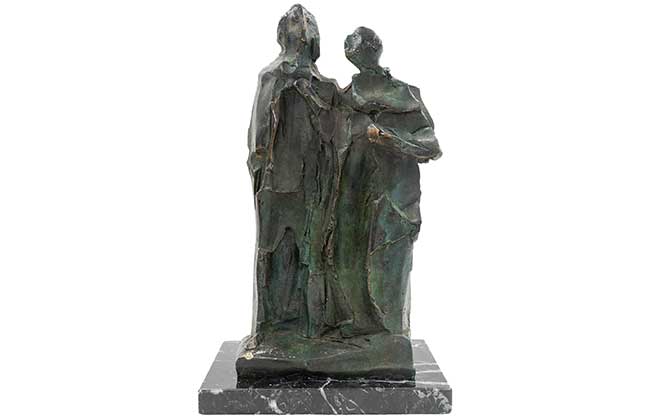
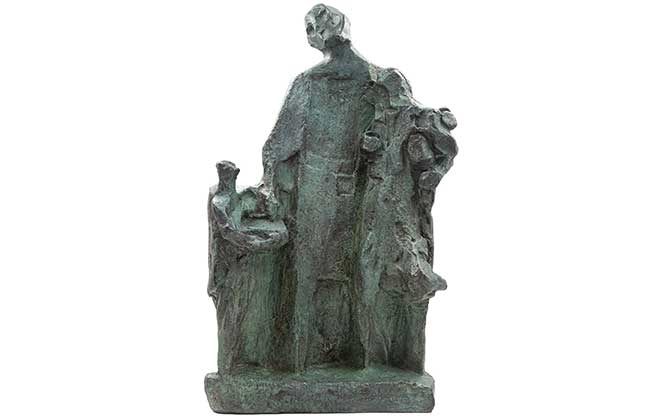
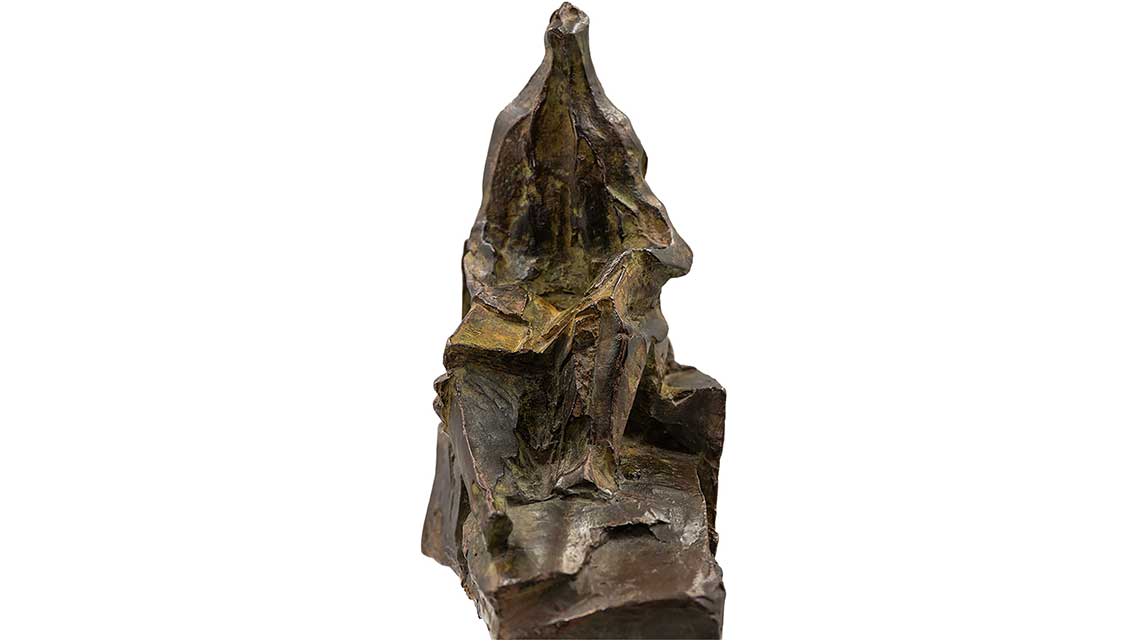
| Characteristics: | Saint Ignatius Wounded is a freestanding bronze sculpture with an open composition and a pronounced horizontal movement. The figure sits or reclines with his legs extended and his upper body raised within a structure that can be read simultaneously as a seat, an interior and an architectural enclosure. Oteiza reduces the anatomy to fractured planes, recessed areas and irregular volumes. The patina combines browns, ochres and greenish tones, with warmer bronze highlights along exposed edges and projecting surfaces. The base is integrated into the casting and extends the physical space occupied by the body. |
| Artwork: |
Click to enlarge |
| Description: |
The wound Ignatius of Loyola suffered during the defence of Pamplona brought his former life to an abrupt halt. His long recovery separated him from military ambition, courtly aspirations and the ideals that had shaped his youth. What began as enforced inactivity gradually became the setting for a profound change of direction. Antonio Oteiza does not depict the battle or the violent instant of injury. Nor does he turn pain into spectacle. He chooses the aftermath: waiting, convalescence and the silence of a man who is not yet the founder of the Society of Jesus, but who has begun to move away from the person he once intended to become. The body cuts diagonally through the composition. The extended legs make his inability to act immediately visible, while the raised head introduces a contrary impulse. The surrounding mass holds the figure in place, yet his posture suggests that his attention is beginning to move beyond the injury itself. An angular, open form rests across his lap and can be read as a book. Oteiza does not describe it in detail or turn it into a dominant attribute. Its understated presence nevertheless evokes the period of reading and reflection that played a decisive role in Ignatius’s spiritual development. The surrounding structure carries considerable expressive weight. Its lateral planes support the saint while also enclosing him. From certain viewpoints the body emerges clearly; from others it seems partly absorbed by the mass around it. The place of recovery becomes the image of a crisis: the former life has been interrupted, while the new one has not yet acquired a definite shape. The bronze surface retains folds, incisions and irregularities that break up the light and resist any idealisation of the figure. Ignatius is not glorified. He appears vulnerable, physically limited and subject to the slow passage of recovery. Spiritual change begins here not in triumph, but in constraint, uncertainty and the recognition that life cannot simply continue as before. Saint Ignatius Wounded portrays the point at which an apparently broken existence begins to be rebuilt from a different inner foundation. The sculpture does not glorify suffering; it shows how a painful interruption can reveal a direction that had previously remained unseen. |