Saint Sebastian
| Collection: | Saints in Bronze (Antonio Oteiza) |
| Author: | Fr. Antonio Oteiza |
| Inventory Number: | MCO-AO-ES-00013 |
| Type: | Sculpture |
| Location: | Cataloguing Room |
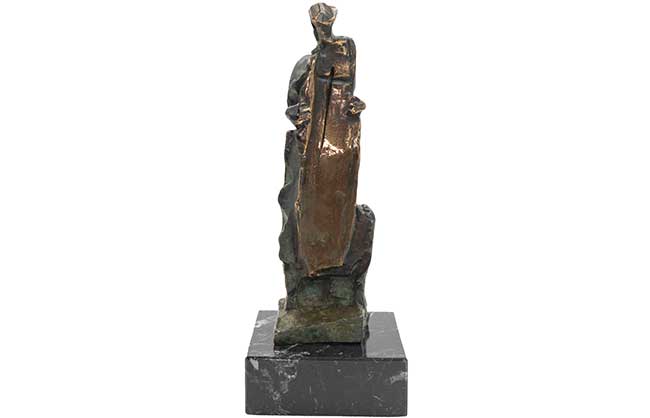
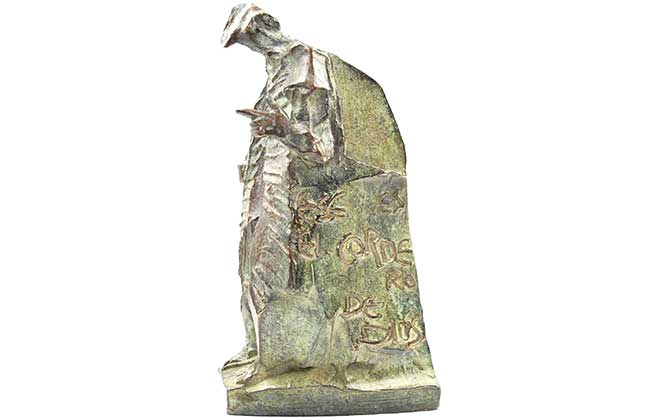
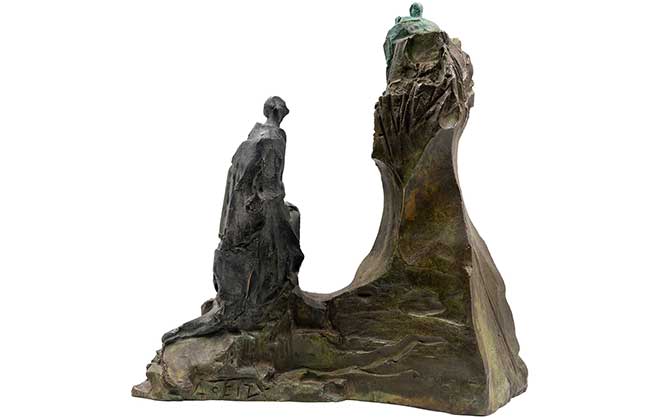
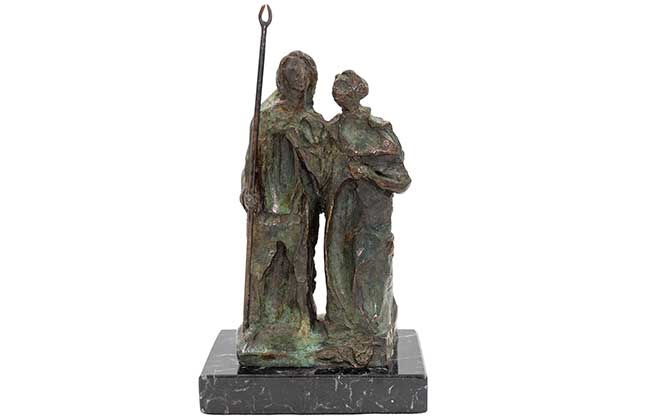
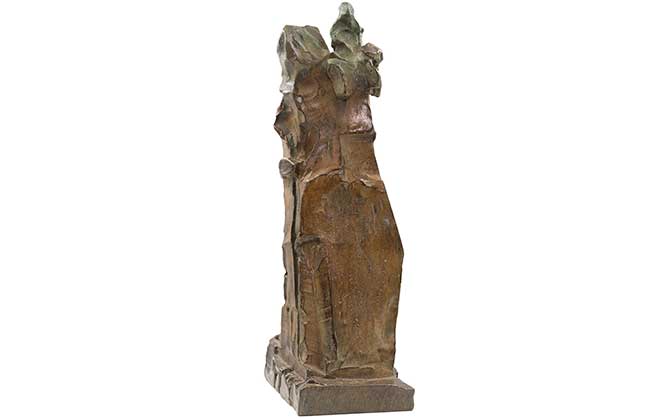
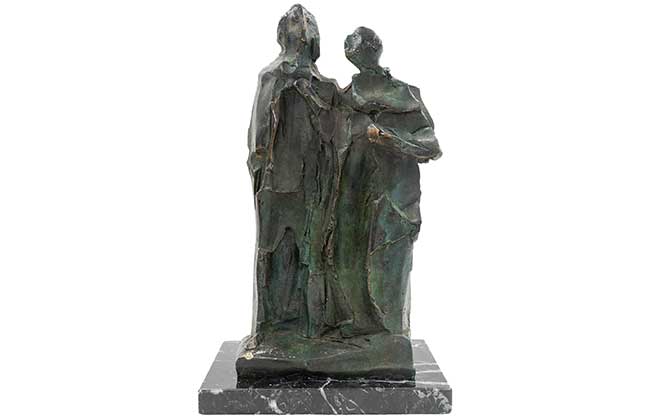
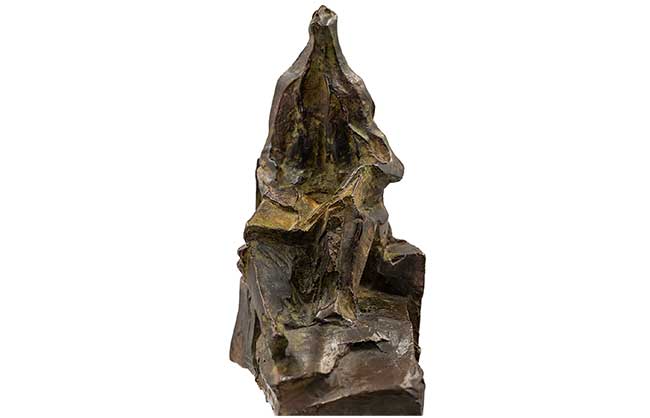
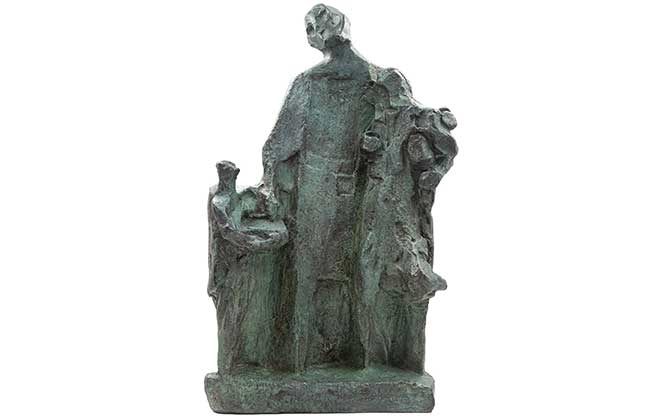
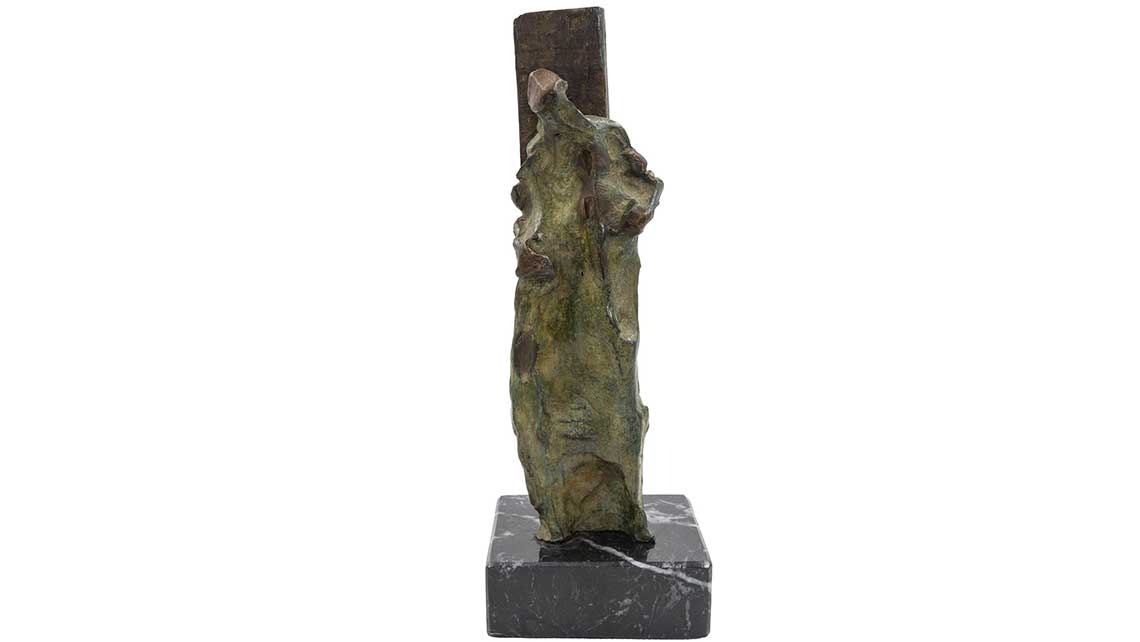
| Characteristics: | Saint Sebastian is a freestanding bronze sculpture in which a vertical wooden element plays a central structural and symbolic role. The work stands on a rectangular base of black marble. The saint’s body is elongated and anatomically reduced, shaped through irregular masses, recessed areas and abrupt shifts of plane. The patina moves through green, ochre and brown tones, with warmer bronze highlights appearing on the head, shoulders, hands and other projecting surfaces. The contrast of materials is essential. The organic, changing surface of the bronze is set against the straight, closed and almost unyielding form of the wood. The sculpture reveals itself gradually as the viewer moves around it: the figure emerges, partially disappears and at times seems to merge with the vertical structure behind it. |
| Artwork: |
Click to enlarge |
| Description: |
For centuries, Saint Sebastian has often been represented as a youthful, idealised body tied to a tree or column and pierced by arrows. Antonio Oteiza strips away almost all of that traditional imagery. He does not show the attack, nor does he describe the wounds. Instead, he concentrates on the essential condition of the martyr: a body exposed, held in place and confronted by a force greater than itself. The figure rises narrow and vulnerable before the tall upright plane. The head falls back and slightly to one side, while the arms remain only loosely separated from the torso. There is no theatrical gesture and no overt physical agony. The tension is held within the posture and within an anatomy that seems worn by experience rather than shaped according to an ideal. The wooden post is far more than an identifying attribute. Its geometry governs the composition, establishes the upward axis and determines how the saint is perceived. From some angles, the body is clearly visible; from others, it is partly concealed or appears to fuse with the structure behind it. Oteiza turns this shifting visibility into part of the sculpture’s meaning. The contrast between materials deepens that relationship. The wood is dark, dry and marked by a strong vertical grain, while the bronze is irregular, coloured and responsive to light. One material appears rigid and enduring; the other bodily, vulnerable and changeable. The sculpture is built around this tension between endurance and submission. By omitting the arrows, Oteiza removes any sense of spectacle from the violence. The martyrdom is not narrated through its instruments, but through the solitude of the body and its continued presence before the wood. This restraint moves the work away from conventional devotional imagery and towards a contemporary meditation on suffering, dignity and resistance. In Saint Sebastian, Oteiza does more than represent a saint from the Christian tradition. He creates a recognisable human image: that of someone who remains standing even when everything seems intent on reducing him to his own vulnerability. |