Saint John of the Cross
| Collection: | Saints in Bronze (Antonio Oteiza) |
| Author: | Fr. Antonio Oteiza |
| Inventory Number: | MCO-AO-ES-00001 |
| Type: | Sculpture |
| Location: | Cataloguing Room |
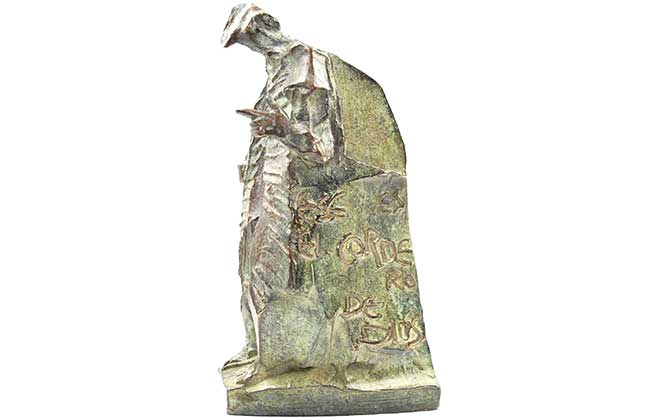
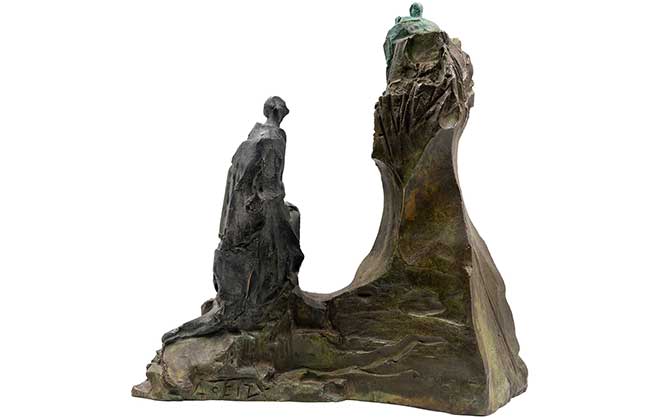
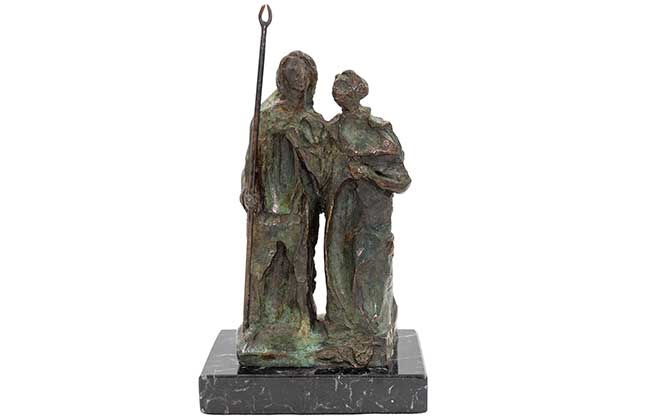
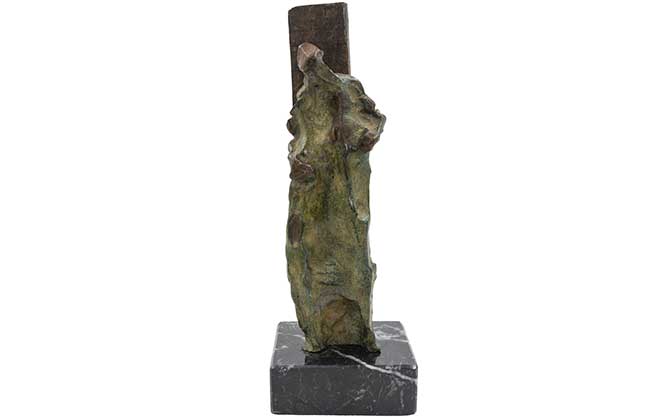
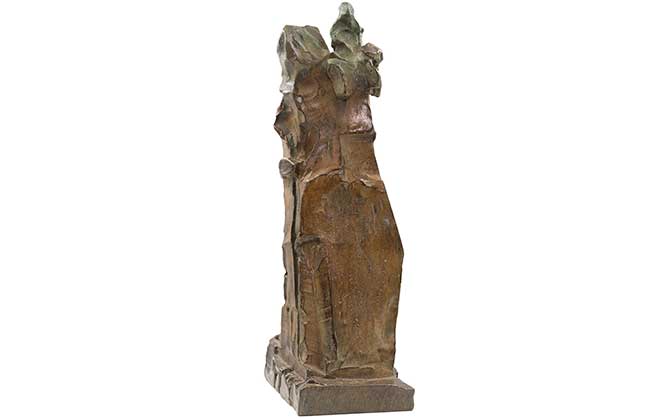
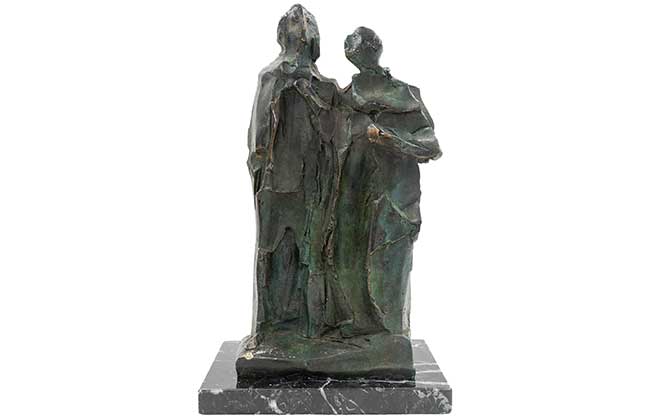
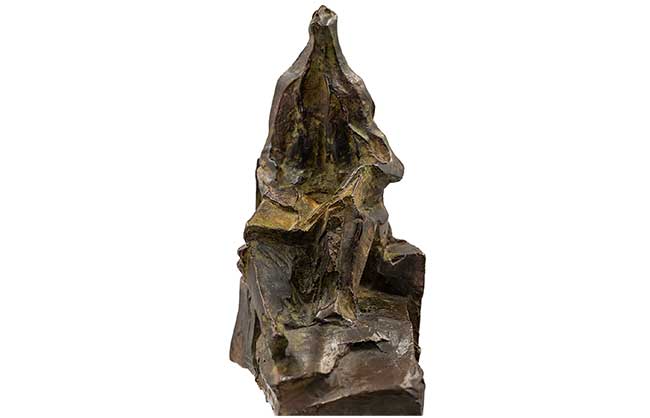
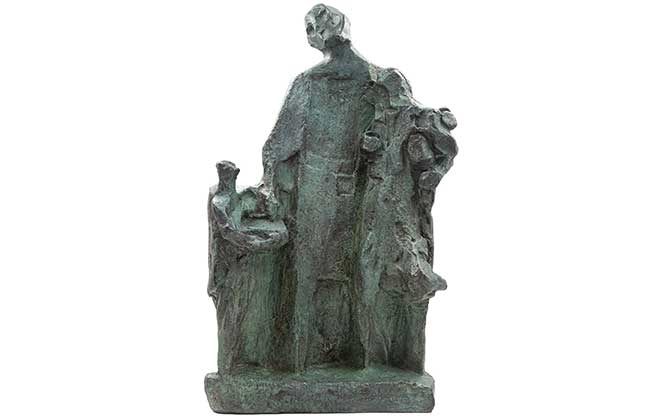
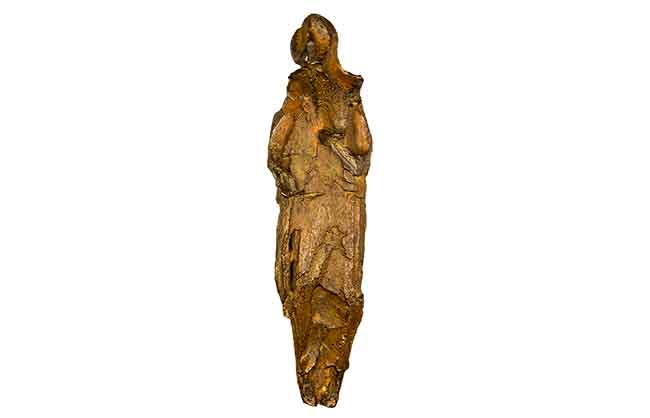
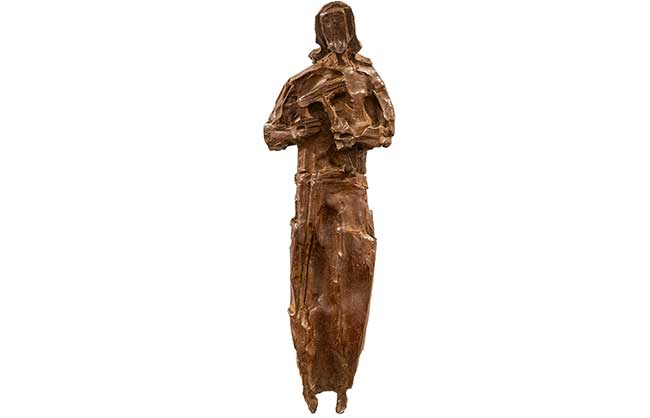
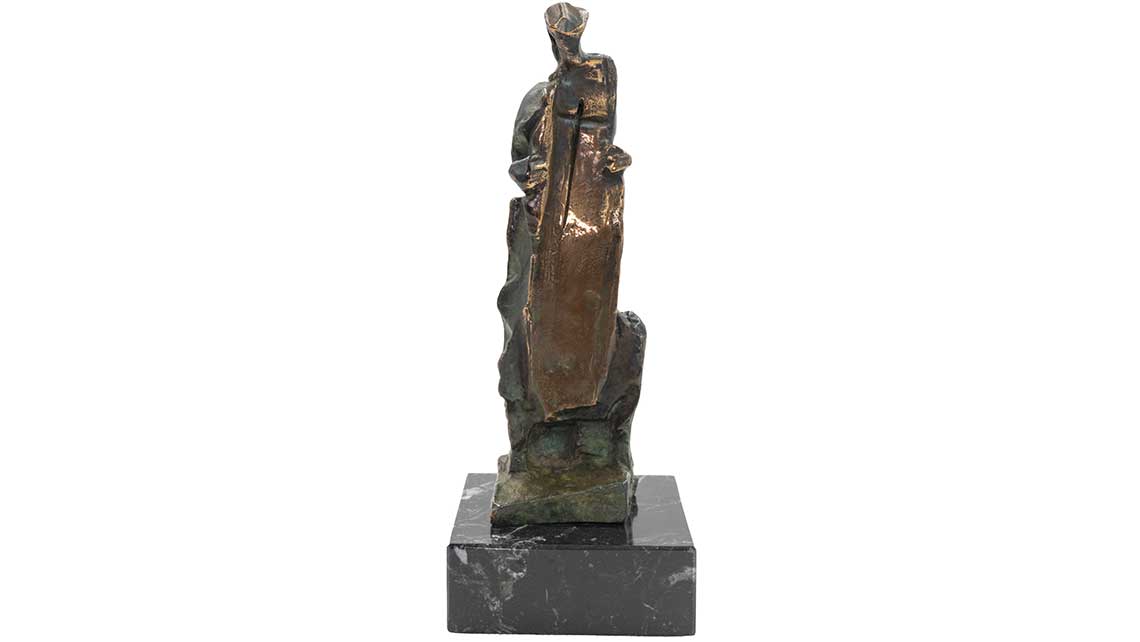
| Characteristics: | Saint John of the Cross is a small freestanding bronze sculpture made in 2002. The figure is built around a strong vertical axis, with the body reduced to elongated, compact volumes and only minimal anatomical definition. The head is only lightly modelled and inclines slightly, reinforcing the sense of introspection. The surface retains irregularities and traces of the modelling and casting process, while the patina combines dark tones with green and ochre nuances. The sculpture stands on a separate base of polished black marble, whose strict geometry contrasts with the organic character of the bronze. |
| Artwork: |
Click to enlarge |
| Description: |
Antonio Oteiza does not create a descriptive or anecdotal image of the saint. There is no book, cross or other conventional attribute to identify him. Instead, the sculptor reduces the figure to a few essential qualities: verticality, silence and deep inner concentration. The body rises as a narrow, almost continuous form. Its individual parts are not clearly separated, but absorbed into a single compact mass that conveys stability and spiritual withdrawal. The slight inclination of the head softens the rigidity of the central axis and gives the figure a more intimate presence, as though its attention were directed entirely inward. The treatment of the surface is central to the sculpture’s effect. Irregular planes, subtle projections and variations in the patina prevent the bronze from being read as a uniform body. Light catches on certain edges and fades in deeper areas, so the work changes as the viewer moves around it. In places, the warmer tone of the metal emerges through the darker patina, creating restrained points of luminosity. This formal austerity corresponds closely to the spiritual identity of Saint John of the Cross, whose thought is associated with detachment, inner experience and the search for what is essential. Oteiza does not illustrate the saint’s life or writings. He creates instead a concentrated presence that seems stripped of everything secondary. The polished black marble base provides a precise counterpoint. Its smooth, geometric form stands against the irregular, living surface of the bronze. From that contrast, the figure rises with an almost ascetic simplicity, becoming an image of silence, firmness and contemplation. |