Saint Ignatius at La Magdalena
| Collection: | Saints in Bronze (Antonio Oteiza) |
| Author: | Fr. Antonio Oteiza |
| Inventory Number: | MCO-AO-ES-00036 |
| Type: | Sculpture |
| Location: | Cataloguing Room |
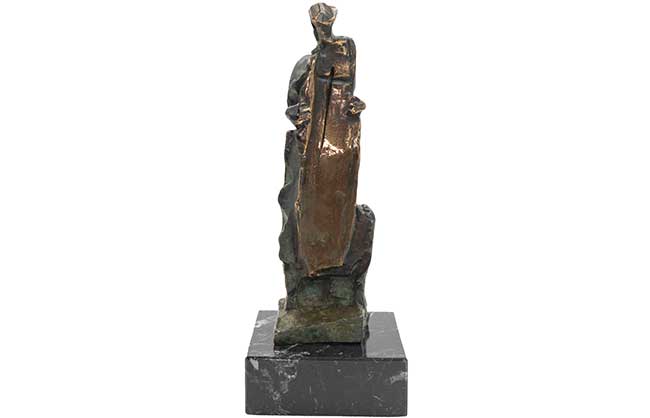
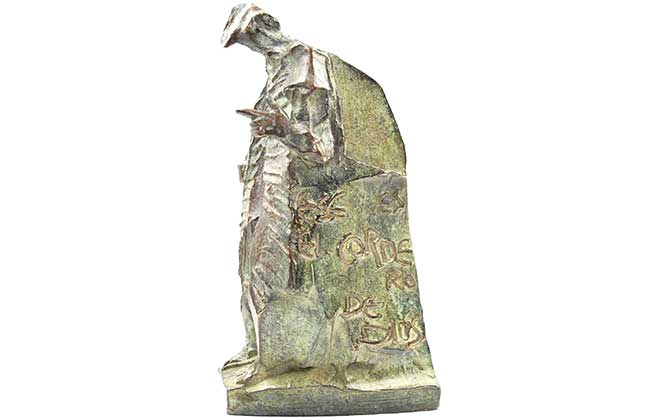
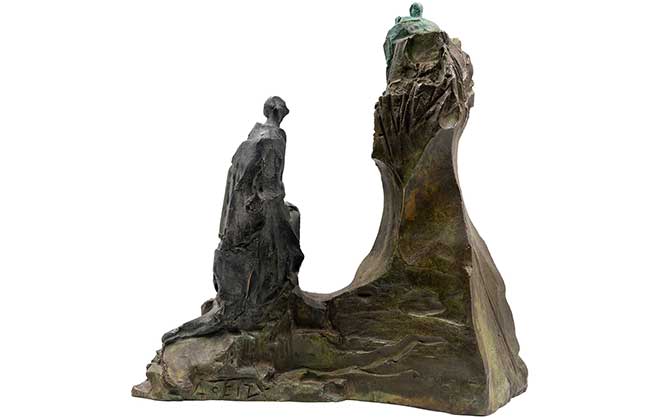
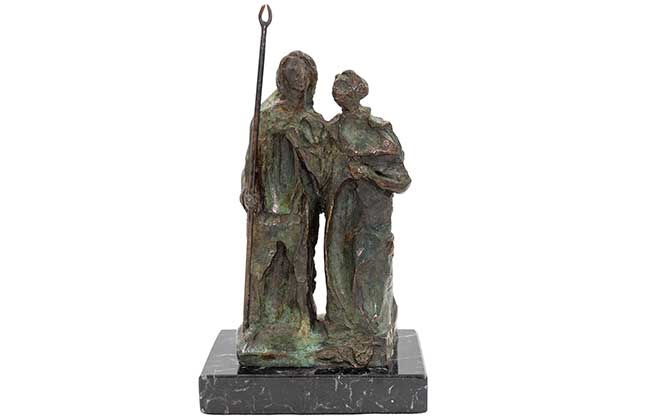
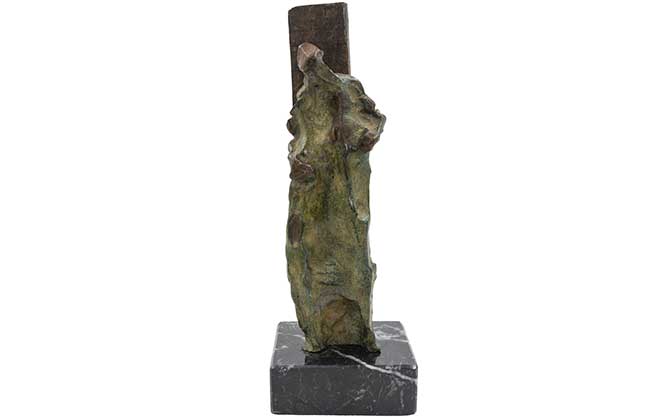
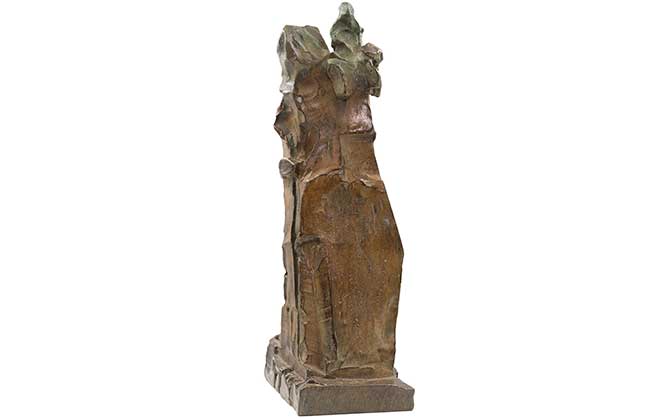
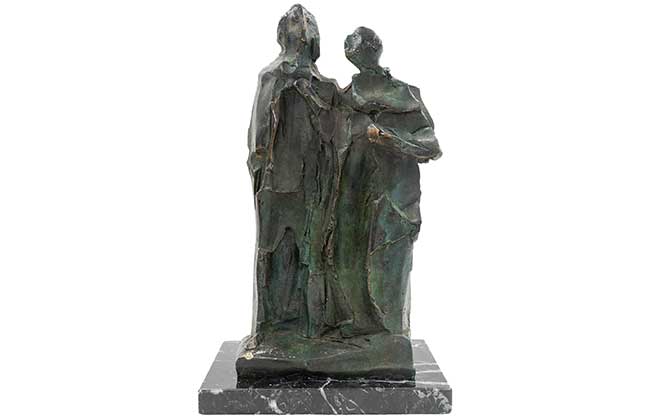
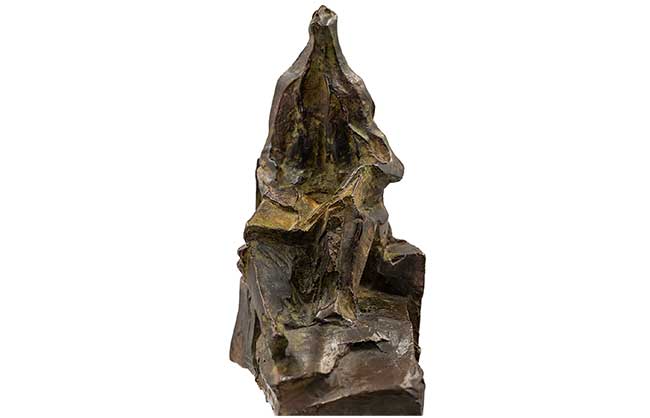
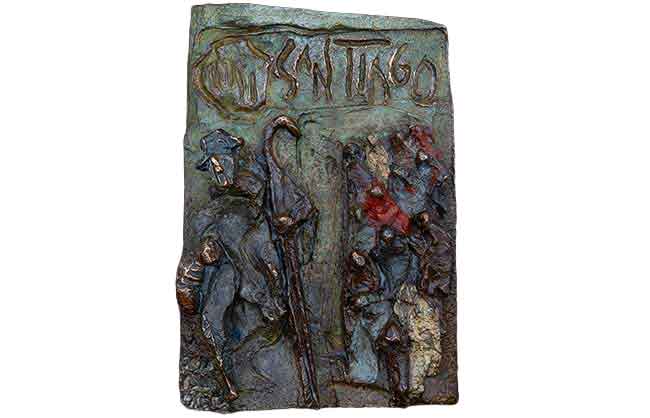
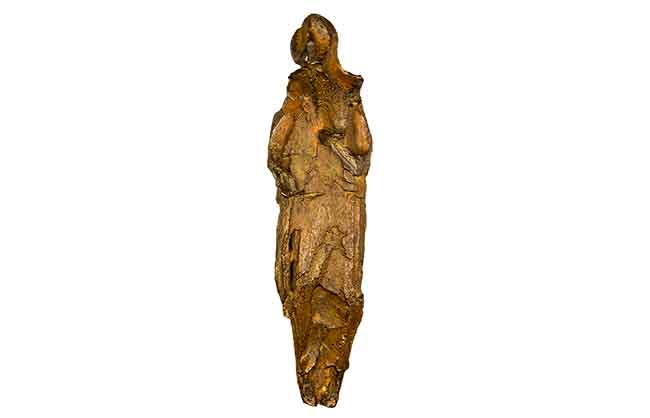
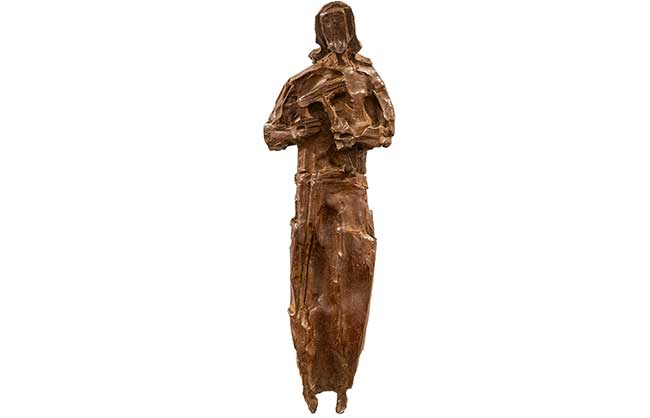
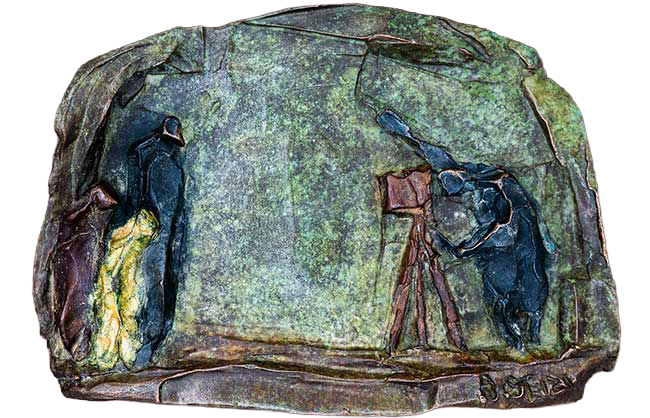
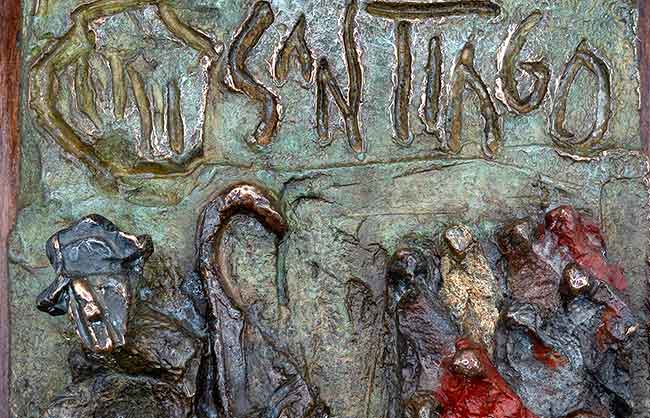
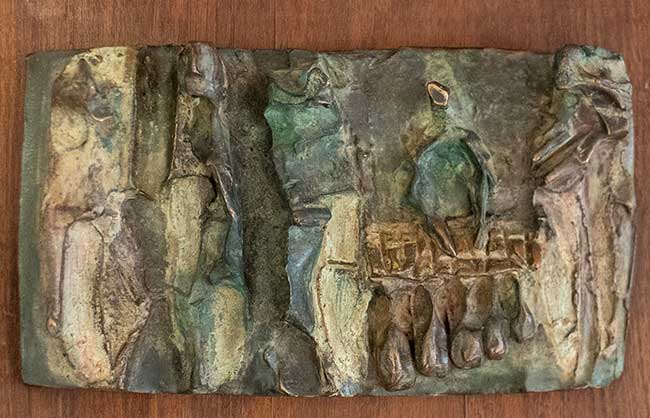
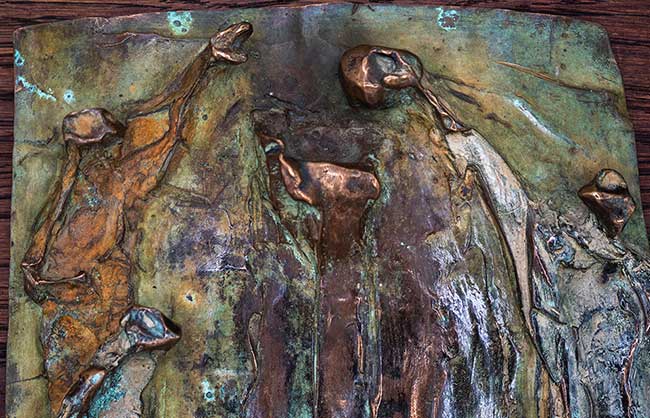
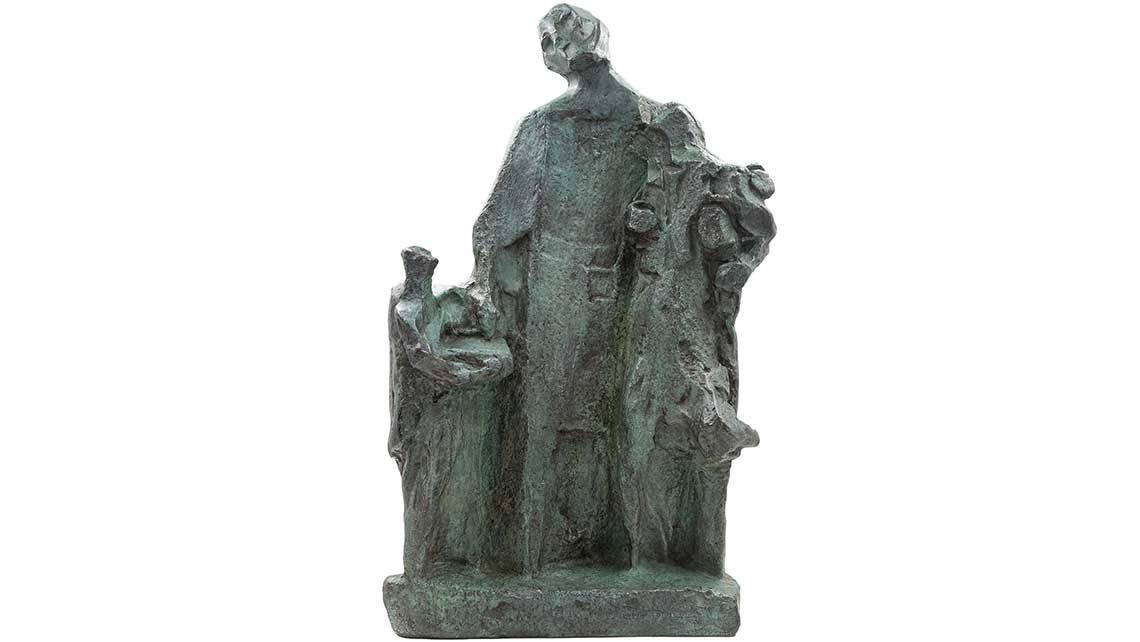
| Characteristics: | Saint Ignatius at La Magdalena is a freestanding bronze sculpture structured around a powerful vertical axis. The figure of the saint dominates the composition through its height and frontal presence, while several smaller figures gather on either side to form a compact human structure. The anatomy is reduced to essential volumes, irregular planes and barely suggested facial features. The lateral figures emerge only partially from the material, overlap and connect with the central body, causing the group to move between sculpture in the round and relief. The surface preserves the direct traces of modelling, with roughness, incisions, cavities and changes of level that fragment the light. The green patina, enriched by darker areas and occasional warm bronze highlights, visually unifies the composition and strengthens its monumental character. The rectangular base is integrated into the casting and brings all the figures together within a shared space. This small-scale bronze is related to a larger version installed in a public setting, yet it possesses an identity of its own through the intimacy and concentration with which the scene can be observed. |
| Artwork: |
Click to enlarge |
| Description: |
Antonio Oteiza constructs the work through a carefully balanced relationship between centrality and accompaniment. Saint Ignatius occupies the main axis, but he is neither isolated nor raised above a distant community. His body is physically integrated with the figures around him, as though his identity could not be understood apart from his relationship with others. The central figure has a firm yet restrained verticality. The long garment falls to the base and turns the body into a kind of human column. The arms remain close to the torso, while the face, built from only a few planes, avoids any clearly narrative expression. The figure’s strength does not come from theatrical gesture, but from the steadiness of its presence. Around the saint, the secondary figures form two groups of different density. On one side, a figure approaches from an elevated structure; on the other, several heads, torsos and arms accumulate into a more complex mass. Oteiza does not seek to individualise them completely. Rather than presenting a sequence of separate portraits, he creates a collective presence made up of people who draw near, wait, question or seek to be received. The difference in scale between Ignatius and those who accompany him establishes a narrative hierarchy, not a human distance. The saint organises the composition and draws the eye, yet remains connected to the group. The lateral bodies seem visually to lean against him, while his silhouette opens to receive them within the same sculptural structure. The work is strongly frontal, although the side views reveal a more complex organisation. The figures project forward, create cavities and open narrow intervals between bodies. Empty space does not fully separate them; instead, it introduces pauses within a deliberately dense material structure. The surface plays an essential role in this construction. The irregularities of the bronze resist idealisation and return the scene to a concrete human reality. Incomplete faces, fragmented bodies and rough material do not diminish the dignity of the figures; they express vulnerability and make visible a community formed by different lives. Antonio Oteiza’s religious sensibility is evident in the way he places the saint among the people. Ignatius appears not only as a founder or historical figure, but as an available and attentive presence. His spirituality becomes relationship, care and service, without relying on grandiose symbols or supernatural effects. The small-scale version intensifies this sense of proximity. In contrast with the public dimension of the monumental work, this bronze allows the scene to be viewed from an intimate distance and reveals how each figure contributes to the construction of the whole. Monumentality here does not depend on size, but on the ability to transform a human gathering into the image of a shared vocation. Saint Ignatius at La Magdalena presents mission as a way of being present among others. Oteiza condenses within the group a deeply religious idea: inner experience reaches fulfilment when it ceases to belong only to the person who lives it and becomes presence, welcome and self-giving. |