“Antonio Oteiza and Carlos Ciriza: The Way and Sculpture – Estella and Museum”, a book exploring the dialogue between two ways of understanding art
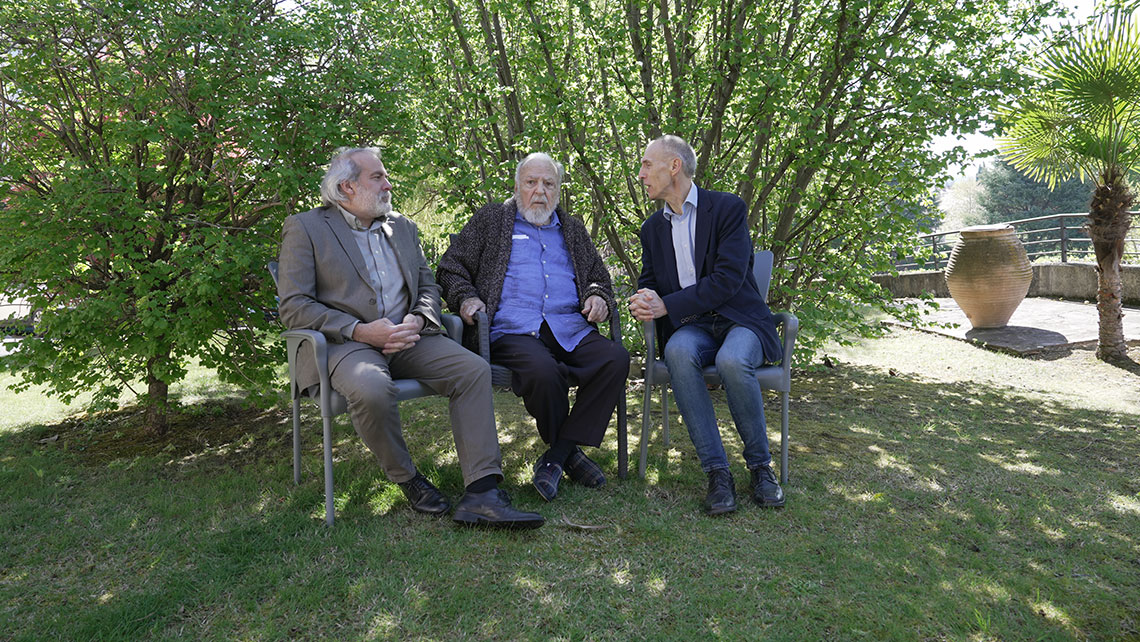
The creation of the Museum Ciriza Oteiza also marks the opening of a new space for discovering, studying and bringing the artistic journeys of Antonio Oteiza and Carlos Ciriza into dialogue. This encounter between two artists, two sculptural languages and a shared aspiration towards transcendence now finds a new expression in the book “ANTONIO OTEIZA and CARLOS CIRIZA: THE WAY and SCULPTURE – ESTELLA and MUSEUM”.
The publication offers a journey through the creative universe of both artists and through the context that makes their encounter in Estella-Lizarra possible, a city deeply connected to the Way of St James and now also becoming the setting for a new museum experience.
Art historian and museologist Francisco Javier Zubiaur Carreño, author of the book's foreword, places the birth of the Museum Ciriza Oteiza within Estella's tradition as a land of passage, encounter and culture. For Zubiaur, the new centre has been created with the ambition of moving beyond the idea of a museum understood solely as a place of conservation, becoming also a space for contemplation, research, dialogue and the generation of new ideas.
The book offers an insight into two clearly distinct artistic personalities.
Antonio Oteiza Embil (1926–2025) developed a body of work deeply rooted in his life and spiritual experience. A sculptor, painter and draughtsman, as well as a Capuchin friar, he found much of the inspiration for his work through direct contact with the people, cultures and realities he encountered throughout his life, particularly in Latin America. His creative work draws on the human figure, the power of folk art and a constant search for the transcendent.
Marked by spontaneity and expressive intensity, his work transforms scenes from everyday life, people, trades and religious subjects into testimonies to a profoundly humanistic way of seeing. As Zubiaur recalls, Antonio Oteiza sought a language capable of communicating inner experience and building a bridge between the everyday and the sacred.
In contrast to this figurative expressionism, the work of Carlos Ciriza (Estella, 1964) presents an essentially constructive and abstract language. Iron, a material closely linked to his childhood memories and his family's workshop, becomes one of the great protagonists of a sculptural practice in which volume, balance, space and emptiness enter into dialogue.
Working in different artistic languages, the works of Oteiza and Ciriza converge in a shared concern for the human being, nature, spirituality and the meaning of existence.
This dialogue forms one of the central themes of the book and is also one of the distinctive features of the Museum Ciriza Oteiza itself.
The publication also explores the project's relationship with Estella and the Way of St James, two elements inseparable from the museum's identity. Located alongside one of Europe's great cultural and spiritual routes, the Museum aspires to become a space open to researchers and specialists as well as students, artists, local residents, travellers and pilgrims.
In the words of Francisco Javier Zubiaur, a museum is built anew every day. Its future depends on its ability to keep the works in its care alive, but also to generate knowledge, awaken emotions and create new spaces for encounter.
“ANTONIO OTEIZA and CARLOS CIRIZA: THE WAY and SCULPTURE – ESTELLA and MUSEUM” was conceived with precisely this purpose: to bring readers closer to the work of two artists while helping them understand the spirit of a cultural project that is beginning its journey in Estella.
A journey through art, place and transcendence which, as Zubiaur himself points out, has only just begun.
News
-
-
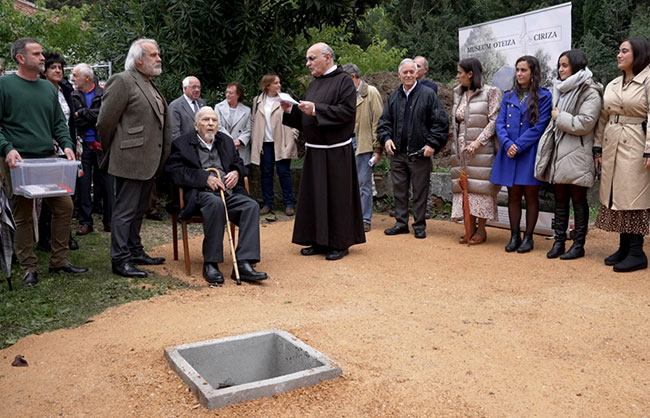 Laying of the Foundation Stone of the Museum Ciriza Oteiza Friday, October 27, 2023
 - View all